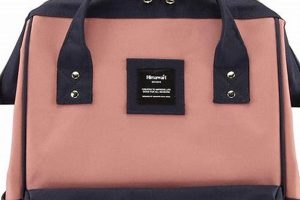
Bags designed to fit within the dimensions specified by airlines for under-seat storage are a category of personal item. These bags, often constructed as backpacks, offer a compact carrying solution for travelers seeking to maximize carry-on allowance without incurring checked baggage fees. An example includes a backpack with dimensions of 18 x 14 x 8 inches, frequently accepted by major airlines for placement beneath the seat.
The appeal of such personal items lies in their utility for short trips, enabling efficient packing of essentials like clothing, electronics, and toiletries. This type of luggage promotes streamlined travel, reducing wait times at baggage carousels and mitigating the risk of lost or delayed luggage. Historically, the development of these products reflects the increasing desire for cost-effective and convenient travel options.
This analysis will delve into the features, selection criteria, and organizational strategies relevant to these compact travel solutions. Further sections will address optimal packing techniques and regulatory compliance considerations to ensure seamless travel experiences.
Optimizing the Use of Under-Seat Luggage
Effective utilization of under-seat luggage necessitates careful planning and execution. The following recommendations are designed to maximize space and ensure compliance with airline regulations.
Tip 1: Prioritize Essential Items: Focus on packing indispensable items such as medications, travel documents, and a change of clothing. This ensures access to crucial items in the event of checked baggage delays or loss.
Tip 2: Compressible Packing Cubes: Employ compression packing cubes to minimize the volume of clothing. These cubes separate items, aiding organization and maximizing usable space within the backpack.
Tip 3: Electronic Device Placement: Position laptops and tablets in designated padded compartments for protection and ease of access during security checks. This prevents damage and expedites the screening process.
Tip 4: Utilize External Pockets: Designate external pockets for frequently accessed items such as water bottles, snacks, and charging cables. This minimizes the need to open the main compartment during transit.
Tip 5: Weigh the Backpack: Adhere to airline weight restrictions for personal items. Overloading can result in gate-checking, negating the benefits of under-seat storage.
Tip 6: Review Airline Regulations: Research specific airline dimension and weight limitations prior to departure. Variations exist between carriers, impacting allowable bag size and weight.
Tip 7: Footwear Considerations: Limit footwear to two pairs, wearing the bulkiest pair and packing a smaller, more compact alternative. This minimizes space consumption within the main compartment.
By adhering to these guidelines, travelers can optimize the functionality of their under-seat luggage and streamline their travel experience.
The next section will explore product selection criteria for choosing the most appropriate under-seat luggage.
1. Dimensions

The dimensional parameters of under-seat luggage directly dictate its viability for airline travel. Airline regulations specify maximum measurements for items stored beneath seats, and these limitations directly influence the design and utility of these backpacks. Failure to adhere to these size constraints results in the item being classified as carry-on luggage, potentially incurring additional fees or requiring gate-checking. For instance, a backpack exceeding 18 x 14 x 8 inches may not fit comfortably, or at all, under a standard airline seat.
Furthermore, the internal volume of the backpack, a direct consequence of its external dimensions, determines its capacity for packing. A larger volume allows for more items, while a smaller volume necessitates careful selection of essentials. The allocation of space within the backpack, considering features like laptop compartments or clothing dividers, impacts the usable volume. Real-world examples, such as fitting a weekend’s worth of clothing into a compliant backpack, demonstrate the practical significance of optimal dimension utilization.
In summary, dimensional compliance is paramount for under-seat luggage. It impacts both the backpack’s usability within airline regulations and its capacity for practical storage. Understanding these dimensional constraints enables travelers to select appropriate luggage and pack efficiently, avoiding additional costs and streamlining their travel experience.
2. Organization

Effective organization is a critical attribute of under-seat travel backpacks, directly impacting the user’s ability to efficiently pack, access, and transport essential items within limited space. The compact nature of under-seat luggage necessitates a strategic approach to internal arrangement to maximize capacity and maintain accessibility. A lack of organization within such a backpack leads to inefficiencies, such as difficulty locating specific items, wasted space, and increased packing time. For example, haphazardly placing clothing can result in wrinkles and reduced overall storage capacity, while a designated compartment for electronics safeguards sensitive devices and facilitates quick security checks.
The internal architecture of a well-designed under-seat travel backpack often incorporates multiple compartments, pockets, and dividers. These features allow for the segregation of different item categories, such as clothing, toiletries, and electronics. Compression straps can further enhance organization by minimizing the volume of packed clothing, creating additional space for other essentials. Real-world scenarios demonstrate the practicality of organized packing: a business traveler can readily access a laptop and documents during a flight without disrupting other packed items, while a vacationer can quickly retrieve essential toiletries upon arrival at their destination.
In summary, organization is not merely a desirable feature but a fundamental requirement for effective use of under-seat travel backpacks. It enhances packing efficiency, promotes accessibility, and ensures the protection of sensitive items. The degree of internal organization directly correlates with the backpack’s utility and the overall travel experience. Backpacks lacking sufficient organizational features compromise efficiency and convenience, underscoring the importance of considering this aspect during product selection.
3. Durability
The longevity and reliability of an under-seat travel backpack are fundamentally determined by its durability. As these bags are subjected to the rigors of travel, including frequent handling, varying environmental conditions, and potential overloading, the materials and construction methods employed directly impact their lifespan and ability to protect contents.
- Material Selection
The choice of materials is paramount in determining durability. High-denier nylons, such as ballistic nylon or Cordura, offer superior abrasion resistance compared to cheaper polyester fabrics. Similarly, reinforced stitching and robust zippers contribute to the overall structural integrity of the backpack. The selection of these components directly affects the bag’s ability to withstand wear and tear, impacting its long-term usability. A backpack constructed from low-quality materials is susceptible to tears, seam failures, and zipper malfunctions, rendering it unsuitable for frequent travel.
- Construction Quality
Beyond material selection, the quality of construction significantly influences durability. Reinforced stress points, such as corners and handles, are crucial for preventing premature failure. Double-stitched seams and bar-tacked reinforcements enhance the bag’s ability to withstand heavy loads and repetitive stress. A poorly constructed backpack, even with high-quality materials, is prone to structural weaknesses and may not endure the demands of frequent travel. Consistent and meticulous stitching is a hallmark of durable construction.
- Water Resistance
Water resistance, while not directly related to structural integrity, contributes to the overall durability and longevity of the contents. Backpacks with water-resistant coatings or materials protect items from rain, spills, and moisture, preventing damage to electronics, documents, and clothing. Ingress of water can lead to corrosion, mold growth, and material degradation, all of which shorten the lifespan of both the backpack and its contents. Water-resistant zippers and sealed seams further enhance protection against the elements.
- Component Quality
Small components, such as buckles, straps, and handles, contribute significantly to the overall durability of the backpack. High-quality buckles made from durable plastics or metals withstand repeated use without breaking. Reinforced straps and handles provide a secure and comfortable grip, even when the backpack is fully loaded. Inferior components are prone to failure, compromising the bag’s functionality and potentially causing damage to its contents. The quality of these seemingly minor details often reflects the overall attention to detail and durability of the backpack.
In conclusion, the durability of an under-seat travel backpack is a multifaceted attribute determined by material selection, construction quality, water resistance, and component quality. These factors collectively impact the bag’s ability to withstand the rigors of travel, protect its contents, and provide long-term usability. Choosing a backpack with a focus on these durability factors ensures a reliable and cost-effective travel solution.
4. Accessibility

Accessibility is a paramount consideration in the design and utilization of personal luggage intended for under-seat storage during air travel. The inherent limitations of space within the aircraft cabin necessitate a design that prioritizes ease of access to essential items while maintaining compliance with size restrictions. A poorly designed backpack, regardless of its storage capacity, becomes a hindrance if accessing necessary items requires significant effort or disruption to fellow passengers. The strategic placement of compartments, readily accessible pockets, and efficient opening mechanisms are crucial to enhancing usability within the confined environment of an aircraft cabin. For example, the ability to quickly retrieve a laptop for in-flight work or a water bottle during turbulence demonstrates the direct impact of accessible design.
The practical application of accessibility extends beyond mere convenience; it directly affects passenger comfort and efficiency. Consider the scenario where a traveler needs to retrieve medication during a flight. A backpack with well-organized and easily accessible compartments facilitates quick retrieval without necessitating the removal of the entire bag from under the seat, thereby minimizing disruption to other passengers. Similarly, designated external pockets for items such as travel documents or charging cables enable seamless navigation through security checkpoints and in-flight entertainment options. Accessibility, therefore, transforms the backpack from a mere container into a functional component of the overall travel experience.
In conclusion, accessibility is not a supplementary feature but an integral element of effective under-seat luggage design. It determines the ease with which travelers can utilize the bag’s contents during transit, impacting their comfort, efficiency, and overall travel experience. Challenges remain in balancing optimal storage capacity with ease of access, requiring designers to prioritize user-centric features such as strategically placed compartments and intuitive opening mechanisms. By focusing on accessibility, manufacturers can significantly enhance the practical value of under-seat travel backpacks, transforming them into indispensable tools for modern air travel.
5. Weight

The weight of an under-seat travel backpack is a critical factor directly influencing both its practicality and compliance with airline regulations. Excess weight can negate the benefits of under-seat storage by causing discomfort during transport, increasing the risk of injury, and potentially leading to additional fees if the bag exceeds airline-imposed weight limits. A heavier backpack, even if dimensionally compliant, diminishes maneuverability in crowded airport environments and during boarding. The effect is a less streamlined and more physically demanding travel experience.
Consider a scenario where a traveler packs a backpack filled with dense items, such as books or heavy electronic devices. While the bag may fit under the seat, its excessive weight can cause strain on the back and shoulders during transit. Furthermore, airlines often impose weight restrictions on personal items, and exceeding these limits can result in the bag being reclassified as carry-on luggage, incurring additional charges or forcing the traveler to check the bag. The weight consideration extends beyond the contents; the backpack’s inherent weight, derived from its materials and construction, also contributes to the overall burden. Lightweight materials, such as ripstop nylon, are therefore favored to minimize the empty weight of the bag.
In summary, the weight of an under-seat travel backpack is a paramount consideration. It directly impacts comfort, maneuverability, and compliance with airline regulations. Balancing storage capacity with weight limitations requires careful packing strategies and selection of lightweight materials. Understanding the practical significance of weight management ensures a more efficient and cost-effective travel experience. The challenges lie in optimizing storage without compromising portability, a key determinant in the overall value of under-seat luggage.
Frequently Asked Questions
The following questions address common inquiries regarding the selection, utilization, and regulatory compliance of under-seat travel backpacks. Understanding these points facilitates informed purchasing decisions and ensures seamless travel experiences.
Question 1: What dimensions are generally accepted for under-seat travel backpacks?
While specific measurements vary by airline, a commonly accepted size is approximately 18 x 14 x 8 inches. It is imperative to consult the airline’s official website for precise dimension limitations before travel to avoid potential gate-checking fees.
Question 2: What materials are most suitable for ensuring the durability of an under-seat travel backpack?
High-denier nylons, such as ballistic nylon or Cordura, offer superior abrasion resistance and overall durability compared to polyester fabrics. Reinforced stitching and robust zippers are also critical indicators of a durable backpack.
Question 3: How can the internal organization of an under-seat travel backpack be optimized?
Employ compression packing cubes to minimize clothing volume, utilize designated compartments for electronics and toiletries, and strategically position frequently accessed items in external pockets. This maximizes space and ensures efficient retrieval of necessities.
Question 4: Are there weight restrictions for under-seat travel backpacks?
Yes, most airlines impose weight restrictions on personal items. Exceeding these limits can result in additional fees or the bag being reclassified as carry-on luggage. It is advisable to weigh the backpack prior to travel to ensure compliance.
Question 5: How important is water resistance in an under-seat travel backpack?
Water resistance is a significant factor in protecting the contents from rain, spills, and moisture. Backpacks with water-resistant coatings or materials prevent damage to electronics, documents, and clothing, extending the lifespan of both the bag and its contents.
Question 6: What are some key features to consider when selecting an under-seat travel backpack?
Essential features include compliance with airline dimension restrictions, durable materials, well-organized internal compartments, easily accessible external pockets, and a lightweight design. Prioritizing these features ensures a functional and efficient travel solution.
In summary, careful consideration of dimensions, materials, organization, weight, water resistance, and key features is crucial when selecting an under-seat travel backpack. Adherence to airline regulations and strategic packing practices contribute to a seamless and cost-effective travel experience.
The subsequent section will address advanced packing techniques for maximizing space within the limited confines of under-seat luggage.
Conclusion
This analysis has thoroughly examined the “under seat travel backpack,” emphasizing its core attributes: dimensions, organization, durability, accessibility, and weight. Adherence to airline regulations concerning size and weight is paramount. Optimal internal organization and robust construction are crucial for maximizing utility and longevity. Prioritizing accessibility streamlines the travel experience. These interconnected factors determine the effectiveness of this luggage option.
The informed traveler recognizes the strategic advantage of the “under seat travel backpack.” Proper selection and utilization provide a cost-effective and efficient means of air travel. Continued advancements in design and materials promise further enhancements in the functionality and durability of these essential travel accessories. Selecting an appropriate one now provides a significant benefit.


![Top-Rated Best Travel Work Backpack [For Pros] | Ultimate Backpack Traveler Guide: Tips, Destinations & Budget Hacks](https://backpack-traveler.com/wp-content/uploads/2026/01/th-486-300x200.jpg "Top-Rated Best Travel Work Backpack [For Pros] Ultimate Backpack Traveler Guide: Tips, Destinations & Budget Hacks")