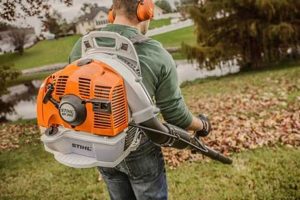
Devices mimicking the function of larger, gas-powered landscaping tools, but designed for children, often take the form of miniature, battery-operated blowers worn on the back. These toys typically feature reduced power and lightweight construction to ensure safe and manageable operation for younger users. They serve primarily as playthings, allowing children to emulate adult yard work activities.
Such toys offer a way for children to engage in imaginative play and role-playing scenarios, fostering creativity and an understanding of outdoor tasks. The incorporation of a backpack design allows for weight distribution, making the toy more comfortable to wear. Historically, children have imitated adult behaviors through play, and these devices represent a modern extension of this tradition, adapted for contemporary landscaping tools.
The subsequent sections will delve into the safety considerations associated with these products, their typical features, and factors to consider when selecting one. The aim is to provide a comprehensive overview for informed decision-making.
Tips for Selecting a Child-Sized, Backpack-Mounted Leaf Blower
The following provides guidance on the selection of a child-sized, backpack-mounted simulated leaf blower. Careful consideration of these points will contribute to a satisfactory and safe play experience.
Tip 1: Prioritize Safety Certifications. Verify the device meets relevant safety standards, such as ASTM F963 in the United States or EN71 in Europe. These certifications indicate the product has undergone testing for potential hazards like sharp edges, small parts, and toxic materials.
Tip 2: Assess Weight and Adjustability. The overall weight must be appropriate for the child’s age and physical capabilities. The backpack straps should be adjustable to ensure a secure and comfortable fit, preventing strain and discomfort.
Tip 3: Evaluate Noise Levels. While simulating the sound of a real leaf blower, the noise output should remain at a level considered safe for children’s hearing. Look for products that specify noise levels or indicate reduced sound output.
Tip 4: Examine Battery Compartment Security. Ensure the battery compartment is securely fastened and requires a tool (such as a screwdriver) to open. This prevents children from accessing the batteries, mitigating the risk of ingestion or other hazards.
Tip 5: Review Material Quality and Durability. The device should be constructed from durable, non-toxic materials that can withstand typical play use. Inspect for any signs of weak construction or potential breaking points.
Tip 6: Consider Battery Type and Life. Understand the battery type required (e.g., AA, AAA) and the expected battery life. Rechargeable options may offer cost savings over time, but also introduce additional charging considerations.
Tip 7: Observe Airflow Strength. The airflow generated should be minimal and pose no risk of injury or discomfort. The purpose is simulation, not actual leaf blowing, so excessive power is unnecessary and potentially hazardous.
Adherence to these recommendations provides a framework for selecting a device that balances entertainment value with safety and suitability for the intended user. This enhances the overall play experience while minimizing potential risks.
The subsequent section will address common features and functionality observed in these play tools.
1. Simulated Operation

Simulated operation forms a cornerstone of the design and functionality of children’s backpack leaf blower toys. This principle dictates that the device replicates the appearance and sound of a functional tool without providing actual utility. Its primary purpose is to facilitate imaginative play, enabling children to emulate adult activities in a safe and controlled manner.
- Mimicked Aesthetics and Sound
The external design mirrors that of a conventional leaf blower, incorporating elements such as a nozzle, a motor housing, and backpack straps. Simultaneously, integrated sound effects emulate the auditory output of a running engine, enhancing the immersive experience. However, the airflow produced is intentionally minimal, rendering the device incapable of moving significant amounts of debris.
- Role-Playing Facilitation
Simulated operation provides a medium for role-playing scenarios, allowing children to explore concepts related to yard work, responsibility, and outdoor maintenance. By mimicking the actions of adults, children can develop an understanding of these tasks without exposure to the potential hazards associated with real tools.
- Safety Considerations
The absence of functional capability inherently promotes safety. The minimal airflow prevents injury from propelled objects, while the battery-powered operation eliminates the risks associated with gasoline engines, such as burns and exhaust inhalation. The emphasis on simulation minimizes the potential for misuse or accidental harm.
- Developmental Benefits
Engaging with these toys fosters creativity and imaginative thinking. Children can construct narratives and scenarios around the act of yard work, stimulating cognitive development and problem-solving skills. The toy serves as a prop within a broader context of imaginative play, promoting learning through recreation.
These facets collectively contribute to the overall design and purpose of child-oriented, backpack-mounted leaf blower toys. The emphasis on simulated operation enables a safe, engaging, and educational play experience. The toy fosters creativity and allows children to explore aspects of adult responsibility within a controlled environment, further connecting the aesthetic design to developmental benefits.
2. Backpack Design

The incorporation of a backpack design is integral to the functionality and appeal of simulated leaf blowers intended for children. This design element directly influences weight distribution, allowing for comfortable wear and prolonged use, mirroring the functionality of professional landscaping equipment. Without the backpack component, the weight of the device, though minimal, would be concentrated in the hands, potentially leading to fatigue and reduced play duration. A real-world example is observed in the difference between carrying a filled water bottle by hand versus in a backpack; the latter distributes the load across the back and shoulders, minimizing strain. This ergonomic advantage is particularly significant for younger users with lower strength and endurance.
Furthermore, the backpack form factor enhances the toy’s realism, contributing to an immersive play experience. The design allows children to emulate the actions of adults engaged in yard work, fostering imaginative role-playing scenarios. The backpack also provides a secure mounting point for the blower unit, preventing accidental drops and potential damage. Consider the alternative, such as a handheld design; the realism is diminished, and the potential for dropping the toy during play increases. The backpack configuration, therefore, is not merely aesthetic but serves a practical purpose in enhancing both the user experience and product durability.
In summary, the backpack design is a critical component of a child-oriented, simulated leaf blower, serving ergonomic, practical, and aesthetic functions. This element significantly contributes to the overall user experience, allowing for comfortable and engaging play while enhancing the product’s durability. The design bridges the gap between toy and realistic tool, promoting imaginative play and fostering an understanding of adult responsibilities. The consideration of appropriate materials for the backpack itself, such as durable, easy-to-clean fabrics, contributes to the overall product value and longevity.
3. Battery Powered
The operational power source for simulated, child-sized leaf blowers is a critical design aspect. The incorporation of battery power provides a safe and accessible means of functionality, differentiating it from combustion-engine alternatives.
- Safety Modulation
Battery power inherently mitigates several risks associated with fuel-powered devices. The absence of flammable liquids eliminates fire hazards, and the elimination of exhaust fumes prevents inhalation of harmful pollutants. Battery operation also minimizes the potential for burns from hot engine components. The low-voltage output poses a significantly reduced risk of electrical shock compared to mains-powered equipment.
- Operational Accessibility
Battery-powered toys offer ease of use and maintenance. There is no need for fuel mixing or storage, and starting the device typically involves a simple switch or button. This accessible operation allows children to independently engage with the toy without requiring adult assistance, fostering a sense of autonomy. Moreover, battery replacement or recharging is a straightforward process compared to engine maintenance.
- Portability and Weight Considerations
Battery power facilitates the design of lightweight and portable toys. Batteries contribute minimally to the overall weight, especially when compared to the mass of an internal combustion engine and fuel tank. This weight reduction is particularly beneficial for children, as it allows for comfortable wear of the backpack unit and extended play sessions. The portability allows for use in various outdoor settings without the constraints of power cords or fuel sources.
- Environmental Impact
Battery-powered toys produce no direct emissions during operation, offering a cleaner alternative to gasoline-powered equipment. While battery production and disposal do present environmental concerns, the absence of ongoing fuel consumption represents a reduction in overall environmental impact. Furthermore, the use of rechargeable batteries minimizes waste compared to disposable options.
These facets underscore the significance of battery power in the design and functionality of children’s simulated leaf blowers. It aligns safety, usability, and environmental considerations to offer an appealing and appropriate play experience. Further innovation in battery technology, such as increased energy density and improved life cycles, will continue to enhance the performance and sustainability of these devices.
4. Lightweight Build

The emphasis on a lightweight build in the design of simulated leaf blowers for children is a critical factor dictating usability, safety, and overall play experience. This consideration transcends mere convenience, directly influencing the physical burden imposed on young users and shaping the duration and quality of their engagement with the toy.
- Ergonomic Considerations and Physical Strain
A lightweight design minimizes the potential for musculoskeletal strain in children. The reduced weight mitigates pressure on the shoulders, back, and arms, preventing fatigue and discomfort during extended use. For example, a heavier toy would exacerbate the strain of carrying the backpack, leading to quicker exhaustion. Lightweight plastics and simplified internal mechanisms contribute to achieving this ergonomic goal. The overall objective is to create a device that can be comfortably worn and operated by children of varying ages and physical capabilities.
- Maneuverability and Control
A lighter device is inherently easier for children to maneuver and control. This enhanced maneuverability allows for more fluid and natural movements during play, promoting a more immersive and enjoyable experience. A heavier toy would require greater effort to lift, aim, and control, hindering natural movements. The lightweight design facilitates ease of use, enabling children to freely explore and interact with their environment without being encumbered by the device’s weight.
- Durability and Material Selection
Achieving a lightweight build often necessitates the use of specific materials, typically lightweight plastics. While durability remains a priority, careful selection of materials balances weight reduction with structural integrity. Thinner-walled plastics, for example, can reduce weight but must be chosen to withstand normal play conditions. Reinforcements and strategic design elements can compensate for the reduced material thickness, ensuring the device remains robust and resistant to breakage.
- Safety and Hazard Mitigation
A lighter device poses a reduced risk of injury in the event of accidental drops or collisions. The lower mass translates to less kinetic energy upon impact, minimizing potential harm to the child or surrounding objects. A heavier toy, if dropped, could cause more significant injury or damage. The lightweight build, therefore, contributes to overall safety, mitigating the consequences of unintended incidents during play. This is particularly important in environments where children are active and mobile.
In summary, the lightweight build is a core design principle for children’s simulated leaf blowers, influencing ergonomic comfort, maneuverability, material selection, and safety. The implementation of this principle directly enhances the user experience, promoting extended and engaging play while minimizing potential risks. Further advancements in lightweight materials and manufacturing techniques will continue to refine these devices, improving their overall performance and appeal.
5. Reduced Airflow

The design of simulated leaf blowers for children incorporates reduced airflow as a fundamental safety feature. This deliberate limitation distinguishes these toys from functional landscaping equipment and mitigates potential hazards associated with forceful air currents. The cause-and-effect relationship is direct: simulating the appearance and sound of a leaf blower necessitates some level of airflow; however, prioritizing child safety requires minimizing its strength. The reduced airflow is not a mere byproduct of design but a carefully engineered characteristic.
The importance of reduced airflow becomes evident when considering the potential consequences of unrestricted air velocity. Projectiles such as small stones, twigs, or dust could be propelled with sufficient force to cause injury, particularly to the eyes. Furthermore, strong airflow could disrupt loose clothing or hair, potentially creating entanglement hazards. The reduced airflow ensures that any expelled air poses minimal risk of harm. Real-world examples demonstrate the significance of this consideration. Toy manufacturers routinely specify maximum airflow velocities and distances, verifying compliance with safety standards. Comparative analysis of toy leaf blowers and adult leaf blowers reveals a significant disparity in airflow power, underscoring the focus on safety over functionality. The practical significance lies in preventing injuries during play, enabling children to engage in imaginative scenarios without undue risk.
In conclusion, reduced airflow is a non-negotiable component of child-oriented, backpack-mounted simulated leaf blowers. This feature provides a crucial safety measure, mitigating potential hazards associated with forceful air currents. While complete elimination of airflow would negate the intended simulation, its controlled reduction ensures a safe and engaging play experience. The challenge lies in balancing realism with safety, a balance that is routinely achieved through careful engineering and adherence to stringent safety regulations. The understanding of this design principle is essential for both manufacturers and consumers, ensuring that these toys provide a safe and enjoyable outlet for imaginative play.
6. Auditory Imitation
Auditory imitation is a key design element in simulated leaf blowers intended for child use. This feature serves to enhance the realism of the toy, allowing children to more fully engage in imaginative play scenarios. The incorporation of sound effects mimicking the operation of a real leaf blower aims to provide an immersive sensory experience.
- Realistic Sound Replication
The primary function of auditory imitation is to replicate the sounds produced by a functioning leaf blower. This often involves the recording and playback of authentic engine noises, amplified and modified to be suitable for a toy. The objective is to create a sound profile that is readily recognizable and closely associated with the operation of a leaf blower. An example includes utilizing digital sound samples of running motors, carefully modulated to ensure safe auditory levels for children. The selection of specific sounds, such as the initial engine start, idle, and full operational speed, contributes to the overall realism. The quality and accuracy of the sound replication directly impact the immersive quality of the toy.
- Sound Level Regulation
While auditory imitation strives for realism, it is crucial to regulate the sound levels to protect children’s hearing. Toy manufacturers must adhere to established safety standards that dictate maximum permissible sound pressure levels. This involves careful calibration of the audio output to ensure that the toy does not produce sounds that could cause auditory damage. A real-world example is the incorporation of noise-dampening materials within the toy’s casing to attenuate sound levels. The careful balancing of sound realism and safety is a paramount concern in the design of auditory imitation features.
- Enhancement of Imaginative Play
Auditory imitation contributes significantly to the enhancement of imaginative play. The incorporation of realistic sound effects allows children to more fully immerse themselves in role-playing scenarios, creating a more believable and engaging experience. For instance, a child might mimic the actions of a landscaper while simultaneously hearing the simulated sounds of a leaf blower. This combination of auditory and visual cues reinforces the sense of realism and fosters creativity. The presence of sound effects transforms the toy from a static object into an interactive element that stimulates the imagination.
- Differentiation and Market Appeal
The quality of auditory imitation can serve as a differentiating factor in the market. Toys with more realistic and compelling sound effects may be perceived as more desirable by consumers. The auditory element adds value to the product, enhancing its overall appeal and increasing its competitiveness. A higher-quality sound chip, for example, can produce more accurate and nuanced sound effects, distinguishing the toy from cheaper alternatives. In a competitive market, the inclusion of well-executed auditory imitation can significantly contribute to product success.
The various facets of auditory imitation converge to enhance the play value and realism of child-oriented simulated leaf blowers. By carefully replicating the sounds of a real leaf blower while adhering to stringent safety standards, manufacturers provide a safe and engaging sensory experience that stimulates imagination and fosters creative play. The implementation of realistic sound is a thoughtful inclusion.
7. Safety Compliance

Safety compliance is a paramount consideration in the design, manufacture, and distribution of simulated leaf blowers intended for child use. Its stringent adherence guarantees a reduced risk of injury and ensures adherence to regulatory standards. These devices, while mimicking the form and function of adult tools, must prioritize the well-being of young users through verifiable safety measures.
- Material Composition Standards
Safety compliance necessitates the use of non-toxic materials in the construction of the device. Plastics must be free of harmful phthalates and heavy metals, mitigating the risk of ingestion or skin contact. For example, European Standard EN 71 specifies acceptable levels of migration for certain elements, ensuring that materials used in toys do not pose a health hazard. Manufacturers are required to provide documentation verifying material compliance with relevant regulations. This aspect directly impacts the potential health risks associated with product use.
- Mechanical Safety Regulations
Mechanical safety features are essential to prevent injuries related to moving parts or structural integrity. These products must undergo testing to ensure they meet standards such as ASTM F963 in the United States. This includes assessments for small parts that could pose a choking hazard, sharp edges or points that could cause cuts, and the structural integrity of the backpack straps and blower housing. For instance, drop tests are performed to simulate accidental impacts and assess the product’s durability. These standards limit potential sources of physical harm.
- Electrical Safety Guidelines
Battery-powered toy leaf blowers must comply with electrical safety standards to minimize the risk of electric shock or battery-related hazards. Battery compartments should be secured to prevent access by children, and batteries must conform to relevant safety specifications. Over-current and over-voltage protection circuits are often implemented to prevent overheating or explosions. Compliance with standards such as IEC 62115 ensures that electrical components are safely integrated into the product.
- Auditory Emission Limits
The sound emitted by simulated leaf blowers must be carefully regulated to prevent hearing damage. Safety compliance dictates adherence to maximum permissible sound pressure levels, often specified in decibels (dB). Manufacturers typically employ sound-dampening materials and limit the power output of the sound-generating components to comply with these regulations. Testing is conducted to verify that sound emissions remain within safe limits, thereby protecting children’s auditory health.
These interconnected facets of safety compliance form a comprehensive framework for ensuring the safe use of simulated leaf blowers by children. Adherence to material composition standards, mechanical safety regulations, electrical safety guidelines, and auditory emission limits mitigates potential hazards and promotes a safe play experience. Continued vigilance and rigorous testing are crucial to maintain these high standards and protect the well-being of young users.
Frequently Asked Questions
The following addresses common inquiries regarding simulated backpack leaf blowers designed for children. The information provided aims to clarify their purpose, functionality, and safety considerations.
Question 1: What is the intended purpose of a simulated backpack leaf blower for children?
The primary function is to provide a safe and engaging toy that replicates the appearance and operation of a real leaf blower, without actual functionality. It facilitates imaginative play and allows children to emulate adult yard work activities in a controlled environment.
Question 2: Are these toys capable of moving leaves or debris?
No. These devices are designed with reduced airflow, intentionally minimizing the ability to move any significant amount of leaves or debris. The emphasis is on simulation, not functional landscaping.
Question 3: What safety certifications should be considered when selecting one of these toys?
Verification of compliance with relevant safety standards, such as ASTM F963 in the United States or EN71 in Europe, is crucial. These certifications indicate the product has undergone testing for potential hazards.
Question 4: What age range is generally appropriate for these toys?
The appropriate age range varies depending on the size, weight, and features of the specific product. However, these toys are typically designed for children aged 3 years and older, and parental supervision is always recommended.
Question 5: What type of batteries do these toys typically require, and how long do they last?
Battery requirements vary by model. Many utilize standard AA or AAA batteries. Battery life is dependent on usage patterns, but prolonged operation can be expected from alkaline batteries. Rechargeable options are also available.
Question 6: What should be done if the device malfunctions or is damaged?
Discontinue use immediately if the device malfunctions or exhibits damage. Attempting repairs or modifications is not advised. Contact the manufacturer or retailer for assistance, referencing the product’s warranty information.
The selection of a child-oriented simulated backpack leaf blower requires careful consideration of safety certifications, age appropriateness, and intended functionality. Prioritizing safety and adhering to manufacturer guidelines ensures a positive play experience.
The subsequent section will explore the market availability and consumer perceptions of these simulated tools.
kids backpack leaf blower
The examination of “kids backpack leaf blower” devices reveals a deliberate design focused on simulated functionality and child safety. Key elements encompass lightweight construction, reduced airflow, auditory imitation, and rigorous adherence to safety compliance standards. These features collectively contribute to toys replicating the appearance and sound of landscaping equipment without posing the inherent risks associated with operational tools.
The market availability of such devices indicates a demand for toys facilitating imaginative play and emulating adult roles. Responsible purchasing decisions necessitate prioritizing safety certifications, age appropriateness, and material composition. Continued adherence to stringent manufacturing practices and consumer awareness of safety guidelines remain crucial for ensuring positive and safe play experiences.
![Top Rated: Best Gas Blower Backpacks of [Year] - Reviews! | Ultimate Backpack Traveler Guide: Tips, Destinations & Budget Hacks](https://backpack-traveler.com/wp-content/uploads/2026/01/th-3-300x200.jpg "Top Rated: Best Gas Blower Backpacks of [Year] - Reviews! Ultimate Backpack Traveler Guide: Tips, Destinations & Budget Hacks")