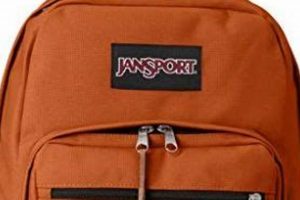
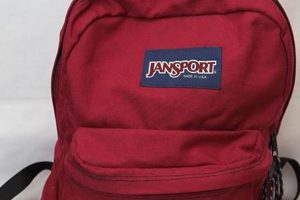
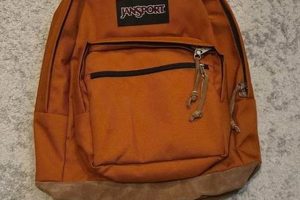
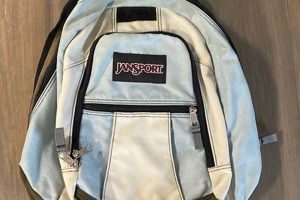
The cleaning procedure for a JanSport backpack involves removing dirt, stains, and odors from the fabric and components. This process aims to restore the backpack to a cleaner, more presentable condition and prolong its lifespan. A typical example would involve removing loose items, pretreating stains, and then either hand-washing or machine-washing the pack.
Maintaining a clean backpack offers several benefits. Regular cleaning prevents the buildup of dirt and grime, which can degrade the fabric over time. It also eliminates potential sources of unpleasant odors and improves hygiene, especially for backpacks used for school, travel, or sports. Historically, cleaning backpacks was often a labor-intensive process, but modern detergents and washing machines have simplified it.
The following sections will detail specific methods for cleaning a JanSport backpack, including preparing the backpack for cleaning, appropriate washing techniques, and proper drying procedures.
Cleaning a JanSport Backpack
This section provides key insights to optimize the backpack cleaning process and ensure its longevity.
Tip 1: Empty All Compartments: Thoroughly check all pockets and compartments. Remove pens, papers, and any loose items. Overlooking these items may result in staining or damage during the washing cycle.
Tip 2: Pre-Treat Stains: Address visible stains, such as ink or food residue, before washing. Apply a mild stain remover directly to the affected area and let it sit for a few minutes. Avoid harsh chemicals that could discolor the fabric.
Tip 3: Protect Hardware: Zippers and buckles can be damaged during machine washing. Place the backpack inside a pillowcase or mesh laundry bag to minimize friction and prevent damage.
Tip 4: Use Gentle Detergent: Select a mild, non-bleach laundry detergent. Harsh detergents can strip the fabric’s color and weaken its fibers. Follow the detergent’s instructions for appropriate dosage.
Tip 5: Choose the Correct Washing Cycle: If machine washing, opt for a delicate or gentle cycle with cold water. Hot water can cause colors to fade and may shrink the fabric.
Tip 6: Air Dry Thoroughly: Avoid using a machine dryer, as high heat can damage the backpack’s material and hardware. Hang the backpack upside down in a well-ventilated area until completely dry.
Tip 7: Check for Residual Moisture: Before storing or using the backpack, verify that all parts, including pockets and seams, are completely dry. Lingering moisture can lead to mold or mildew growth.
Adhering to these recommendations will contribute to effective cleaning and prolonged backpack usability. Implementing these steps preserves the backpack’s appearance and functionality.
The final section will offer a concluding summary of the complete cleaning procedure.
1. Empty all pockets

The instruction “Empty all pockets” represents a foundational step in the procedure for cleaning a JanSport backpack. This seemingly simple action is crucial for several reasons directly impacting the efficacy and outcome of cleaning. Failure to adequately clear the backpack’s compartments risks introducing foreign objects into the wash, which can damage both the backpack and the washing machine. Pens, loose change, or even small pieces of paper can cause staining, tearing, or mechanical malfunctions.
Consider a scenario where a pen is inadvertently left in a backpack pocket. During the wash cycle, the pen could leak ink, leading to permanent discoloration of the backpack’s fabric. Similarly, metallic objects such as paperclips or keys can damage the washing machine’s drum. From a practical perspective, the effort required to empty the pockets is minimal compared to the potential consequences of neglecting this step. Therefore, prioritizing “Empty all pockets” as the primary action ensures a smoother and more successful cleaning process.
In conclusion, the directive to empty all pockets is not merely a preliminary task, but an integral element in the proper execution of cleaning a JanSport backpack. By systematically clearing each compartment, individuals can prevent damage, avoid unnecessary complications, and ultimately achieve a cleaner and more refreshed backpack. Ignoring this instruction can lead to avoidable setbacks, underscoring its importance within the overall cleaning process.
2. Pre-treat any stains

The directive “Pre-treat any stains” represents a critical phase within the process of cleaning a JanSport backpack. This step addresses localized areas of concentrated soiling prior to the primary wash, significantly enhancing the overall effectiveness of the cleaning regimen. The failure to pre-treat stains often results in their persistence even after a complete wash cycle, necessitating repeated cleaning attempts or leaving the backpack permanently marked.
- Enhancement of Cleaning Efficacy
Pre-treating stains disrupts the bond between the staining agent and the fabric fibers. This allows the detergent in the subsequent wash cycle to more effectively lift and remove the stain. Without pre-treatment, certain substances, such as grease or ink, may become deeply embedded, rendering them resistant to conventional washing methods. A practical example is the application of stain remover to a grease stain before machine washing; this significantly increases the likelihood of complete removal compared to washing alone.
- Prevention of Stain Setting
The heat and agitation of a washing machine can cause certain stains to set permanently into the fabric. Pre-treatment mitigates this risk by loosening the stain before it is subjected to these conditions. For instance, bloodstains, if not pre-treated with a cold water soak, may coagulate and become irremovable when exposed to warm water in the washing machine. Therefore, early intervention through pre-treatment is essential.
- Targeted Application of Cleaning Agents
Pre-treating enables the targeted application of specific cleaning agents tailored to the type of stain. Different stains require different approaches; for example, enzymatic stain removers are effective on protein-based stains like blood or grass, while solvent-based removers are more suitable for grease or oil. This specificity maximizes the effectiveness of the cleaning process while minimizing the risk of damage to the backpack’s fabric.
- Preservation of Backpack Aesthetics
Consistent and effective stain removal contributes directly to the preservation of the backpack’s aesthetic appeal. Neglecting pre-treatment can lead to a gradual accumulation of stains, resulting in a worn and unkempt appearance. Regular pre-treatment, coupled with proper washing, maintains the backpack’s original color and texture, extending its usable lifespan and enhancing its perceived value.
The outlined facets underscore the pivotal role of pre-treatment in the successful cleaning of a JanSport backpack. The practice contributes not only to the immediate removal of unsightly blemishes but also to the long-term preservation of the backpack’s integrity and visual presentation. Accordingly, integrating pre-treatment as a standard step is highly recommended.
3. Gentle cycle selection

The selection of a gentle cycle on a washing machine is a critical consideration in the proper procedure for cleaning a JanSport backpack. This choice directly influences the longevity and aesthetic integrity of the backpack due to the delicate nature of its materials and construction.
- Minimization of Fabric Stress
A gentle cycle utilizes reduced agitation and spin speeds compared to standard or heavy-duty cycles. This decreased mechanical stress is particularly important for materials such as nylon or polyester commonly found in JanSport backpacks. Vigorous washing can lead to fiber weakening, abrasion, and eventual tearing, especially at seams and stress points. For example, a backpack subjected to repeated heavy-duty cycles will likely exhibit premature wear compared to one washed on a gentle cycle.
- Preservation of Color and Finishes
Intense washing cycles can accelerate the fading of dyes and the breakdown of protective finishes applied to the fabric. Ultraviolet (UV) resistant coatings, water-repellent treatments, and printed designs are susceptible to damage from prolonged exposure to high agitation and harsh detergents. A gentle cycle minimizes the rate of color loss and protects the integrity of these finishes, preserving the backpack’s original appearance for a longer period.
- Protection of Hardware and Components
Buckles, zippers, and other hardware components on a backpack can be damaged or dislodged during aggressive washing cycles. The reduced agitation of a gentle cycle minimizes the risk of these components being forcefully impacted against the washing machine drum or against each other. This, in turn, prevents breakage, bending, or detachment, ensuring the backpack remains fully functional after cleaning.
- Mitigation of Shrinkage and Warping
High water temperatures and aggressive spin cycles can induce shrinkage or warping of the backpack’s fabric and structural elements. A gentle cycle typically employs cooler water temperatures and lower spin speeds, reducing the likelihood of these undesirable outcomes. This is especially important for backpacks with rigid frames or padded sections that are more prone to distortion under extreme conditions.
The aforementioned facets illustrate the integral role of gentle cycle selection in the context of cleaning a JanSport backpack. By mitigating fabric stress, preserving color and finishes, protecting hardware, and minimizing shrinkage, this practice contributes significantly to maintaining the backpack’s condition and extending its lifespan. Deviation from this recommendation can lead to accelerated wear and reduced usability.
4. Mild detergent usage

The employment of a mild detergent is paramount within the recommended procedures for washing a JanSport backpack. The selection of an appropriate cleaning agent directly impacts the backpack’s structural integrity, colorfastness, and overall lifespan. A departure from this guideline introduces the risk of damage and premature wear.
- Prevention of Fabric Degradation
Harsh detergents frequently contain strong chemicals, such as bleach or enzymes, that can degrade the fibers in the backpack’s fabric, typically nylon or polyester. These chemicals can weaken the material over time, leading to tearing, fraying, or reduced water resistance. A mild detergent, conversely, is formulated to gently lift dirt and stains without compromising the fabric’s structural integrity. As an example, repeated washing with a strong detergent might cause a nylon backpack to lose its shape and tear easily under stress, whereas a backpack washed with a mild detergent would retain its form and durability.
- Maintenance of Color Integrity
Aggressive detergents can strip the dyes from the backpack’s fabric, causing colors to fade or bleed. This is particularly problematic for backpacks with bright colors or intricate designs. Mild detergents are designed to be color-safe, preserving the vibrancy of the fabric and preventing unsightly discoloration. For instance, a brightly colored JanSport backpack washed with a standard laundry detergent may fade noticeably after just a few washes, while a backpack washed with a mild, color-safe detergent would maintain its original hue for a longer period.
- Protection of Water-Resistant Coatings
Many JanSport backpacks are treated with a durable water repellent (DWR) coating to provide water resistance. Harsh detergents can strip away this coating, diminishing the backpack’s ability to repel water and making it more susceptible to soaking and damage. Mild detergents are less likely to affect the DWR coating, preserving the backpack’s ability to protect its contents from moisture. A backpack washed regularly with a strong detergent might lose its water resistance within a few months, requiring the application of a new DWR coating, whereas a backpack washed with a mild detergent would retain its water resistance for a significantly longer period.
- Mitigation of Allergic Reactions
Residue from strong detergents can remain in the backpack’s fabric after washing, potentially causing skin irritation or allergic reactions, especially for individuals with sensitive skin. Mild detergents are formulated to rinse more completely, reducing the likelihood of residue buildup and minimizing the risk of adverse skin reactions. For example, a student using a backpack washed with a harsh detergent might experience itching or redness on their back, while the use of a mild detergent would eliminate this concern.
These interconnected factors underscore the importance of selecting a mild detergent when cleaning a JanSport backpack. By preventing fabric degradation, maintaining color integrity, protecting water-resistant coatings, and mitigating allergic reactions, the use of a mild detergent contributes significantly to the backpack’s longevity and user comfort. The seemingly minor choice of detergent has a profound impact on the overall success of the cleaning process and the backpack’s continued usability.
5. Air dry only
The instruction “Air dry only” is a critical component of the backpack cleaning procedure. This directive stems from the inherent material properties of JanSport backpacks and the potential for damage arising from machine drying. The elevated temperatures within a machine dryer can compromise the structural integrity of the backpack’s fabric, hardware, and protective coatings. The forced convection and tumbling action can induce shrinkage, warping, and delamination of bonded layers. The consequence of neglecting this instruction is often a significantly reduced lifespan for the backpack and compromised functionality. For example, exposing a JanSport backpack to high dryer heat may melt or distort plastic buckles, shrink the fabric, and degrade any water-resistant treatments applied to the material.
The practical application of “Air dry only” involves suspending the backpack in a well-ventilated area, ideally away from direct sunlight, to facilitate evaporative drying. Inversion of the backpack is recommended to promote drainage and prevent moisture accumulation in the base. Ensuring adequate airflow is crucial to expedite the drying process and inhibit the growth of mold or mildew. As an illustration, hanging a backpack upside down on a clothesline in a shaded area allows for efficient evaporation without exposing the fabric to damaging ultraviolet radiation. This method minimizes the risk of material degradation and ensures thorough drying, preventing odor development.
In summary, the adherence to “Air dry only” is non-negotiable for preserving the quality and usability of a JanSport backpack after cleaning. This practice mitigates the risk of heat damage, prevents deformation, and safeguards any specialized coatings applied to the fabric. Ignoring this instruction can lead to irreversible damage and a shortened product lifespan, undermining the effort invested in the cleaning process. Thus, “Air dry only” must be recognized as an essential step in the comprehensive care routine for a JanSport backpack.
6. Inspect for moisture
The instruction to “Inspect for moisture” is a critical endpoint within the JanSport backpack cleaning procedure. Its significance arises from the potential for residual dampness to foster microbial growth and material degradation within the backpack’s fabric and internal structure. The effectiveness of washing a JanSport backpack hinges not only on stain removal but also on ensuring complete dryness to prevent secondary issues. Neglecting moisture inspection may negate the benefits of the cleaning process, leading to odor development, mold formation, and weakening of the fabric fibers. A real-life example is a backpack stored before complete drying; this commonly results in a musty odor and potential structural damage, requiring subsequent cleaning efforts.
The practical application of “Inspect for moisture” involves a multi-faceted approach. This includes a visual assessment of all compartments, pockets, and seams for any signs of dampness. Tactile examination of the fabric can reveal hidden moisture, particularly in densely padded areas or along the seams. Proper inspection necessitates turning the backpack inside out to examine the lining and the interior of pockets. Specific attention should be paid to areas that are slow to dry, such as the base of the backpack or areas with multiple fabric layers. In addition, employing a moisture meter can provide a quantitative assessment of moisture levels in critical areas. If moisture is detected, further air-drying or the use of a dehumidifier may be necessary to achieve complete dryness.
In summary, “Inspect for moisture” represents a vital quality control step in the process. The failure to diligently inspect and address residual moisture can lead to long-term damage, compromising the backpack’s integrity and usability. This instruction should be viewed as integral to the overall washing routine, ensuring the desired outcome of a clean, hygienic, and durable backpack. This step bridges the act of washing and the subsequent storage or use of the backpack, safeguarding against potential complications and extending its service life.
Frequently Asked Questions
The following section addresses common inquiries regarding the proper methods and considerations for cleaning JanSport backpacks, ensuring both effective sanitation and preservation of the backpack’s condition.
Question 1: What is the optimal frequency for cleaning a JanSport backpack?
The appropriate cleaning interval depends on usage frequency and environmental exposure. Backpacks used daily should be cleaned at least once per semester or quarterly. Backpacks exposed to heavy soiling or spills require immediate cleaning.
Question 2: Can all JanSport backpacks be machine washed?
While many JanSport backpacks are machine washable, checking the care label is crucial. Certain models with specialized components or materials may require hand washing to prevent damage.
Question 3: What type of detergent is recommended for cleaning a JanSport backpack?
A mild, non-bleach laundry detergent is recommended. Harsh detergents can strip the fabric’s color and weaken its fibers.
Question 4: What water temperature should be used when washing a JanSport backpack?
Cold water is the optimal choice for washing JanSport backpacks. Hot water can cause colors to fade and may shrink the fabric.
Question 5: Is it permissible to use a machine dryer to dry a JanSport backpack?
Using a machine dryer is strongly discouraged. High heat can damage the backpack’s material and hardware. Air drying is the recommended method.
Question 6: How can mold or mildew be removed from a JanSport backpack?
For mold or mildew removal, a solution of diluted white vinegar and water can be applied to the affected areas. Ensure the backpack is thoroughly dried after treatment to prevent recurrence.
These answers provide clarification on common cleaning concerns. Adhering to these guidelines ensures the longevity and cleanliness of the backpack.
The subsequent segment will synthesize all facets of the cleaning process into a concluding summary.
How to Wash JanSport Backpack
This exploration of how to wash JanSport backpack has illuminated critical procedures for maintaining the integrity and cleanliness of these items. The process encompasses several key stages: emptying compartments, pretreating stains, selecting a gentle wash cycle with mild detergent, ensuring thorough air drying, and meticulously inspecting for residual moisture. Each step contributes to both stain removal and the prevention of damage. Proper adherence to these guidelines extends the usable lifespan of the backpack, safeguards its aesthetic appeal, and minimizes the risk of microbial growth.
The presented information serves as a foundation for responsible backpack maintenance. Consistent application of these cleaning practices is essential not only for hygiene but also for preserving the functional and economic value of the backpack. Understanding and implementing these procedures ensures that a JanSport backpack remains a reliable and presentable asset for years to come. The longevity and utility of the backpack ultimately depend on the diligence and thoroughness with which these cleaning recommendations are followed.