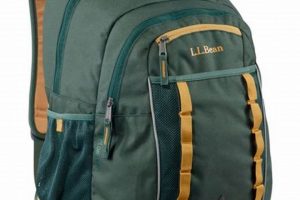
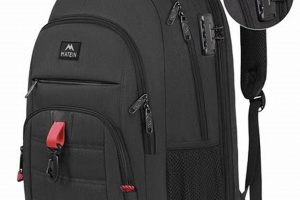
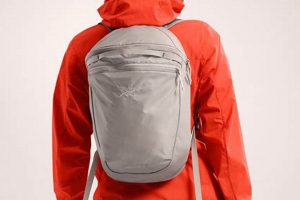
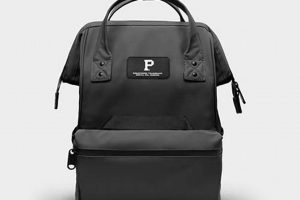
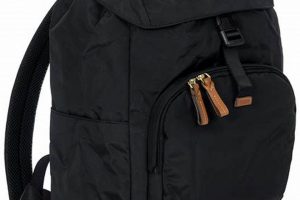
The term refers to a carrying device, typically made of durable material, designed to be worn on a person’s back, commonly used by students, travelers, and outdoor enthusiasts. It serves as a convenient method for transporting books, supplies, clothing, or gear. For instance, a student might use this to carry textbooks and a laptop between classes, or a hiker could utilize one to carry food, water, and camping equipment.
The utility of this carrying solution lies in its ability to distribute weight evenly across the wearer’s back, thereby reducing strain compared to carrying items in hand or on one shoulder. The origins of this design can be traced back centuries, with modern iterations incorporating ergonomic features and specialized compartments. Its widespread adoption reflects its adaptability and practicality in various settings.
The subsequent sections will delve into specific types of these portable storage solutions, examining their construction, intended uses, and key features that differentiate them within the broader market. Detailed analysis of materials, sizing, and load-bearing capacity will provide a comprehensive understanding of their diverse applications.
Backpack Utilization Optimization Tips
The following recommendations aim to improve the efficiency and comfort of using a back-worn carrying device for various activities. Adhering to these guidelines can mitigate potential physical strain and prolong the lifespan of the equipment.
Tip 1: Weight Distribution. Ensure heavier items are positioned closer to the wearer’s back, ideally between the shoulder blades. This minimizes leverage and reduces strain on the back and shoulders. For example, place textbooks or a laptop against the back panel.
Tip 2: Proper Adjustment. Adjust shoulder straps to ensure a snug fit, preventing excessive bouncing or swaying. The bottom of the pack should rest just above the hips. An ill-fitting pack can lead to discomfort and potential injury.
Tip 3: Utilize Compression Straps. Compression straps, if present, should be tightened to secure the load and minimize shifting. This prevents contents from settling at the bottom and creating an unbalanced load.
Tip 4: Employ Organizational Compartments. Utilize designated compartments to segregate items and maintain order. Separating sharp or heavy objects from fragile items prevents damage and facilitates accessibility.
Tip 5: Regular Inspection and Maintenance. Periodically inspect the pack for signs of wear and tear, such as frayed straps, damaged zippers, or compromised seams. Address minor repairs promptly to prevent further deterioration.
Tip 6: Consider Weight Limits. Adhere to the manufacturer’s recommended weight limit to avoid overloading the pack. Exceeding the specified capacity can damage the pack and increase the risk of injury. A general guideline is to keep the total weight below 20% of the wearer’s body weight.
Effective implementation of these techniques optimizes the utility of back-worn carrying devices, promoting comfort, minimizing physical strain, and extending the lifespan of the equipment. Proper usage contributes to both personal well-being and the longevity of the investment.
The subsequent sections will focus on specific types of these devices and their suitability for different applications, providing a comprehensive overview of the available options.
1. Capacity

Capacity, in the context of back-worn carrying devices, directly influences the volume of items that can be transported, thereby affecting the user’s ability to undertake specific tasks or activities. Insufficient capacity limits the quantity of essential items, such as textbooks, equipment, or supplies, potentially hindering academic performance, outdoor adventures, or professional responsibilities. Conversely, excessive capacity may encourage over-packing, leading to increased weight and subsequent physical strain. For example, a student with a limited-capacity pack may be forced to carry additional items in hand, while an outdoorsman with an oversized pack may load unnecessary gear, increasing fatigue during a hike.
The appropriate capacity depends on the intended application. A daypack for urban commuting typically requires less volume than a multi-day hiking pack. Selecting the optimal capacity is thus a crucial factor in ensuring both utility and comfort. Manufacturers often express capacity in liters or cubic inches, providing a standardized measure for comparison. Real-world examples include a 20-liter pack suitable for daily commutes, a 40-liter pack ideal for weekend hiking trips, and a 70-liter pack designed for extended backpacking expeditions. Proper estimation and planning are required to avoid under- or over-utilization of available space.
Ultimately, the relationship between capacity and back-worn carrying device effectiveness is a critical consideration. The challenge lies in balancing the need for sufficient space with the ergonomic limitations of carrying weight on one’s back. Ignoring this balance can lead to discomfort, injury, or a compromised ability to achieve the intended purpose for using the carrying device. Therefore, a thorough assessment of individual needs and a careful evaluation of capacity specifications are paramount to successful utilization.
2. Weight distribution

Weight distribution is a critical factor influencing the effectiveness and safety of back-worn carrying devices. Uneven or improper distribution can lead to discomfort, injury, and reduced overall carrying capacity, negating many of the potential benefits. Proper weight management is paramount to optimizing utility and minimizing physical strain.
- Proximity to Center of Gravity
Placing heavier items closer to the wearer’s center of gravity, specifically near the spine, reduces the torque exerted on the body. This minimizes strain on the back muscles and promotes better balance. For instance, positioning books or a laptop against the back panel, rather than further out, lessens the perceived weight and improves stability.
- Vertical Arrangement
A vertical arrangement of items, with heavier objects at the mid-to-upper back, encourages a more upright posture. Stacking lighter items at the bottom reduces the risk of excessive lower back curvature. This arrangement simulates a more natural load distribution, alleviating pressure on specific spinal regions.
- Lateral Balance
Ensuring lateral balance prevents the wearer from leaning to one side, which can cause muscle imbalances and spinal misalignment. Distributing items evenly between the left and right sides of the pack ensures a more stable and comfortable carrying experience. Failure to achieve lateral balance can lead to chronic pain and postural problems.
- Internal Stabilization
Utilizing compression straps and internal dividers within the pack prevents items from shifting during movement. Shifting weight increases the risk of imbalance and places added stress on the wearer’s muscles. A stabilized load minimizes dynamic forces and improves overall control, particularly during activities involving changes in direction or terrain.
In conclusion, effective weight distribution is essential for maximizing the utility and minimizing the risks associated with using a back-worn carrying device. By adhering to principles of proximity, vertical arrangement, lateral balance, and internal stabilization, wearers can optimize their carrying experience and mitigate potential negative impacts on their physical well-being. These considerations are particularly crucial for individuals carrying heavy loads or engaging in prolonged periods of activity.
3. Strap adjustment
Strap adjustment is a critical element in optimizing the functionality of a back-worn carrying device. It directly influences comfort, stability, and the distribution of weight across the wearer’s body, thus affecting overall user experience. Proper adjustment mitigates the risk of injury and enhances carrying efficiency.
- Shoulder Strap Length
The length of the shoulder straps determines the position of the pack on the wearer’s back. Excessively long straps cause the pack to sag, placing undue stress on the shoulders and lower back. Conversely, overly short straps restrict movement and can lead to discomfort in the upper back and neck. Ideally, the bottom of the pack should rest just above the hips, with the straps snug but not constricting.
- Load Lifter Straps
Load lifter straps, typically found on larger packs, connect the top of the shoulder straps to the pack frame. When properly adjusted, these straps pull the pack closer to the wearer’s body, improving balance and reducing strain on the shoulders. A 45-degree angle between the shoulder strap and the load lifter strap is generally considered optimal for effective weight transfer.
- Sternum Strap Tension
The sternum strap connects the shoulder straps across the chest, preventing them from slipping off the shoulders and improving stability. The tension on the sternum strap should be moderate, enough to keep the shoulder straps in place without restricting breathing or causing discomfort. An improperly adjusted sternum strap can exacerbate pressure points on the shoulders or chest.
- Hip Belt Placement and Tightness
A hip belt transfers a significant portion of the pack’s weight from the shoulders to the hips, where larger muscles can more easily bear the load. The hip belt should be positioned so that it rests on the iliac crest (the top of the hip bones), and it should be tightened snugly but not so tightly as to cause pain or restrict movement. Correct hip belt placement and tension are essential for maximizing comfort and minimizing the risk of back pain.
The cumulative effect of these adjustments dictates the overall effectiveness of the back-worn carrying device. Neglecting proper strap adjustment can lead to discomfort, pain, and even injury, undermining the purpose of using the pack in the first place. A thorough understanding of adjustment principles and careful attention to individual fit are crucial for optimizing the carrying experience.
4. Compartmentalization

Compartmentalization, in the context of back-worn carrying devices, refers to the organization of internal space using dividers, pockets, and specialized sections. It is a critical design element influencing accessibility, protection, and overall usability of the pack. Effective compartmentalization optimizes space utilization and enhances the user experience.
- Dedicated Device Storage
This facet involves designated compartments specifically designed for electronic devices such as laptops, tablets, or smartphones. These compartments often feature padding or protective linings to safeguard against impacts and scratches. For instance, a padded laptop sleeve can prevent damage to a computer during transit. The presence of dedicated device storage enhances the pack’s functionality for students, professionals, and travelers.
- Specialized Pockets for Small Items
These smaller pockets cater to the organization of pens, keys, wallets, and other frequently accessed items. Strategically placed pockets allow for quick retrieval of essential items without requiring a complete unpacking of the main compartment. For example, a small zippered pocket on the top of the pack might hold sunglasses or a phone. Their presence promotes efficiency and prevents loss or disorganization.
- Segregation of Clean and Dirty Items
This aspect emphasizes the separation of clean clothing or equipment from soiled or wet items. Water-resistant or isolated compartments can prevent the contamination of clean items. A common example is a separate shoe compartment in a gym pack, preventing dirt and odors from affecting clothing. This segregation is particularly relevant for athletic or outdoor applications.
- Organization for Task-Specific Equipment
This involves compartments tailored to specific tasks or activities, such as photography, hiking, or medical response. These sections may include dividers, straps, or specialized holders to secure and organize equipment. For instance, a photography pack might feature padded dividers to protect lenses and cameras. This level of specialization enhances the pack’s utility for professionals and hobbyists.
The multifaceted nature of compartmentalization underscores its importance in the design and functionality of back-worn carrying solutions. By catering to specific organizational needs, these features significantly contribute to user satisfaction and the overall effectiveness of the carrying device. The integration of dedicated device storage, specialized pockets, segregated areas, and task-specific organization transforms a simple carrying device into a sophisticated and adaptable tool for diverse applications.
5. Material durability

Material durability is a foundational aspect of back-worn carrying device utility and longevity. The choice of materials directly impacts the ability of the pack to withstand wear and tear, protect contents, and maintain structural integrity under varying conditions. A compromise in material quality invariably results in reduced performance and a shorter lifespan for the equipment.
- Abrasion Resistance
This characteristic dictates the material’s ability to resist surface damage from rubbing or scraping against abrasive surfaces. High abrasion resistance is crucial for packs used in outdoor environments or for carrying heavy loads, where contact with rocks, branches, or rough surfaces is common. For example, packs constructed from Cordura nylon exhibit superior abrasion resistance compared to those made from standard polyester, extending their usability in demanding conditions. The implication is a reduced likelihood of tears, punctures, or general wear, preserving the pack’s functionality and appearance.
- Tear Strength
Tear strength refers to the material’s ability to resist tearing or ripping when subjected to tensile stress. This property is particularly important in areas of high stress, such as seams, straps, and attachment points. Materials with high tear strength, such as ripstop nylon, are designed to prevent small tears from propagating, thereby mitigating catastrophic failures. For instance, a pack made with ripstop fabric will contain a small tear, preventing it from expanding across the entire panel. The outcome is enhanced structural integrity and a prolonged useful life, particularly under strenuous usage.
- Water Resistance/Waterproofness
The ability of the material to repel water is critical for protecting the contents of the pack from moisture damage. Water resistance is typically achieved through coatings or treatments applied to the fabric, while waterproofness involves using impermeable materials or laminates. Examples include packs with a Durable Water Repellent (DWR) finish or those constructed from waterproof fabrics like TPU-coated nylon. Water resistance protects contents from light rain or splashes, while waterproofness provides complete protection during heavy downpours or submersion. The consequence is the preservation of sensitive items such as electronics, documents, or clothing.
- UV Resistance
Prolonged exposure to ultraviolet (UV) radiation can degrade many materials, causing them to become brittle, fade in color, or lose strength. UV resistance is achieved through the use of UV-resistant fibers or coatings. Packs used in environments with high sun exposure, such as desert or alpine regions, benefit significantly from UV-resistant materials. For example, a pack made with UV-treated polyester will maintain its color and structural integrity for a longer period compared to one made with untreated material. The resulting benefit is extended material lifespan and sustained aesthetic appeal, even under harsh environmental conditions.
These facets of material durability collectively determine the overall reliability and longevity of a back-worn carrying device. The selection of appropriate materials, tailored to the intended use and environmental conditions, is paramount to maximizing performance and minimizing the need for frequent replacements. High-quality materials represent a significant investment that translates to long-term cost savings and enhanced user satisfaction. Therefore, careful consideration of material properties is a key factor in the informed selection and effective utilization of back-worn carrying equipment.
6. Ergonomic design

Ergonomic design is an indispensable component of a well-functioning back-worn carrying device. The integration of ergonomic principles directly influences user comfort, posture, and the potential for long-term physical strain. Suboptimal designs can lead to back pain, shoulder discomfort, and neck stiffness, negating the intended benefits of portability. A cause-and-effect relationship exists: improper design leads to physical stress, while effective design mitigates such stress. For example, a carrying device lacking padded shoulder straps and a supportive hip belt will concentrate weight on the shoulders, leading to fatigue and potential injury. Ergonomic design, therefore, is not merely an aesthetic consideration but a functional imperative.
Practical applications of ergonomic design in these devices manifest in several key features. Contoured shoulder straps distribute weight evenly across the shoulders, reducing pressure points. Adjustable torso lengths accommodate a range of body sizes, ensuring a proper fit. Lumbar support pads provide lower back reinforcement, maintaining spinal alignment. Furthermore, breathable back panels facilitate ventilation, minimizing perspiration and discomfort during extended use. An example of this is a hiking pack designed with an adjustable suspension system to match the user’s torso length, transferring the majority of the weight to the hips, thereby reducing strain on the back and shoulders during long treks. These features, when implemented effectively, enhance user experience and promote physical well-being.
In summary, ergonomic design is integral to the overall utility of a back-worn carrying solution. Its effectiveness is measured by its ability to minimize physical strain and maximize user comfort. Challenges remain in accommodating diverse body types and activity levels, requiring continuous innovation and refinement of design principles. Recognizing the practical significance of ergonomic considerations ensures that the carrying device functions not only as a convenient means of transport but also as a tool that actively supports the user’s physical health and well-being.
7. Load stabilization

Load stabilization is a critical component of effective carrying device utilization optimization, influencing both user comfort and physical safety. Unstable loads within a back-worn carrying system create dynamic forces that disrupt balance and increase energy expenditure. This instability necessitates compensatory movements, leading to muscular strain and potential for injury. For example, an unstable load during hiking on uneven terrain requires constant adjustments, increasing fatigue and the risk of falls. Load stabilization is not simply about minimizing movement; it is about maintaining postural control and reducing the biomechanical burden on the user.
The implementation of load stabilization principles involves several practical measures. Internal compression straps minimize shifting by securing contents within the main compartment. External compression straps reduce the overall volume of the pack, preventing items from settling at the bottom. Furthermore, proper packing techniques, such as placing heavier items closer to the spine, contribute to load stability. A real-world illustration is a cyclist using a carrying solution with a hydration bladder; securing the bladder prevents sloshing, improving balance and reducing distractions. These techniques directly impact the efficiency and safety of carrying solutions.
Effective carrying device utilization optimization relies on a holistic approach that integrates load stabilization with other ergonomic considerations, such as proper fit and weight distribution. Challenges remain in designing systems that accommodate a wide range of load sizes and shapes while maintaining stability. Addressing these challenges requires continuous innovation in carrying device design and a greater emphasis on user education regarding packing and adjustment techniques. Ultimately, load stabilization is an essential element in maximizing the functionality of back-worn carrying solutions and minimizing the risks associated with their use.
Frequently Asked Questions about Backpack Utilization Optimization
The following questions and answers address common concerns and provide clarity regarding the efficient and safe use of back-worn carrying devices.
Question 1: What is the recommended weight limit for a backpack to avoid potential injuries?
The recommended weight limit generally should not exceed 20% of an individual’s body weight. Exceeding this limit can increase the risk of back pain, shoulder discomfort, and postural problems. It is important to consider individual physical condition and activity level when determining appropriate load.
Question 2: How often should a backpack’s straps be adjusted?
Strap adjustments should be made before each use to ensure proper fit and weight distribution. Variations in clothing or load volume necessitate frequent adjustments to maintain optimal comfort and stability.
Question 3: What are the key indicators that a backpack is overloaded?
Key indicators of an overloaded backpack include difficulty standing upright, experiencing significant shoulder or back pain, visible strain on the straps and seams, and a general feeling of instability while walking.
Question 4: What materials offer the best combination of durability and lightweight construction for backpack manufacturing?
Ripstop nylon and Cordura nylon provide a balance of durability and lightweight construction. These materials offer good abrasion resistance and tear strength, essential for withstanding the rigors of frequent use.
Question 5: How does compartmentalization contribute to efficient backpack utilization?
Compartmentalization promotes organization, prevents items from shifting during movement, and protects delicate contents from damage. Designated compartments also facilitate quick access to frequently used items.
Question 6: Is there a correlation between backpack design and postural alignment?
Yes, backpack design significantly influences postural alignment. Ergonomic designs with contoured shoulder straps, lumbar support, and adjustable torso lengths promote proper spinal alignment and reduce the risk of postural problems.
Proper understanding and implementation of these principles are crucial for safe and efficient use of back-worn carrying devices, minimizing potential risks and maximizing user comfort.
The next section will explore specific types of backpacks and their suitability for various activities and applications.
Backpack Utilization Optimization
This exploration of back-worn carrying device utilization optimization (backpack uo) has highlighted the critical interplay between capacity, weight distribution, strap adjustment, compartmentalization, material durability, ergonomic design, and load stabilization. Each element contributes significantly to the comfort, safety, and overall effectiveness of carrying solutions. Understanding these factors is essential for mitigating potential physical strain and maximizing the lifespan of the equipment.
The principles outlined herein represent a foundation for informed decision-making regarding back-worn carrying devices. Continued adherence to these guidelines, coupled with ongoing innovation in design and manufacturing, will facilitate improvements in user experience and contribute to the responsible and sustainable use of these widely employed tools. Individuals are encouraged to apply these principles to their own specific needs and circumstances, thereby enhancing their well-being and promoting responsible carrying practices.