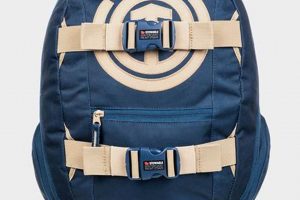
Modular Lightweight Load-carrying Equipment (MOLLE) allows for the customization and expansion of a backpack’s carrying capacity. This system typically involves durable nylon webbing stitched onto the pack, creating a grid onto which compatible pouches, accessories, and gear can be securely attached. As an example, a user might add a first-aid kit, a water bottle holder, or a radio pouch to their existing pack using these adaptable fasteners.
The advantage of this modular design lies in its adaptability to diverse operational needs. It enables the user to tailor their load-out based on the specific demands of the situation, increasing efficiency and accessibility of essential items. Originally developed for military applications, this system has found widespread use in civilian contexts, including hiking, camping, law enforcement, and emergency preparedness, highlighting its practicality and enduring value. The evolution of such attachment methods reflects a broader trend towards customizable and scalable equipment solutions.
The following sections will delve into the different types of equipment that can be affixed, the considerations for optimal configuration and weight distribution, and the proper techniques for securing items to ensure a stable and functional load carriage system.
Optimizing Load Carriage with Modular Attachments
The effective use of modular attachment systems requires careful consideration of several factors to ensure optimal performance, comfort, and safety. The following are essential guidelines for maximizing the functionality of equipment using this system.
Tip 1: Prioritize Essential Gear. Select pouches and accessories based on mission-critical items needed for immediate access. Avoid overloading with non-essential equipment that adds unnecessary weight and bulk.
Tip 2: Distribute Weight Evenly. Position heavier items closer to the center of the back and as high as possible. This minimizes strain and maintains balance, preventing fatigue and potential injury.
Tip 3: Secure Attachments Properly. Weave straps tightly and securely through the grid to prevent shifting or detachment during movement. Regularly inspect attachments for wear and tear, replacing damaged straps as needed.
Tip 4: Optimize Accessibility. Arrange pouches and accessories according to frequency of use. Items needed most often should be placed within easy reach, minimizing the need to remove the backpack.
Tip 5: Consider Environmental Conditions. Choose weather-resistant pouches and covers to protect sensitive equipment from moisture and debris. Adapt the configuration to accommodate seasonal changes and specific operational environments.
Tip 6: Maintain a Low Profile. Avoid excessively bulky or protruding attachments that could snag on obstacles or impede movement. Streamline the overall profile to minimize interference with surroundings.
Tip 7: Practice Attachment Placement. Familiarize yourself with the layout of pouches and accessories through repeated practice. This ensures efficient retrieval of items under pressure or in low-light conditions.
By adhering to these guidelines, users can enhance the functionality and comfort of their load-carrying system, improving performance and safety in diverse operational environments. Careful planning and execution are crucial to unlocking the full potential of modular attachment systems.
The subsequent section will address specific product recommendations and considerations for selecting appropriate modular attachments based on individual needs and requirements.
1. Compatibility

Compatibility is paramount when integrating modular pouches and accessories with a MOLLE backpack system. Without proper compatibility, attachments may not securely fasten, potentially leading to gear loss or compromising the balance and functionality of the load-carrying system. It is crucial to ensure all components adhere to standardized MOLLE specifications.
- Webbing Dimensions and Spacing
MOLLE systems adhere to specific webbing dimensions (typically 1 inch wide) and spacing (usually 1 inch apart). Incompatible webbing can prevent proper interweaving of attachment straps, resulting in a loose or unstable connection. A pouch designed for narrower webbing may not securely attach to a standard MOLLE grid. Deviation from these standards diminishes attachment integrity.
- Strap and Fastener Design
Attachment straps must be designed to interface correctly with the MOLLE webbing. The length, material, and closure mechanisms (e.g., snaps, hook-and-loop fasteners) of the straps determine the security and ease of attachment. Improper strap length or inadequate fasteners can lead to slippage or detachment, especially under load or during dynamic movement. Inferior strap designs compromise load-bearing capacity.
- Pouch Material and Construction
The durability and structural integrity of both the pouch and the backpack material are significant compatibility factors. Weak or flimsy pouch materials may fail under stress, even if the attachment is technically compatible. Similarly, if the backpack’s MOLLE grid is poorly constructed, it may not adequately support heavier loads or withstand repeated use, ultimately impacting overall system reliability. Material mismatch causes premature wear and tear.
- Load Distribution Considerations
While pouches and accessories may physically attach to the backpack, their placement and weight distribution must also be compatible with the user’s body and intended activities. Overloading one side or area of the pack can create imbalance and discomfort, negating the benefits of modularity. Placement must consider ergonomics and intended use. Ill-considered load distribution diminishes user efficiency and comfort.
The interplay of these compatibility factors ensures that a MOLLE backpack functions as a cohesive and reliable load-carrying system. Any deviation from established standards or oversight in considering these aspects can compromise the system’s effectiveness and user safety. Proper evaluation of compatibility is an investment in long-term reliability and operational success.
2. Weight Distribution

Weight distribution is a critical factor in the effective utilization of modular attachments on a backpack employing a MOLLE (Modular Lightweight Load-carrying Equipment) system. Incorrect distribution can lead to discomfort, fatigue, and potential injury, negating the benefits of a customizable load-carrying platform. The placement of pouches and accessories directly affects the center of gravity and overall balance of the pack. For instance, concentrating heavy items on one side of the backpack creates an uneven load, causing the wearer to compensate, leading to muscle strain and reduced endurance. Prioritizing balanced configurations is vital for optimized performance.
Strategic weight distribution involves positioning heavier items as close to the wearer’s back and as high as possible within the main compartment of the backpack. This minimizes the lever arm effect, reducing the perceived weight and improving stability. Modular attachments enable precise placement of specialized equipment, such as water reservoirs or radio pouches, within this optimal zone. Consider the example of a combat medic: a properly configured MOLLE system allows for the secure and accessible placement of medical supplies, with heavier items near the center of the back, ensuring efficient movement and rapid response capabilities. This tactical advantage demonstrates the practical significance of balanced load distribution.
In conclusion, the effectiveness of MOLLE backpack attachments hinges on thoughtful weight distribution. Failure to consider this aspect compromises comfort, efficiency, and safety. The ability to strategically position gear via the modular system offers an advantage, but requires careful planning and consistent adherence to principles of balance and load management. Prioritizing proper weight distribution is essential for maximizing the utility of modular attachments and ensuring a sustainable load-carrying solution.
3. Attachment Security

Attachment security constitutes a critical factor in the reliable performance of any load-bearing system utilizing modular components. In the context of MOLLE (Modular Lightweight Load-carrying Equipment) backpacks, the secure and stable attachment of pouches and accessories directly impacts the system’s functionality, user safety, and mission effectiveness. Compromised attachment integrity can lead to gear loss, increased physical strain, and operational inefficiencies. Rigorous attention to attachment security is therefore paramount.
- Webbing Integrity and Stitching
The foundation of attachment security lies in the strength and durability of the MOLLE webbing and the associated stitching. High-tenacity nylon webbing, precisely spaced and securely sewn to the backpack, forms the interface for attachment. Weak or frayed webbing, coupled with inadequate stitching, compromises the load-bearing capacity of the system. For example, a medic’s pouch containing critical medical supplies, if attached to a MOLLE grid with compromised webbing, could detach during movement, severely hindering the medic’s ability to provide timely care. The quality of materials and manufacturing directly influence attachment security.
- Attachment Strap Design and Material
The design and material composition of the attachment straps are integral to ensuring a secure connection. Straps must be of sufficient length and width to weave securely through the MOLLE webbing, and constructed from robust materials resistant to abrasion and environmental degradation. Inferior straps made from low-grade materials can stretch, fray, or break under load, jeopardizing attachment security. A common failure point occurs when plastic buckles on attachment straps crack or break under stress, releasing the attached pouch. The selection of appropriate strap materials and durable closure mechanisms is crucial.
- Proper Weaving Technique and Fastening
The method by which attachment straps are woven through the MOLLE webbing significantly impacts security. Straps must be tightly and correctly woven, utilizing all available attachment points, to distribute the load and prevent slippage. Incorrect weaving techniques, such as skipping attachment points or failing to fully secure fasteners, can result in a loose or unstable connection. For example, a poorly attached water bottle pouch might shift during strenuous activity, creating an imbalance and increasing the risk of it detaching completely. Adhering to established best practices for weaving and fastening is essential.
- Regular Inspection and Maintenance
Attachment security is not a static attribute; it requires regular inspection and maintenance to ensure ongoing reliability. Webbing, stitching, and attachment straps should be inspected for signs of wear, tear, or damage. Damaged components should be repaired or replaced immediately. Neglecting routine maintenance can lead to a gradual degradation of attachment security, increasing the risk of gear loss. In military operations, pre-mission equipment checks routinely include verifying the integrity of MOLLE attachments to mitigate potential equipment failures in the field. Proactive maintenance safeguards attachment security.
Collectively, these facets underscore the multifaceted nature of attachment security within the context of MOLLE backpack systems. Reliable performance hinges on the integration of robust materials, sound manufacturing practices, proper usage techniques, and consistent maintenance protocols. A commitment to these principles is fundamental to maximizing the utility and minimizing the risks associated with modular load-carrying equipment. Neglecting these factors can have significant operational consequences.
4. Accessibility
Accessibility, in the context of MOLLE (Modular Lightweight Load-carrying Equipment) backpack attachments, directly correlates with operational efficiency and user safety. The capacity to rapidly retrieve essential items without compromising balance or requiring extensive manipulation of the pack significantly enhances the user’s effectiveness. Conversely, poorly configured attachments can impede access, leading to delays in critical situations. Consider a tactical scenario: a combat medic requiring immediate access to a tourniquet. A MOLLE-compatible pouch, strategically positioned on the exterior of the backpack and readily accessible with one hand, allows for swift deployment of the life-saving device. This direct cause-and-effect relationship underscores the importance of accessibility as a core component of any effective MOLLE system. The practical significance of this understanding lies in its potential to reduce response times and improve outcomes in high-stress environments. Accessibility translates directly to improved performance under pressure.
The design and placement of MOLLE pouches directly influence accessibility. Features such as quick-release buckles, zippered openings, and color-coded compartments enhance the speed and ease of item retrieval. However, excessive layering of pouches or poorly chosen locations can hinder access, creating a bottleneck in critical moments. For instance, a water bottle pouch positioned behind multiple other pouches requires additional steps to access, potentially delaying hydration and reducing performance. Furthermore, the size and configuration of individual pouches must align with the specific items they contain, ensuring a snug fit without hindering access. A well-designed system prioritizes intuitive layout and efficient operation. Another critical aspect is ambidextrous compatibility. A system favoring only right-hand users can severely hamper accessibility for left-handed individuals, leading to operational disadvantages. Equal consideration for both dominant hands fosters versatility and ensures all users can efficiently access their equipment.
In summary, accessibility is a critical factor in determining the effectiveness of MOLLE backpack attachments. Strategic placement, pouch design, and consideration of user ergonomics directly impact the speed and ease of item retrieval. While the modular nature of MOLLE systems offers unparalleled customization, it also presents challenges in achieving optimal accessibility. By prioritizing intuitive layouts, user-friendly features, and ambidextrous compatibility, users can maximize the benefits of MOLLE systems and enhance their operational performance. The ultimate goal is to create a system where essential items are readily accessible, minimizing delays and maximizing effectiveness in all operational scenarios. Compromising on accessibility diminishes the advantages of the system.
5. Durability

Durability constitutes a fundamental requirement for any load-bearing system, and its importance is amplified in the context of MOLLE (Modular Lightweight Load-carrying Equipment) backpack attachments. The operational effectiveness and longevity of a MOLLE system are directly contingent upon the resilience of its components, particularly when subjected to demanding environmental conditions and rigorous use. Material selection, construction techniques, and stress resistance collectively determine the overall durability of these systems.
- Material Composition and Abrasion Resistance
The selection of high-tenacity fabrics, such as Cordura nylon, significantly contributes to the durability of MOLLE attachments. These materials exhibit exceptional resistance to abrasion, tearing, and puncture, protecting the contents of pouches and ensuring the structural integrity of the system. For example, a first-aid pouch constructed from durable nylon can withstand repeated contact with rough surfaces without compromising its protective function. The inherent resilience of the materials safeguards against premature wear and tear, extending the lifespan of the attachments. Inferior materials compromise longevity.
- Stitching Reinforcement and Stress Point Mitigation
Reinforced stitching at stress points, such as attachment points and seam junctions, is crucial for preventing premature failure. Bartack stitching, in particular, provides exceptional strength and stability, distributing load effectively across the fabric. The strategic placement of reinforced stitching mitigates the risk of tearing or separation under stress. Consider a radio pouch that endures constant handling; reinforced stitching at the attachment points prevents the pouch from detaching from the backpack, ensuring reliable communication capabilities. Neglecting stress point reinforcement reduces lifespan.
- Environmental Resistance and Degradation Prevention
Exposure to harsh environmental conditions, including ultraviolet radiation, moisture, and extreme temperatures, can degrade the materials used in MOLLE attachments. Ultraviolet inhibitors and water-resistant coatings can mitigate these effects, extending the lifespan of the system. For instance, a water bottle pouch treated with a water-resistant finish can protect its contents from moisture damage, even in inclement weather. Environmental protection preserves functionality.
- Hardware Quality and Corrosion Resistance
The quality of hardware components, such as zippers, buckles, and snaps, directly impacts the durability of MOLLE attachments. Corrosion-resistant materials, such as stainless steel or anodized aluminum, prevent degradation and ensure reliable operation. A poorly constructed zipper on a utility pouch can fail, rendering the contents inaccessible. Corrosion-resistant hardware ensures continued functionality, even after prolonged exposure to harsh conditions. Low-quality hardware fails prematurely.
The composite effect of these durability factors determines the overall reliability and longevity of MOLLE backpack attachments. A system engineered with robust materials, reinforced stitching, environmental resistance, and high-quality hardware can withstand the rigors of operational use, ensuring the secure and accessible carriage of essential equipment. Conversely, compromising on durability diminishes the system’s effectiveness and increases the risk of equipment failure. A commitment to durability is therefore paramount for ensuring the long-term utility of MOLLE systems.
Frequently Asked Questions
This section addresses common inquiries regarding the selection, utilization, and maintenance of modular attachments designed for use with MOLLE (Modular Lightweight Load-carrying Equipment) backpack systems.
Question 1: What are the standardized dimensions for MOLLE webbing to ensure compatibility?
MOLLE webbing adheres to a standardized one-inch horizontal spacing with one-inch vertical rows. Deviations from these dimensions may compromise attachment security and overall system integrity. Confirmation of adherence to these standards is crucial when selecting compatible pouches and accessories.
Question 2: How does the placement of heavier items on MOLLE attachments affect balance and stability?
Concentrating heavy items on the periphery of the backpack or on one side can negatively impact balance and stability, potentially leading to fatigue and increased risk of injury. The strategic placement of heavier items closer to the wearer’s back and higher within the pack’s main compartment improves weight distribution and minimizes strain.
Question 3: What materials offer the highest level of durability for MOLLE attachment straps?
High-tenacity nylon webbing, such as that meeting military specifications, provides optimal durability for MOLLE attachment straps. These materials offer superior resistance to abrasion, tearing, and UV degradation, ensuring reliable performance under demanding conditions. Inferior materials may fail prematurely, compromising attachment security.
Question 4: How frequently should MOLLE attachments be inspected for wear and tear?
MOLLE attachments should be inspected regularly, particularly before periods of extended use or high-intensity activity. Inspection should include assessment of webbing integrity, stitching strength, and the condition of hardware components. Proactive identification and repair of damage can prevent equipment failure and ensure continued functionality.
Question 5: What factors contribute to optimal accessibility of items stored in MOLLE pouches?
Accessibility is influenced by pouch placement, closure mechanisms, and the overall organization of the MOLLE system. Strategic positioning of frequently used items within easy reach, combined with quick-release buckles or zippered openings, facilitates rapid retrieval. Overlapping or excessively layered pouches can impede access and should be avoided.
Question 6: How does environmental exposure affect the long-term durability of MOLLE attachments, and what mitigation strategies exist?
Prolonged exposure to ultraviolet radiation, moisture, and extreme temperatures can degrade the materials used in MOLLE attachments. Mitigation strategies include the use of UV inhibitors, water-resistant coatings, and storage of equipment in protected environments when not in use. Regular cleaning and maintenance can also extend the lifespan of the attachments.
In conclusion, the proper selection, configuration, and maintenance of MOLLE backpack attachments are critical for maximizing the system’s utility and ensuring reliable performance. Adherence to standardized dimensions, strategic weight distribution, and regular inspection protocols are essential for optimizing functionality and mitigating potential risks.
The next section will summarize the key points discussed throughout this document and offer concluding remarks on the strategic implementation of MOLLE systems.
Conclusion
This document has explored the multifaceted nature of MOLLE backpack attachments, emphasizing the importance of compatibility, weight distribution, attachment security, accessibility, and durability. It has detailed the crucial role each of these elements plays in optimizing load carriage and ensuring the operational readiness of personnel utilizing modular equipment. The exploration highlighted the need for meticulous attention to detail in material selection, design implementation, and maintenance protocols. Proper application of these principles maximizes the effectiveness of MOLLE systems.
The strategic implementation of MOLLE backpack attachments is not merely a matter of affixing pouches to a grid; it is a deliberate process requiring careful planning and execution. Failure to adhere to established standards and best practices can compromise system integrity and user safety. Therefore, a comprehensive understanding of these principles is essential for those responsible for equipping and training personnel utilizing modular load-carrying systems. Continued refinement and standardization of MOLLE systems remains a critical endeavor to ensure optimal performance in diverse operational environments.
![Buy Premium Backpack Boyz Monroe: [Strain Guide] | Ultimate Backpack Traveler Guide: Tips, Destinations & Budget Hacks](https://backpack-traveler.com/wp-content/uploads/2026/05/th-97-300x200.jpg "Buy Premium Backpack Boyz Monroe: [Strain Guide] Ultimate Backpack Traveler Guide: Tips, Destinations & Budget Hacks")