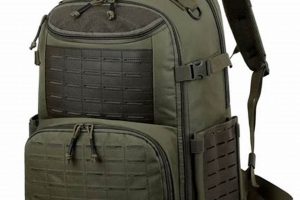
Equipment carriers originating from armed forces supplies, often decommissioned or excess, represent a segment of the outdoor gear market. These items, constructed to meet military specifications, offer durability and functionality. An example includes rucksacks designed for load-bearing in demanding field conditions.
The robust build quality and inherent design features of these packs render them suitable for civilian applications such as hiking, camping, and emergency preparedness. Their historical use in military operations speaks to their reliability under stress, a characteristic valued by outdoor enthusiasts. Furthermore, acquiring these items contributes to resource reuse, minimizing waste and promoting sustainability.
The following sections will delve into specific aspects of these equipment carriers, including their construction materials, load-bearing capabilities, design variations, and considerations for selecting the appropriate type for different activities.
Selection and Utilization Guidance
The following considerations are presented to aid in the informed selection and effective use of load-bearing equipment originally intended for military applications. These points emphasize practical functionality and suitability for various civilian purposes.
Tip 1: Material Assessment: Prioritize models constructed from durable fabrics such as Cordura nylon or reinforced canvas. Inspect stitching and reinforcement points for evidence of wear or potential failure. Military specifications often require high-strength materials capable of withstanding abrasive conditions.
Tip 2: Capacity Evaluation: Determine the necessary volume based on intended usage. Smaller packs are suitable for day hikes, while larger packs accommodate multi-day expeditions. Consider the cubic liter measurement to accurately gauge internal space.
Tip 3: Frame Type Consideration: Internal frame packs offer better weight distribution and stability for heavy loads, whereas external frame packs provide improved ventilation and organizational options. Choose the frame type that best suits the load weight and terrain.
Tip 4: Compartmentalization Analysis: Evaluate the number and arrangement of compartments. Dedicated pockets for water bottles, sleeping bags, and other essential gear enhance organization and accessibility. Consider MOLLE (Modular Lightweight Load-carrying Equipment) webbing for attaching additional pouches.
Tip 5: Fit Adjustment: Ensure the pack provides an adjustable torso length and shoulder straps. A properly fitted pack distributes weight evenly, reducing strain on the back and shoulders. Consult sizing charts and fitting guides for accurate measurements.
Tip 6: Weather Resistance Evaluation: Examine the pack’s ability to withstand inclement weather. Water-resistant coatings or included rain covers protect contents from moisture damage. Consider sealed zippers and reinforced seams for increased water repellency.
Tip 7: Hardware Integrity: Inspect buckles, zippers, and other hardware components for robustness and functionality. Military-grade hardware is designed to withstand significant stress and should operate smoothly under pressure.
Adherence to these recommendations enables informed decision-making and maximizes the utility of robust, load-bearing equipment. Prioritizing durability, capacity, fit, and environmental protection ensures suitability for a range of outdoor activities.
The subsequent section will address the maintenance and care requirements for these items, prolonging their lifespan and optimizing performance.
1. Durability and construction

The defining characteristic of equipment sourced from military surplus lies in its inherent resilience. The construction methods and materials employed during manufacture directly influence the service life and operational suitability of these packs. Rigorous testing protocols, mandated by military standards, necessitate the use of robust fabrics, reinforced stitching, and heavy-duty hardware. This emphasis on durability stems from the extreme conditions encountered during military operations, where equipment failure can have severe consequences. For instance, a rucksack used by special forces units must withstand abrasion from rough terrain, exposure to harsh weather, and the weight of substantial loads, ensuring that crucial supplies remain secure and accessible.
The cause-and-effect relationship between construction and durability is evident in the materials selection process. For example, Cordura nylon, a synthetic fabric renowned for its abrasion resistance, is frequently employed in the construction of these packs. Its tight weave and high tensile strength provide exceptional protection against tears and punctures. Similarly, reinforced stitching, often using multiple rows of thread, prevents seams from unraveling under stress. The selection of robust zippers and buckles, often manufactured from metal or high-strength polymers, ensures that closures remain functional even after repeated use and exposure to extreme temperatures. These construction details directly contribute to the pack’s ability to withstand demanding conditions. Military specifications often require items to pass rigorous testing, like the drop test from a certain height, to prove its durability.
In summary, the durability and construction of packs originating from military surplus constitute their primary value proposition. This robustness is not merely a desirable attribute, but a fundamental requirement dictated by the operational context in which the equipment was originally designed. Understanding the construction techniques and materials employed provides valuable insight into the pack’s suitability for civilian applications, particularly those involving demanding outdoor activities or emergency preparedness scenarios. Although wear and tear are inevitable, packs built to military specifications offer a level of durability unmatched by many commercially available alternatives. The significance of this lies in the sustained reliability and long-term cost-effectiveness they offer.
2. Load-bearing capacity

The capacity to effectively bear a substantial weight is a defining characteristic of equipment sourced from military inventories. This attribute dictates its suitability for diverse applications beyond its original purpose.
- Volume and Weight Distribution
Capacity is determined by volume, typically measured in liters, and the engineered weight distribution. Designs prioritize distributing load across the frame and onto the wearer’s hips, mitigating strain on the back and shoulders. An example is the ALICE pack, where the external frame facilitates carrying heavy, bulky items while maintaining balance.
- Frame Design Impact
The presence and design of a frame, either internal or external, significantly affect load-bearing capabilities. External frames generally permit the carriage of heavier, awkwardly shaped loads, while internal frames offer greater stability and contour to the body. Specialized units might require modified frame systems to accommodate mission-specific equipment.
- Material Strength and Reinforcement
The materials used in construction, such as high-denier nylon or reinforced canvas, directly influence the weight a pack can safely carry. Reinforced stitching and stress points enhance overall structural integrity. The pack must withstand the rigors of field use without compromising its ability to support the intended load. This is exemplified by the MOLLE system which supports a large load by distributing the weight on the vest and hips.
- Practical Implications for Civilian Use
For civilian applications, high load-bearing capacity translates to the ability to carry camping gear, emergency supplies, or tools. However, users must consider ergonomic factors and distribute weight responsibly to avoid injury. Selecting an item with appropriate load-bearing characteristics ensures both functionality and user safety.
Consideration of these facets is essential when evaluating the suitability of these equipment carriers. Balancing volume, frame design, material strength, and individual needs enables the selection of a pack that effectively meets load-bearing requirements.
3. Compartmental organization

The systematic arrangement of internal and external storage spaces constitutes a critical design element in equipment carriers derived from military inventories. Effective compartmentalization enhances operational efficiency and accessibility, directly impacting the user’s ability to manage and retrieve essential items in demanding environments.
- Dedicated Compartments for Specific Gear
Military packs often feature designated compartments tailored for specific equipment, such as ammunition, communication devices, or medical supplies. This specialization facilitates rapid access to mission-critical items. For example, a medic’s pack might include individual pouches for bandages, antiseptics, and diagnostic tools. The presence of dedicated compartments streamlines logistical operations and minimizes search time during emergencies.
- Modular Attachment Systems (MOLLE)
The Modular Lightweight Load-carrying Equipment (MOLLE) system, prevalent in contemporary military packs, enables users to customize the pack’s configuration by attaching additional pouches and accessories. MOLLE webbing provides a grid of attachment points, allowing for the secure and flexible integration of various storage solutions. This modularity caters to diverse mission requirements and individual preferences, enhancing adaptability and user autonomy.
- Accessibility and Ergonomic Considerations
The placement and design of compartments prioritize ease of access and ergonomic efficiency. Frequently used items are typically located in readily accessible pockets or pouches, while less frequently needed items are stored in more remote compartments. Zipper closures, buckle systems, and drawstrings facilitate quick opening and closing, even when wearing gloves or under adverse conditions. The ergonomic layout minimizes physical strain and optimizes workflow.
- Impact on Civilian Applications
The principles of compartmental organization inherent in military packs translate effectively to civilian applications such as hiking, camping, and emergency preparedness. Dedicated compartments for water bottles, first-aid kits, and navigation tools enhance organization and safety. The MOLLE system allows for the customization of packs to suit specific activities and personal preferences. The structured approach to storage promotes efficiency and reduces the risk of misplacing essential items.
The strategic allocation of storage space within military equipment carriers underscores the importance of efficient organization in demanding operational scenarios. The adaptability and accessibility afforded by compartmentalization contribute significantly to mission success and enhance the user’s overall effectiveness. These design principles offer practical benefits across a range of civilian applications, making items sourced from military surplus a valuable asset for individuals seeking robust and well-organized carrying solutions.
4. Hardware integrity

The durability and functionality of military surplus backpacks are significantly influenced by the integrity of their hardware. Components such as buckles, zippers, straps, and adjusters are subject to considerable stress during operation. Their robustness directly impacts the pack’s reliability and longevity.
- Buckle Systems and Load Security
Buckles serve as critical closure mechanisms, securing compartments and maintaining the integrity of load distribution. Military specifications demand high-impact resistant materials, such as acetal or nylon, to withstand repeated use and exposure to extreme temperatures. Failure of a buckle can compromise the contents of the pack and affect the wearer’s balance, potentially leading to injury in challenging terrains. For example, side-release buckles on compression straps must reliably hold tension, preventing shifting loads.
- Zipper Reliability and Environmental Protection
Zippers provide access to the main compartments and smaller pockets. Heavy-duty zippers, often featuring reinforced teeth and durable sliders, are essential for withstanding frequent use and preventing water ingress. Rust-resistant materials, such as brass or coated alloys, are utilized to mitigate corrosion in humid environments. A malfunctioning zipper can expose gear to the elements and hinder access to vital equipment. Many military-grade packs will have zippers specifically designed with storm flaps or water-resistant coatings.
- Strap Strength and Adjustability
Shoulder straps, sternum straps, and waist belts distribute the pack’s weight across the wearer’s body. High-tensile strength webbing, typically made of nylon or polyester, is employed to ensure that straps can withstand substantial loads without tearing or stretching. Adjustable straps allow for a customized fit, optimizing comfort and stability. A broken or frayed strap can lead to uneven weight distribution and increased strain on the back and shoulders. Reinforcements and bar-tack stitching are commonly employed at stress points.
- Adjustment Hardware and Fit Customization
Slides, ladder locks, and other adjustment hardware enable users to fine-tune the fit of the pack, ensuring optimal comfort and load distribution. These components must be manufactured from durable materials and designed to maintain their position under tension. Slippage of adjustment hardware can result in a poorly fitted pack, increasing the risk of discomfort and injury. The quality of these components is directly related to the user’s ability to effectively manage the pack’s weight and maintain stability during movement.
The overall performance of surplus military backpacks is intrinsically linked to the quality and condition of their hardware. A thorough inspection of these components is essential when evaluating the suitability of such packs for civilian applications, particularly those involving strenuous activities or demanding environments. Investing in packs with robust hardware translates to increased reliability, extended service life, and enhanced user safety.
5. Camouflage patterns

Camouflage patterns on military surplus backpacks serve a specific purpose: concealment. Developed to disrupt visual recognition in operational environments, these patterns are integral to the pack’s original function. The effectiveness of a pattern depends on the environment it is designed for. For example, Woodland camouflage, characterized by its mix of green, brown, black, and tan, performs optimally in forested areas. Desert camouflage patterns, with lighter shades of tan and brown, are intended for arid landscapes. The presence of these patterns on surplus backpacks is a direct consequence of their military origin, reflecting the design priorities of minimizing visibility.
The significance of camouflage extends beyond mere aesthetics. In military applications, it is a survival tool, reducing the likelihood of detection by adversaries. While this function may be less critical in civilian contexts, the presence of camouflage patterns can offer advantages in certain outdoor activities such as hunting, wildlife photography, or nature observation. Moreover, the choice of camouflage pattern can influence the pack’s perceived utility and appeal to specific user groups. The U.S. Army’s Universal Camouflage Pattern (UCP), despite its widespread adoption, was found to be less effective than anticipated in diverse environments, highlighting the complex relationship between camouflage design and operational performance.
Understanding camouflage patterns in the context of military surplus backpacks provides insight into their history, design rationale, and potential applications. While the original intent of concealment may not always be relevant for civilian users, the patterns themselves can offer functional benefits or aesthetic appeal. The choice of a specific pattern should be informed by the intended use of the pack and the environment in which it will be deployed. In summary, camouflage is a defining feature of many military surplus backpacks, reflecting their origins and influencing their suitability for various purposes.
Frequently Asked Questions
The following questions and answers address common inquiries concerning equipment carriers originating from military surplus inventories.
Question 1: What defines a “military surplus” equipment carrier?
The term “military surplus” refers to equipment, including load-bearing packs, that has been deemed excess, decommissioned, or otherwise released from military service. These items were originally manufactured to meet specific military specifications and standards.
Question 2: Are “military surplus” packs inherently superior in quality to commercially available alternatives?
While these packs are typically constructed with robust materials and durable designs, their suitability depends on the intended application. Commercially available packs may offer specialized features or ergonomic designs tailored for specific civilian activities.
Question 3: What are the primary factors to consider when selecting a “military surplus” equipment carrier?
Key considerations include the pack’s overall condition, load-bearing capacity, compartmental organization, hardware integrity, and the presence of any modifications or repairs. Intended use and desired features should also be evaluated.
Question 4: How should one assess the remaining service life of a used “military surplus” pack?
A thorough inspection of the fabric, stitching, zippers, buckles, and frame (if applicable) is crucial. Signs of excessive wear, damage, or deterioration may indicate a reduced service life. Consideration should be given to the pack’s age and previous usage history, if known.
Question 5: What are the potential advantages of “military surplus” packs for emergency preparedness?
The inherent durability and load-bearing capacity of many military packs make them suitable for carrying essential survival gear, such as food, water, first-aid supplies, and shelter. Their robust construction can withstand demanding conditions encountered during emergencies.
Question 6: Are there any legal restrictions associated with owning or using “military surplus” equipment, including load-bearing packs?
While owning most military surplus items is generally legal, specific regulations may apply to certain restricted items, such as those containing sensitive technologies or those designated as controlled property. Adherence to all applicable laws and regulations is essential.
In summary, packs sourced from military surplus inventories offer a range of potential benefits and considerations. A careful assessment of individual needs and the pack’s condition is paramount to ensuring its suitability for the intended purpose.
The subsequent section will provide guidance on the proper care and maintenance of these equipment carriers to maximize their lifespan and performance.
Conclusion
This exploration of equipment carriers sourced from military inventories has underscored the interplay between robust construction, load-bearing capabilities, compartmental organization, hardware integrity, and camouflage patterns. Packs originating from military surplus represent a distinct category of load-bearing equipment characterized by their durability and functional design.
The informed selection and responsible use of these items are crucial. Whether employed for outdoor pursuits or preparedness applications, the inherent qualities derived from their military origins necessitate a clear understanding of their capabilities and limitations. Continued diligence in maintenance and appropriate application will ensure their enduring utility.