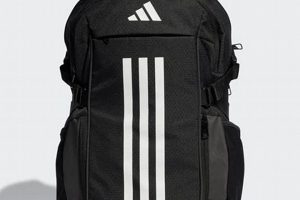
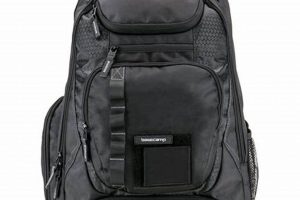
A protective panel designed to be placed within a backpack, intended to offer ballistic or stab resistance to the wearer. These panels are typically constructed from materials such as Kevlar, polyethylene, or steel, offering varying levels of protection against different threats. For example, a student might place the panel in their backpack as a precautionary measure.
These items provide a readily available shield in situations involving potential threats. Their development has been influenced by increasing concerns about safety in public spaces. The ability to quickly deploy a barrier against projectiles or edged weapons offers a degree of personal security and can potentially mitigate harm during an attack. Historically, body armor was largely limited to military and law enforcement, but rising concerns have spurred the creation of more accessible and discreet options for civilians.
This article will further examine the specific levels of protection offered by these panels, the materials used in their construction, legal considerations surrounding their ownership, and factors to consider when selecting a suitable product.
Selection and Usage Guidelines
The following guidelines are provided to assist in the informed selection and effective utilization of protective panels for backpacks. Careful consideration of these points will contribute to ensuring the appropriate level of security is achieved.
Tip 1: Understand Protection Levels: Ensure the panel meets established NIJ standards or equivalent certifications relevant to potential threats. Specific threats require different protective capabilities; a panel rated for handgun rounds may not offer adequate defense against rifle fire.
Tip 2: Material Composition Assessment: Investigate the materials used in the panel’s construction, noting the pros and cons of each. Aramid fibers (Kevlar) offer flexibility, while steel provides robust protection, but at the cost of added weight.
Tip 3: Backpack Compatibility: Verify the dimensions of the panel are compatible with the backpack’s internal compartment. An ill-fitting panel may shift during use, compromising its effectiveness or causing discomfort.
Tip 4: Weight Considerations: A heavier panel increases the overall load carried, potentially impacting mobility and endurance. Balance the need for protection with the practical considerations of daily use.
Tip 5: Discreet Integration: Opt for a panel designed for inconspicuous integration within the backpack. Avoid panels that obviously alter the bag’s profile or draw unwanted attention.
Tip 6: Legal Compliance: Research and adhere to all applicable local, state, and federal laws regarding the ownership, possession, and use of body armor.
Tip 7: Practice Deployment: Familiarize oneself with the process of deploying the backpack as a shield in simulated scenarios. Regular practice improves response time and effectiveness under pressure.
Adhering to these guidelines will improve the likelihood of selecting an appropriate protective solution and maximizing its potential effectiveness in a threat situation. The key is to balance practical considerations with desired protective capabilities.
The subsequent sections of this article will elaborate on these selection criteria and delve into the legal framework surrounding these protective devices.
1. Ballistic Threat Level

Ballistic threat level is the cornerstone of selecting an appropriate protective panel for a backpack. It dictates the panel’s ability to resist penetration and reduce blunt force trauma from projectiles. Understanding the threat environment is paramount in making an informed decision.
- NIJ Standards Compliance
The National Institute of Justice (NIJ) establishes standardized testing protocols for body armor. Compliance with these standards, indicated by an NIJ rating, ensures a predictable level of protection against specified threats. For instance, an NIJ Level IIIA panel is certified to stop .357 Magnum and 9mm rounds, while Level III is rated for rifle rounds. This rating should directly correspond to the anticipated threats.
- Consideration of Local Crime Statistics
Analyzing local crime statistics, particularly those involving firearms, provides valuable insights into the prevalence of different types of weapons. If handguns are more commonly used in criminal activity, a lower-rated panel may suffice. However, in areas with higher instances of rifle attacks, a higher-rated, albeit heavier, panel is essential. Neglecting this data can lead to inadequate protection.
- Blunt Force Trauma Mitigation
While a panel may successfully prevent penetration, the wearer can still experience significant blunt force trauma from the impact of the projectile. Higher-rated panels often incorporate materials or designs that better disperse energy, reducing the risk of internal injuries. This factor should be considered, especially for individuals with pre-existing health conditions or when protecting vulnerable areas of the body.
- Limitations of Protective Coverage
A protective panel only covers the area of the backpack directly behind it. It does not offer comprehensive protection against attacks from all angles. This limitation underscores the importance of situational awareness and strategic positioning during a threat. The panel should be viewed as one component of a broader personal safety strategy, not as a sole guarantee of protection.
The relationship between ballistic threat level and a protective backpack panel is direct and critical. The anticipated threat dictates the necessary protection level, which in turn influences material selection, weight, and overall suitability of the panel. A comprehensive understanding of these factors is essential for responsible decision-making regarding personal safety.
2. Material Composition

The material composition of a protective panel for a backpack is inextricably linked to its performance, durability, and suitability for purpose. The choice of materials directly influences the panel’s ability to resist penetration, absorb impact energy, and withstand environmental factors. Aramid fibers, such as Kevlar, are frequently employed due to their high tensile strength and relatively low weight. However, steel plates, while heavier, offer enhanced protection against certain high-velocity projectiles and edged weapons. The selection of material is a critical determinant of the panel’s effectiveness in mitigating threats. For example, a panel designed to protect against handgun rounds might utilize multiple layers of woven aramid fibers, while a panel intended for rifle protection would likely incorporate a hardened steel or ceramic strike face backed by energy-absorbing layers.
Beyond ballistic resistance, material composition also impacts the panel’s longevity and resistance to degradation. Exposure to moisture, ultraviolet radiation, and extreme temperatures can compromise the structural integrity of certain materials. For instance, some polymers may become brittle and lose their protective properties over time if not properly treated. Therefore, understanding the material’s environmental limitations is crucial for ensuring long-term performance. Furthermore, the comfort and wearability of a protective panel are directly affected by its material composition. A heavier panel can cause fatigue and discomfort, reducing its practical value for daily use. Lightweight alternatives, while potentially offering lower levels of protection, may be more readily integrated into everyday life without significantly impacting mobility or comfort.
In summary, the relationship between material composition and the functional characteristics of these protective devices is paramount. Informed selection requires a thorough understanding of the trade-offs between protection level, weight, durability, and environmental resistance. The optimal material composition will depend on the specific threats anticipated, the user’s individual needs, and the intended application. A failure to adequately consider these factors can result in a device that is either ineffective against the threats encountered or impractical for everyday use.
3. Weight and Mobility

The weight of a protective panel for a backpack directly impacts the wearer’s mobility, a critical factor in emergency situations. Heavier panels, while potentially offering greater ballistic protection, can impede movement, reduce agility, and accelerate fatigue. This compromise between protection and agility necessitates careful consideration of the anticipated threat environment and the individual’s physical capabilities. For example, a student carrying a heavily laden backpack with a weighty protective panel may experience reduced reaction time and maneuverability when faced with a sudden threat, thereby negating some of the panel’s intended benefits. The ability to swiftly evade or respond to danger is often as important as the panel’s protective capabilities.
The practical significance of understanding this relationship extends to the design and deployment of protective measures. Manufacturers strive to balance protection levels with weight reduction through the use of advanced materials and innovative construction techniques. Lightweight composite materials, while potentially more expensive, offer a viable alternative to traditional steel plating. Furthermore, the distribution of weight within the backpack can influence mobility. Proper adjustment of straps and the strategic placement of the panel can minimize strain and optimize balance. Training exercises that simulate real-world scenarios can help individuals adapt to the added weight and develop effective response strategies. Ignoring these ergonomic considerations can render the protective panel ineffective, or even detrimental, in a crisis.
In conclusion, the correlation between weight and mobility is a fundamental aspect of selecting and utilizing protective panels for backpacks. While a higher level of protection is often desirable, it must be balanced against the practical limitations imposed by increased weight. Careful consideration of material selection, backpack design, and individual physical capabilities is essential for maximizing the effectiveness of protective measures without compromising mobility. Future advancements in lightweight materials and ergonomic designs will likely further mitigate this trade-off, enhancing the practicality of these devices in everyday life.
4. Backpack Compatibility
The seamless integration of a protective panel within a backpack hinges on its compatibility with the backpack’s design and dimensions. A properly fitted panel maximizes protective coverage, ensures comfortable carry, and facilitates rapid deployment. Compatibility, therefore, is not merely a matter of fitting the panel into the bag but rather optimizing its performance within the intended operational context.
- Dimensional Alignment
The panel’s dimensions must precisely match the backpack’s internal compartment intended for its storage. A panel that is too large will create bulges, impede zipper function, and potentially damage the backpack. A panel that is too small will shift within the compartment, leaving vulnerable areas exposed. Examples include custom-designed backpacks with dedicated panel pockets or adjustable straps to secure panels of varying sizes. The implications of dimensional misalignment range from compromised protection to premature wear and tear on the backpack.
- Weight Distribution Considerations
A compatible backpack is designed to distribute the weight of the panel evenly across the wearer’s back and shoulders. Poor weight distribution can lead to discomfort, fatigue, and even musculoskeletal injuries. Backpacks with integrated internal frames or padded shoulder straps are better suited for carrying heavy panels. Real-world examples include military-grade backpacks specifically designed to accommodate body armor plates. The implications of inadequate weight distribution extend beyond comfort, potentially affecting the wearer’s ability to react effectively in a threat situation.
- Deployment Accessibility
The panel must be readily accessible for rapid deployment in an emergency. A compatible backpack allows for quick access to the panel without requiring excessive manipulation or removal of other contents. Backpacks with dedicated panel access points or quick-release straps facilitate swift deployment. Examples include backpacks designed for law enforcement or security personnel who require immediate access to protective gear. Impeded access can significantly delay the wearer’s response, diminishing the protective value of the panel.
- Material and Construction Harmony
The materials and construction of the backpack should be compatible with the panel’s characteristics. A backpack made of flimsy material may not adequately support the weight of a heavy panel, leading to sagging or tearing. Conversely, a rigid backpack may not conform comfortably to the wearer’s back when combined with a stiff panel. Examples include backpacks constructed from durable nylon or canvas that are reinforced at stress points. Incompatible materials can accelerate wear and tear, reduce comfort, and compromise the panel’s structural integrity.
These multifaceted aspects of backpack compatibility underscore its critical role in ensuring the effective and comfortable use of protective panels. Careful consideration of dimensional alignment, weight distribution, deployment accessibility, and material harmony is essential for maximizing the protective benefits while minimizing potential drawbacks.
5. Deployment Speed

Deployment speed represents a critical factor in the effectiveness of a protective panel integrated into a backpack. The ability to rapidly access and utilize the panel during an active threat can significantly influence the outcome of a dangerous situation. Delayed deployment diminishes the panel’s protective value, rendering it potentially useless in time-sensitive scenarios.
- Backpack Design and Accessibility
The design of the backpack directly affects the ease and speed of panel deployment. Backpacks with dedicated compartments or quick-release straps designed for immediate access to the panel facilitate faster deployment times. Backpacks lacking these features may require time-consuming maneuvers to access the panel, reducing its effectiveness. An example includes backpacks with a designated external sleeve for the panel, allowing it to be quickly extracted and held as a shield. The design should prioritize intuitive access without impeding other necessary actions.
- User Training and Familiarization
Proficient deployment requires proper training and familiarization with the backpack’s features and the panel’s deployment process. Regular practice drills enable users to develop muscle memory, reducing reaction time and improving efficiency under stress. Untrained individuals may struggle to locate and deploy the panel effectively, even with a well-designed backpack. Law enforcement and security personnel routinely undergo training exercises to optimize their deployment speed with protective gear. Consistent training is essential to bridge the gap between theoretical protection and practical application.
- Environmental and Contextual Factors
The surrounding environment and the specific threat context influence deployment speed. Confined spaces, limited mobility, or the presence of obstacles can impede the deployment process. Similarly, the nature of the threat, such as an active shooter scenario versus a stabbing attack, may dictate different deployment strategies. Consider a crowded school hallway compared to an open outdoor space; deployment tactics and speeds will vary significantly. Adaptability and situational awareness are crucial components of effective panel utilization.
- Panel Weight and Ergonomics
The weight and ergonomic design of the protective panel influence the speed and ease of deployment. Heavier panels can be more cumbersome to maneuver quickly, especially for individuals with limited strength or mobility. Panels with ergonomic features, such as strategically placed handles or grips, facilitate easier handling and faster deployment. The weight and design should balance protective capabilities with practical usability. A lighter panel that can be deployed swiftly may offer greater overall protection than a heavier panel that is difficult to maneuver in a high-stress situation.
In summary, deployment speed is a crucial determinant of a protective panel’s effectiveness. Factors ranging from backpack design and user training to environmental conditions and panel ergonomics significantly impact the speed at which a panel can be deployed. Optimizing these elements is essential for maximizing the protective benefits of the panel in real-world threat scenarios.
6. Legal Restrictions

The acquisition, possession, and use of body armor, including protective panels for backpacks, are subject to a complex web of legal restrictions that vary significantly by jurisdiction. Understanding these regulations is crucial for individuals considering the purchase and deployment of these items to avoid potential legal repercussions.
- Federal Regulations on Felon Possession
Federal law generally prohibits convicted felons from possessing body armor. Violation of this statute can result in significant penalties, including imprisonment. The definition of “body armor” typically encompasses items designed to provide ballistic resistance, including panels intended for backpack insertion. This restriction is intended to prevent individuals with a history of violent crime from accessing protective equipment that could facilitate further criminal activity. The implications of this restriction are significant for individuals with prior felony convictions who may seek personal protection.
- State and Local Laws on Body Armor Ownership
Many states and localities have enacted laws regulating the sale, possession, and use of body armor. These laws may include restrictions on specific types of body armor, requirements for permits or licenses, and prohibitions on wearing body armor during the commission of a crime. For example, some jurisdictions may prohibit the possession of body armor by individuals with a history of domestic violence or those subject to restraining orders. The applicability of these laws to backpack inserts can vary depending on their specific design and intended use. Compliance with these regulations requires careful research and adherence to local legal requirements.
- Restrictions on Possession in Specific Locations
Certain jurisdictions may restrict the possession of body armor in specific locations, such as schools, government buildings, or polling places. These restrictions are typically intended to enhance security in sensitive areas and prevent the potential use of body armor in violent acts. The application of these restrictions to backpack inserts may depend on the specific wording of the relevant statutes and the circumstances of possession. Individuals carrying backpacks with protective inserts should be aware of these location-based restrictions and take appropriate precautions to avoid potential violations.
- Liability Considerations for Use in Self-Defense
The use of a protective panel as a shield in a self-defense situation may raise legal questions regarding the justification for the use of force. While self-defense is a recognized legal right, the level of force used must be proportionate to the perceived threat. The deployment of a protective panel may be viewed as a defensive measure, but the subsequent use of force against an attacker could be subject to legal scrutiny. It is crucial for individuals who carry these items to understand the legal principles governing self-defense and to act responsibly in potentially violent encounters. Consultation with legal counsel is advisable to clarify the legal implications of using body armor in self-defense scenarios.
The legal landscape surrounding these protective panels is dynamic and subject to change. It is incumbent upon individuals considering their purchase and use to remain informed of current regulations and to seek legal advice when necessary to ensure compliance. Failure to do so can result in significant legal consequences, underscoring the importance of responsible and informed decision-making.
7. Concealability

The concealability of a protective panel within a backpack represents a critical component of its overall effectiveness. Its ability to blend seamlessly into the everyday appearance of a backpack minimizes unwanted attention, avoiding potential escalation or preemptive aggression from individuals who might be deterred by the visible presence of protective measures. A bulky or obviously altered backpack can signal the wearer’s perceived vulnerability or preparedness, paradoxically increasing the likelihood of becoming a target. Furthermore, maintaining a low profile allows the wearer to react more effectively in a dynamic threat environment without alerting potential aggressors to their defensive capabilities. Examples of successful concealability include panels designed to mimic the shape and flexibility of textbooks or laptop computers, integrating smoothly into the backpack’s contents. The practical significance of this understanding lies in the balance between protective capability and the need to avoid attracting undue scrutiny.
The effectiveness of concealability is further enhanced by considering the panel’s weight distribution and material composition. An unevenly distributed or excessively heavy panel can alter the backpack’s silhouette, betraying the presence of the hidden protection. Similarly, stiff or inflexible materials can create unnatural bulges or distortions, compromising the illusion of normalcy. Manufacturers address these challenges through the use of lightweight composite materials and ergonomic designs that conform to the backpack’s contours. The integration of the panel should not impede the backpack’s functionality, such as access to compartments or comfortable wear. Tactical backpacks designed for covert operations serve as prime examples of successful concealability, prioritizing inconspicuousness without sacrificing protective capabilities. The practical application of these principles allows individuals to integrate protective measures into their daily lives without compromising their personal safety or drawing unwanted attention.
In summary, concealability is not merely an aesthetic consideration but a strategic imperative for maximizing the protective benefits of backpack armor inserts. Its successful implementation requires a holistic approach, encompassing design, materials, weight distribution, and user awareness. The key insights highlight the importance of balancing the need for protection with the desire to maintain a low profile, emphasizing the nuanced relationship between preparedness and discretion. Challenges remain in developing panels that offer high levels of protection while remaining virtually undetectable, but ongoing advancements in materials science and ergonomic design are continuously pushing the boundaries of what is achievable. Concealability serves as a crucial link in the broader theme of personal security, allowing individuals to exercise proactive self-defense measures in a discreet and responsible manner.
Frequently Asked Questions About Backpack Armor Inserts
The following section addresses common inquiries regarding protective panels designed for integration into backpacks. The information provided aims to clarify key aspects related to their purpose, functionality, and limitations.
Question 1: What threats does a backpack armor insert effectively mitigate?
Protective panels mitigate threats depending on their specific National Institute of Justice (NIJ) rating. Panels are typically designed to resist penetration from handgun rounds, shotgun projectiles, or edged weapons. Higher-rated panels may offer protection against rifle rounds. The level of protection afforded is directly related to the panel’s construction and materials.
Question 2: How is the level of protection of a backpack armor insert determined?
The level of protection is determined by standardized testing conducted in accordance with NIJ standards. These tests involve firing various types of ammunition at the panel and assessing its ability to prevent penetration. Panels that meet the required criteria are certified to the corresponding NIJ level.
Question 3: Does a backpack armor insert offer complete protection from all threats?
No protective panel offers complete protection. Even if a panel prevents penetration, the wearer may still experience blunt force trauma from the impact. Furthermore, the panel only protects the area of the backpack directly behind it. It does not provide comprehensive protection against attacks from all angles.
Question 4: Are there any legal restrictions on owning or carrying a backpack armor insert?
Legal restrictions vary by jurisdiction. Federal law prohibits convicted felons from possessing body armor. Some states and localities may have additional restrictions on the sale, possession, or use of body armor, including panels designed for backpacks. Individuals should research and comply with all applicable laws in their area.
Question 5: How does the weight of a backpack armor insert affect its usability?
The weight of the panel can significantly impact the wearer’s mobility and endurance. Heavier panels provide greater protection but can also lead to fatigue and reduced agility. The appropriate weight is a trade-off between protection and practicality, depending on individual needs and circumstances.
Question 6: How should a backpack armor insert be properly deployed in an emergency situation?
Deployment techniques depend on the backpack’s design and the specific threat. The panel should be quickly accessible and positioned to provide maximum coverage to vital organs. Regular practice with deployment techniques is recommended to improve reaction time and effectiveness under stress.
In summary, protective panels for backpacks offer a degree of personal security but are subject to limitations in terms of protection level, legal restrictions, and practical considerations. Informed decision-making requires a thorough understanding of these factors.
The subsequent section of this article will delve into case studies and real-world applications of protective panels for backpacks.
Conclusion
This article has explored the protective panel designed for backpacks, examining critical factors such as ballistic threat levels, material composition, weight considerations, backpack compatibility, deployment speed, legal restrictions, and concealability. Each of these elements contributes to the overall effectiveness and suitability of this protective device in mitigating potential threats. Understanding the interplay between these factors is paramount for making informed decisions regarding personal security.
The implementation of such devices represents a proactive approach to personal safety in an increasingly uncertain world. While protective panels offer a tangible measure of security, their effectiveness relies upon responsible decision-making, adherence to legal frameworks, and a clear understanding of their capabilities and limitations. Continued advancements in materials science and ergonomic design may further enhance the practicality and accessibility of these protective measures in the future, contributing to a greater sense of security in public spaces. Individuals should seek professional guidance and consult with legal experts to ensure responsible usage of such technology.