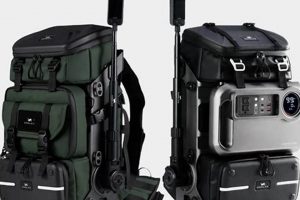
These bags represent a practical carrying solution crafted from durable, woven fabric. Typically featuring a main compartment and supplementary pockets, they offer a versatile option for transporting various items. For instance, a student might use one to carry textbooks and a laptop.
The appeal of these carriers lies in their resilience, lightweight nature, and potential for customization. Historically, the material has been valued for its strength and affordability, making it a popular choice for everyday use and outdoor activities. The adaptable nature of the material also lends itself well to various aesthetic styles.
The subsequent sections will delve into the construction, care, styles, and suitability of these versatile carrying solutions for different needs and environments, examining factors such as water resistance, durability, and aesthetic considerations.
Practical Considerations for Maximizing the Utility of Canvas Backpacks
The following tips offer guidance for selecting and maintaining canvas backpacks, ensuring their longevity and optimal performance across various applications.
Tip 1: Prioritize Reinforced Stitching: Inspect the stitching quality, particularly at stress points like shoulder strap attachments and zipper seams. Reinforced stitching enhances the overall durability and prevents premature wear and tear.
Tip 2: Evaluate Fabric Weight and Weave: A higher fabric weight indicates a denser weave and greater resistance to abrasion. Consider the intended use; lighter-weight options suffice for casual applications, while heavier weights are preferable for demanding activities.
Tip 3: Assess Water Resistance: While inherently absorbent, canvas can be treated for water resistance. Look for options with wax coatings or water-repellent finishes. However, note that prolonged exposure to heavy rain may still saturate the material.
Tip 4: Regularly Clean and Condition: Periodic cleaning removes dirt and stains, preventing material degradation. Use mild soap and water. Conditioning with appropriate treatments can maintain the fabric’s flexibility and water resistance.
Tip 5: Utilize Proper Storage Techniques: When not in use, store in a cool, dry place away from direct sunlight to prevent fading and mildew growth. Stuffing with paper or cloth can help maintain its shape.
Tip 6: Address Stains Promptly: Treat stains as soon as possible to prevent them from setting. Consult fabric care guides for appropriate cleaning agents and techniques based on the stain type.
Tip 7: Consider the Intended Load Capacity: Overloading can strain the seams and compromise the structural integrity. Adhere to the manufacturer’s recommended weight limits.
Implementing these strategies will contribute significantly to extending the lifespan and maximizing the utility of this carrying option, providing reliable service for diverse needs.
The next section will address the aesthetic aspects and design variations available within the realm of canvas backpacks, catering to individual preferences and stylistic considerations.
1. Durability

Durability constitutes a critical attribute of canvas backpacks, fundamentally impacting their lifespan and suitability for various applications. The inherent strength of the canvas material, typically cotton or linen woven in a plain weave, provides a baseline level of resistance to wear and tear. However, the specific construction methods and supplementary treatments significantly influence the overall durability. For example, reinforced stitching at stress points, such as strap attachments and zipper seams, mitigates the risk of seam failure under heavy loads. The density of the weave, measured in terms of fabric weight, also correlates directly with durability. A heavier canvas, indicative of a tighter weave, offers greater resistance to abrasion and puncture, extending the usable life of the backpack.
The practical significance of durability becomes evident in real-world scenarios. A student carrying textbooks and a laptop requires a backpack capable of withstanding the daily strain of repeated use without tearing or fraying. Similarly, a traveler relying on a canvas backpack for extended trips needs assurance that the bag can endure the rigors of transportation and handling. The choice of canvas backpack, therefore, necessitates careful consideration of the fabric weight, stitching quality, and any reinforcing elements incorporated into the design. Failure to prioritize durability can lead to premature failure, necessitating replacement and incurring additional expense.
In conclusion, the durability of canvas backpacks is not merely a desirable feature but a foundational requirement for reliable performance. Understanding the factors that contribute to durabilitymaterial weight, weave density, stitching reinforcementallows consumers to make informed decisions, selecting a product that meets their specific needs and withstands the demands of their intended use. Neglecting durability can lead to diminished utility and premature replacement, highlighting its central role in the overall value proposition of canvas backpacks.
2. Material Weight

The material weight of canvas fundamentally influences the structural integrity and performance characteristics of canvas backpacks. Expressed typically in ounces per square yard or grams per square meter, the weight of the canvas directly correlates with its density and, consequently, its resistance to tearing, abrasion, and water penetration. A heavier canvas, indicative of a denser weave, provides enhanced protection against the elements and the rigors of daily use. The cause-and-effect relationship is straightforward: increased material weight results in a more durable and resilient backpack. The importance of material weight cannot be overstated; it is a primary determinant of the product’s longevity and suitability for demanding applications. For example, a lightweight canvas might suffice for carrying light loads in dry conditions, whereas a heavy-duty canvas backpack is essential for transporting heavy textbooks, camping gear, or other substantial items.
The practical significance of understanding material weight extends to informed purchasing decisions. Consumers should consider the intended use of the backpack when selecting a product. A student requiring a backpack for daily commuting and carrying textbooks would benefit from a medium-to-heavy weight canvas, typically in the range of 12 to 18 ounces per square yard. This range provides a balance between durability and weight. Conversely, a minimalist user who only needs to carry a few light items could opt for a lighter canvas, perhaps 8 to 10 ounces per square yard, to reduce the overall weight of the bag. Misjudging the required material weight can lead to premature wear and tear or unnecessary bulkiness, diminishing the overall user experience.
In summary, the material weight of canvas is a critical parameter that directly impacts the durability, functionality, and suitability of canvas backpacks. By carefully considering the intended application and selecting a canvas weight accordingly, consumers can ensure that their backpack meets their specific needs and provides reliable service over an extended period. The challenge lies in balancing the need for durability with considerations of weight and cost, but a clear understanding of the relationship between material weight and performance is essential for making an informed decision. The material weight is a defining factor in the overall quality of canvas backpacks.
3. Water Resistance
Water resistance represents a critical performance aspect of canvas backpacks, influencing their suitability for use in varying weather conditions and their ability to protect contents from moisture damage. While canvas inherently possesses absorbent qualities, various treatments and design features can enhance its capacity to repel water, thereby mitigating potential harm to carried items.
- Waxed Canvas Treatment
Application of wax, traditionally beeswax or synthetic alternatives, to the canvas fabric creates a hydrophobic barrier. This treatment effectively repels water, causing it to bead and roll off the surface, preventing saturation. Waxed canvas backpacks are frequently favored for outdoor activities and environments where exposure to rain or dampness is anticipated. However, waxed finishes may require periodic re-application to maintain their effectiveness.
- Water-Repellent Finishes
Chemical treatments, such as durable water repellent (DWR) coatings, can be applied to canvas backpacks to enhance water resistance. These finishes create a surface tension that impedes water absorption. DWR treatments are often lighter and more flexible than waxed coatings, preserving the fabric’s breathability to a greater extent. However, the effectiveness of DWR finishes can diminish over time with wear and washing, necessitating re-application to maintain optimal performance.
- Lining Materials
The choice of lining material within a canvas backpack contributes to overall water resistance. A waterproof or water-resistant lining, such as nylon or polyurethane-coated fabric, provides an additional barrier against moisture intrusion, even if the outer canvas becomes saturated. The seams of the lining should also be sealed or taped to prevent water from seeping through stitching holes.
- Design Considerations
Design elements, such as storm flaps over zippers and tightly woven seams, can further enhance water resistance. These features minimize potential entry points for water, providing added protection for the backpack’s contents. Additionally, the overall construction of the backpack, including the use of water-resistant threads and reinforcing materials, contributes to its ability to withstand exposure to moisture.
The degree of water resistance required in a canvas backpack is ultimately dictated by the intended use and environmental conditions. While no canvas backpack is entirely waterproof unless specifically designed with sealed seams and waterproof membranes, the implementation of various treatments and design features can significantly enhance its ability to protect contents from moderate rainfall and incidental exposure to moisture. Assessing these factors allows for an informed decision, aligning the product’s capabilities with anticipated environmental demands.
4. Carrying Capacity

Carrying capacity, in the context of canvas backpacks, represents the maximum volume and weight of items a bag can safely and effectively accommodate. It is a primary determinant of the backpack’s suitability for various purposes, ranging from daily commutes to extended travel. Understanding the factors that influence this capacity is crucial for selecting a bag that meets specific needs without compromising durability or user comfort.
- Volume Measurement
Volume, typically measured in liters, indicates the total internal space available within the main compartment and any secondary pockets. Larger volume backpacks are suitable for carrying bulky items like textbooks, clothing, or camping equipment. Smaller volume options are more appropriate for daily essentials, such as laptops, notebooks, and personal items. For instance, a 30-liter backpack might suffice for a day hike, while a 50-liter model could be necessary for an overnight camping trip.
- Weight Limit
Weight limit, specified in kilograms or pounds, defines the maximum load the backpack can bear without risking damage to the seams, straps, or fabric. Exceeding this limit can lead to premature wear, strap failure, and discomfort for the user. The weight limit is directly influenced by the quality and construction of the canvas material and the reinforcing elements incorporated into the design. A backpack with reinforced stitching and heavy-duty hardware can generally support a higher weight load than a lightweight, basic model.
- Compartmentalization
The arrangement and number of compartments significantly impact the effective carrying capacity. Well-organized compartments allow for efficient distribution of weight and prevent items from shifting during transport. Dedicated pockets for laptops, water bottles, and small accessories enhance organization and accessibility. For example, a backpack with multiple internal dividers and external pockets can accommodate a wider range of items than a single-compartment bag of the same volume.
- Ergonomic Design
The ergonomic design of a canvas backpack, including the shoulder strap configuration, back panel padding, and weight distribution, directly affects the perceived carrying capacity. A well-designed backpack distributes weight evenly across the shoulders and back, reducing strain and improving comfort, even when carrying heavy loads. Adjustable straps allow for customization to fit different body sizes and ensure optimal weight distribution. Poor ergonomic design can lead to discomfort, fatigue, and potential injury, even when the actual weight is within the specified limit.
These factors collectively determine the practical carrying capacity of canvas backpacks. Consumers must consider not only the stated volume and weight limit but also the compartmentalization and ergonomic design to select a bag that meets their specific needs and provides a comfortable and reliable carrying experience. Overlooking any of these aspects can lead to dissatisfaction and potential compromise of the bag’s functionality and durability. Properly assessing carrying capacity is important.
5. Aesthetic Style

Aesthetic style significantly influences the market appeal and perceived value of canvas backpacks. The inherent versatility of canvas as a material allows for diverse design implementations, catering to a wide spectrum of consumer preferences. From minimalist, utilitarian designs to elaborate, embellished expressions, the visual character of these carriers directly impacts consumer choice and brand identity. For example, a canvas backpack featuring a neutral color palette and clean lines may appeal to professionals seeking a functional yet understated accessory for a work environment. Conversely, a brightly colored backpack with intricate patterns might resonate with students or artists seeking to express individuality. The aesthetic design directly contributes to the perceived use case and target demographic.
The choice of hardware, such as buckles, zippers, and strap adjusters, further contributes to the overall aesthetic. Antique brass hardware can evoke a vintage or rustic aesthetic, while sleek, modern zippers project a contemporary image. Customization options, including patches, pins, and screen-printed designs, allow individuals to personalize their backpacks, reflecting personal tastes and affiliations. This level of personalization enhances the perceived value and strengthens the emotional connection between the consumer and the product. Brand identity is also intrinsically linked to aesthetic style; companies often employ specific color palettes, logos, and design motifs to create a consistent visual language across their product lines, fostering brand recognition and loyalty.
The importance of aesthetic style should not be underestimated, as it plays a central role in shaping consumer perceptions and purchase decisions. By carefully considering the visual elements of design, manufacturers can create canvas backpacks that resonate with specific target markets, enhancing their competitiveness and market share. The interplay between functionality and aesthetics is crucial, as consumers increasingly seek products that not only perform well but also reflect their personal values and style. Neglecting the aesthetic dimension can result in missed opportunities and reduced market appeal, highlighting its critical role in the overall success of canvas backpacks.
6. Compartment Design

Compartment design in canvas backpacks directly impacts functionality, organization, and the overall user experience. The configuration of compartments dictates how efficiently items can be stored, accessed, and protected during transport. The structure and layout are not arbitrary but rather a deliberate engineering of space to meet diverse user needs.
- Main Compartment Accessibility
The primary compartment’s access point, whether a zippered opening, drawstring closure, or flap with buckles, determines the ease of loading and retrieving larger items. A wide opening facilitates the insertion and removal of bulky objects, while a smaller, more secure closure offers better protection against theft and the elements. Backpacks designed for travel often feature clamshell-style openings that allow the main compartment to be fully opened for efficient packing and unpacking.
- Dedicated Laptop/Tablet Sleeves
The inclusion of padded sleeves specifically designed to accommodate laptops and tablets offers protection against impact and scratches. These sleeves are often positioned near the back panel for enhanced stability and weight distribution. The dimensions of these sleeves are critical, as they must accommodate a range of device sizes while maintaining a secure fit. The presence or absence of a dedicated laptop sleeve can significantly influence the suitability of a canvas backpack for students and professionals.
- Organization Pockets
Smaller organizational pockets, located both inside and outside the main compartment, provide designated storage for smaller items such as pens, phones, wallets, and keys. These pockets prevent items from becoming lost or damaged within the larger compartment. The design and placement of these pockets vary widely, from simple slip pockets to zippered pouches and mesh compartments, each catering to different organizational preferences. The strategic placement of external pockets allows for quick access to frequently used items without requiring the user to open the main compartment.
- Water Bottle Pockets
Exterior water bottle pockets offer convenient and accessible hydration on the go. These pockets are typically constructed from elasticized mesh or durable fabric and are sized to accommodate a range of bottle sizes. Secure placement and construction are essential to prevent bottles from falling out during movement. The presence of well-designed water bottle pockets enhances the practicality of canvas backpacks, particularly for outdoor activities and daily commutes.
The considerations related to compartment design in canvas backpacks highlight the crucial role of spatial organization in enhancing utility. Thoughtful planning in the arrangement and types of compartments increases the efficiency of packing, accessibility of objects, and safety of carried objects, making a canvas backpack much more than a simple carrier.
7. Ergonomics

The integration of ergonomic principles into the design of canvas backpacks is paramount to mitigating physical strain and promoting user well-being. A direct correlation exists between the ergonomic features of a backpack and the potential for musculoskeletal discomfort or injury, particularly when carrying substantial loads over extended periods. For instance, backpacks lacking adequate padding on the shoulder straps can cause localized pressure and irritation, leading to shoulder and neck pain. Similarly, a poorly designed back panel can contribute to improper spinal alignment, exacerbating back pain and postural problems. Ergonomics, therefore, is not a mere aesthetic consideration but a fundamental component affecting the long-term health and comfort of the user.
Specific ergonomic features, such as adjustable shoulder straps, sternum straps, and hip belts, play crucial roles in optimizing weight distribution and minimizing stress on the body. Adjustable shoulder straps allow users to customize the fit of the backpack, ensuring that the weight is evenly distributed across the shoulders and back. A sternum strap prevents the shoulder straps from slipping off the shoulders, further stabilizing the load. A hip belt transfers a significant portion of the weight from the shoulders to the hips, reducing strain on the upper body. Consider, for example, a student carrying heavy textbooks; a backpack equipped with these ergonomic features can significantly alleviate pressure on the spine and shoulders, promoting a more comfortable and sustainable carrying experience. Neglecting these elements can lead to chronic pain and postural imbalances.
In conclusion, the ergonomic design of canvas backpacks is integral to preventing discomfort and promoting long-term physical health. Understanding the impact of design features, such as padding, strap adjustability, and weight distribution mechanisms, allows consumers to make informed choices that prioritize their well-being. As the demand for functional and comfortable carrying solutions continues to rise, manufacturers must prioritize the integration of ergonomic principles into the design and construction of canvas backpacks, ensuring that these products not only serve their intended purpose but also contribute to the health and comfort of their users. The absence of ergonomic design in canvas backpacks carries a risk of physical discomfort, and it is a real consideration for individuals using these bags frequently.
Frequently Asked Questions
This section addresses common inquiries and concerns regarding canvas backpacks, providing factual information to aid in informed decision-making.
Question 1: How does canvas construction affect water resistance?
Untreated canvas offers minimal water resistance due to the absorbent nature of its fibers. Treatments such as waxing or the application of durable water repellent (DWR) finishes enhance its ability to repel moisture. However, even treated canvas is not entirely waterproof and may become saturated during prolonged exposure to heavy rain.
Question 2: What is the typical lifespan of a canvas backpack?
The lifespan depends heavily on usage intensity, load weight, and maintenance practices. With proper care and moderate use, a well-constructed canvas backpack can last for several years. Heavy use, overloading, and neglect can significantly shorten its lifespan.
Question 3: How should canvas backpacks be cleaned and maintained?
Canvas backpacks can be cleaned using mild soap and water. A soft brush may be used to remove stubborn dirt or stains. Avoid harsh chemicals or abrasive cleaners, as these can damage the fabric. Allow the backpack to air dry completely after cleaning. Regular cleaning helps to prevent mildew and prolong the fabric’s integrity.
Question 4: Are canvas backpacks suitable for carrying heavy loads?
Canvas backpacks can support moderately heavy loads, provided they are well-constructed and feature reinforced stitching at stress points. Overloading can strain the seams and cause premature wear. Consider the backpack’s weight limit and the ergonomic design when carrying heavy items.
Question 5: What are the advantages of canvas over synthetic materials in backpacks?
Canvas offers durability, a classic aesthetic, and the potential for sustainable sourcing depending on the type of canvas. Synthetic materials may offer superior water resistance and lighter weight in some cases, but canvas is preferred by some for its ruggedness and natural feel.
Question 6: How does fabric weight influence the durability of canvas backpacks?
A higher fabric weight indicates a denser weave and greater resistance to abrasion, tearing, and puncture. Heavier canvas backpacks are generally more durable and suitable for demanding applications than those made from lighter canvas.
The responses highlight key considerations regarding the selection, care, and suitability of canvas backpacks for various purposes.
The subsequent section will explore different style of this backpack.
Conclusion
The preceding analysis has explored the multifaceted nature of canvas backpacks, encompassing durability, material weight, water resistance, carrying capacity, aesthetic style, compartment design, and ergonomics. A comprehensive understanding of these factors is essential for informed consumer choices and responsible product stewardship. The suitability of any specific example hinges on a careful evaluation of individual needs and intended use cases, balancing performance characteristics against budgetary constraints.
The continued relevance of these bags as carrying solutions rests on their adaptability and potential for sustainable manufacturing practices. Further research into eco-friendly canvas treatments and responsible sourcing of raw materials will be crucial for minimizing the environmental impact of these products. As consumer awareness of sustainability grows, manufacturers who prioritize these considerations will be best positioned to meet evolving market demands. The durability and timeless nature of canvas continue to make it a relevant option.


![Organize & Carry: Best Crate and Kids Backpack [Guide] | Ultimate Backpack Traveler Guide: Tips, Destinations & Budget Hacks](https://backpack-traveler.com/wp-content/uploads/2026/05/th-10-300x200.jpg "Organize & Carry: Best Crate and Kids Backpack [Guide] Ultimate Backpack Traveler Guide: Tips, Destinations & Budget Hacks")