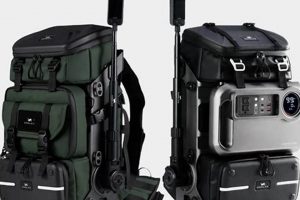
The core equipment central to traversal within the game allows the protagonist to carry essential cargo and supplies. This equipment fundamentally affects the player’s mobility and carrying capacity, influencing strategic decision-making regarding load management and route planning. An example would be the standard issue that is equipped to allow carrying of multiple cargo at a time.
This system is not merely a container; it is a critical element of the gameplay loop. Its management dictates success or failure in deliveries, influencing player engagement and immersion within the game world. The design draws inspiration from real-world backpacking and load-bearing techniques, adding a layer of grounded realism to the science fiction setting.
The following sections will delve into the specific functionalities, customization options, and in-game implications associated with this crucial piece of equipment. Further discussion will detail how its mechanics affect gameplay, contributing to the unique and often challenging experience.
Practical Considerations for Cargo Management
Effective utilization of the central carrying system is paramount for successful navigation and completion of deliveries. The following guidelines provide valuable insights for optimizing cargo distribution and maintaining stability during traversal.
Tip 1: Prioritize Weight Distribution. Distribute heavier loads towards the center and bottom of the frame. This lowers the center of gravity, improving balance and reducing the likelihood of falls, particularly on uneven terrain.
Tip 2: Leverage Autopack Functionality Strategically. While convenient, the automatic packing system does not always optimize for stability. Manually rearrange cargo to achieve a more balanced configuration if needed. Consider potential terrain.
Tip 3: Utilize Anchors for Secure Cargo Placement. Utilize available anchor points to prevent shifting of cargo during movement. Loose items can significantly disrupt balance and increase the risk of damage.
Tip 4: Monitor Cargo Condition Regularly. Inspect the condition of containers frequently, especially after traversing hazardous areas. Damaged cargo can compromise delivery objectives and impact reward outcomes.
Tip 5: Adapt Loadout to Terrain. Anticipate the challenges posed by specific environments. Reduce load for mountainous regions or prioritize water-resistant containers for areas with heavy precipitation.
Tip 6: Implement Strategic Use of Utility Pouches. Equip pouches with repair spray and blood bags for faster access to necessary items during challenging encounters or terrain.
These considerations, when implemented effectively, can significantly enhance overall efficiency and survivability in the challenging environments. A well-managed load translates directly to increased success rates and reduced risk of mission failure.
The following sections will address advanced strategies for managing stamina and navigation, building upon the foundational knowledge presented here.
1. Cargo capacity

The cargo capacity fundamentally defines the scope and efficiency of delivery operations within the game. It dictates the quantity and type of items a player can transport, influencing mission planning, resource management, and overall strategic decision-making.
- Maximum Weight Limit
The central system imposes a maximum weight limit, a restriction analogous to real-world load-bearing constraints. Exceeding this limit drastically impairs mobility, stability, and stamina, increasing the risk of falls and cargo damage. This encourages strategic prioritization of essential items versus non-essential ones.
- Stacking and Arrangement
Available space is not just about total weight; how cargo is arranged affects stability. Efficient stacking, utilizing every available anchor point, minimizes swaying and improves balance. Mismanagement results in instability, especially on uneven terrain, impacting delivery speed and increasing the likelihood of damage. Real-world logistics employ similar principles of load distribution for safety and efficiency.
- Specialized Carriers and Attachments
The basic frame can be augmented with specialized carriers and attachments that increase carrying capacity or provide specialized storage for specific types of cargo, like blood bags or repair spray. These additions are analogous to specialized backpacks or trailers used in real-world expeditions to transport sensitive or bulky equipment, enhancing mission efficiency and allowing for greater self-sufficiency.
- Effect on Stamina and Mobility
The load directly affects the player’s stamina and mobility. Heavier loads drain stamina faster, requiring careful route planning and strategic use of resting points. The systems weight hinders movement speed, impacting delivery timelines. This interplay mirrors real-world backpacking where load management affects endurance and pace.
The various facets demonstrate cargo management’s complex role and affect multiple aspects of gameplay. Smart planning is crucial, and contributes to mission success.
2. Weight Distribution

Proper management of payload distribution is a critical skill for efficient traversal and mission success. An imbalance in load placement can lead to decreased stability, increased risk of falls, and accelerated stamina depletion. This section explores the core aspects of load distribution.
- Center of Gravity
Maintaining a low center of gravity is crucial for balance. Placing heavier cargo lower and closer to the back stabilizes movement, reducing the likelihood of tipping. Real-world mountaineers and backpackers employ similar techniques to maintain stability on uneven terrain. In the game, this principle manifests as improved balance in mountainous environments.
- Lateral Balance
Even distribution of weight between the left and right sides minimizes swaying. Uneven lateral weight distribution results in a constant struggle to maintain balance, increasing fatigue and decreasing travel speed. This is analogous to carrying unbalanced loads in construction or logistics, where it directly impacts worker efficiency and safety. The game reflects this with stamina penalties when loads are lopsided.
- Forward and Aft Balance
While less critical than vertical and lateral considerations, distributing weight evenly between front and back prevents a pulling sensation. Improper front-to-back balance affects posture and stride, leading to discomfort and increased strain. Historical examples include pack animal management, where balanced loads ensured the animal’s well-being and efficiency. Within the game, excessive weight too far forward or back affects directional control.
- Anchor Point Utilization
Strategic use of anchor points is essential for securing cargo and preventing shifting during movement. Properly secured cargo minimizes instability caused by dynamic weight shifts. This is similar to the use of tie-downs in transportation to prevent cargo from moving during transit. Securely fastened cargo contributes to overall stability, mitigating risks on uneven and dangerous routes.
These elements illustrate how weight distribution directly influences gameplay. Strategic planning and careful execution are crucial for mitigating risks associated with uneven terrain and long distances. Mastering load placement is essential for navigating the challenging landscapes and maximizing mission success.
3. Battery life
Battery life is a finite resource intrinsically linked to the functionality of certain equipment integrated or attached to the core carrying system. This energy source powers exoskeletons, enhancing load-bearing capabilities and improving mobility across difficult terrain. Depletion of power directly impacts efficiency and survivability, potentially stranding individuals or impeding critical deliveries. The relationship can be likened to real-world applications such as electrically assisted backpacks where auxiliary power aids movement but requires battery management. Failure to monitor usage and replenish energy reserves compromises the benefits offered by these technologies.
Exoskeletons, vital for transporting heavy cargo, are rendered useless upon battery depletion, significantly reducing movement speed and increasing stamina drain. Utility pouches connected to the frame, which might hold battery packs or charging devices, become essential for sustained operation. Furthermore, the environmental charging stations strategically placed across the landscape necessitate route planning and resource management. Dependence on these external resources emphasizes the integration of battery consideration into operational planning, demonstrating a direct correlation between power availability and mission accomplishment.
Effective utilization and conservation strategies are imperative. Judicious employment of exoskeletons, only when traversing demanding terrain, alongside proactive recharging at available stations, extends operational range. The interplay underscores the critical role of foresight in managing battery levels, reflecting the broader themes of resourcefulness and strategic thinking inherent in the delivery framework. Imprudent usage jeopardizes mission success, reiterating the importance of power management.
4. Customization Options
Modification capabilities significantly influence its functionality and adaptability to various mission parameters. The modular design allows for adjustments based on specific requirements, optimizing performance for diverse scenarios.
- Pouch Attachments
The integration of utility pouches offers immediate access to essential tools and consumables. These pouches, secured directly to the frame, provide storage for repair sprays, blood bags, or spare batteries. Similar to tactical gear configurations used by military personnel or emergency responders, placement of pouches is strategic, facilitating rapid response in dynamic situations.
- Cargo Covers and Protection
Interchangeable covers enhance the system’s resilience to environmental hazards. These protective layers safeguard cargo from rain, snow, and timefall, preserving the integrity of sensitive materials. Analogous to weather-resistant gear used in outdoor activities or logistics, the selection of appropriate covers is crucial for maintaining delivery integrity in adverse conditions.
- Specialized Carriers
Dedicated carriers enable the transportation of unique cargo types. These specialized attachments, such as pizza containers or medical equipment mounts, ensure secure and efficient handling of atypical deliveries. Their existence mirrors real-world specialized carrying systems used for transporting temperature-sensitive items or fragile instruments, reflecting a commitment to realism and diverse mission requirements.
- Straps and Harness Adjustments
Adjustable straps and harnesses allow customization for individual comfort and load distribution. The ability to fine-tune the fit optimizes weight balance and reduces strain, particularly during prolonged traversal. This reflects ergonomic principles applied in backpack design, minimizing physical stress and enhancing endurance over extended periods.
These customization options emphasize the adaptable nature and the importance of tailoring its configuration to the demands of each specific mission. Optimizing the frame through strategic modifications directly enhances operational effectiveness and survivability in the challenging environment.
5. Anchor points

Anchor points, integral to the carrying system’s functionality, represent connection locations used for securing cargo and auxiliary equipment. Their strategic utilization is paramount for load stability and efficient resource management.
- Preventing Load Displacement
The primary function of anchor points is to restrict cargo movement during traversal. Shifting loads compromise balance, increasing fatigue and potentially causing falls. This principle aligns with real-world cargo securing practices employed in transportation industries, where tiedowns and restraints prevent goods from shifting during transit, maintaining vehicle stability and preventing damage.
- Standardized Attachment Interfaces
Anchor points typically adhere to standardized dimensions and load-bearing capacities, enabling interoperability with various cargo containers and accessories. Standardization ensures compatibility, similar to the use of standardized container sizes in global shipping, which streamlines logistics and facilitates efficient handling of diverse cargo types.
- Load Distribution and Stress Mitigation
Strategic distribution of cargo across multiple anchor points distributes weight more evenly across the carrying system. This reduces stress on individual connection points, preventing failures and enhancing overall system durability. This parallels structural engineering practices, where loads are distributed across multiple supports to minimize stress concentration and ensure structural integrity.
- Facilitating Modular Configuration
The presence of multiple strategically placed anchor points allows for a modular configuration of the carrying system. Users can attach and detach cargo and equipment based on mission requirements, customizing the setup for optimal efficiency. This modularity mirrors that of military load-bearing equipment, where pouches and accessories can be attached and reconfigured based on the demands of the mission.
The systematic employment of anchor points enhances load stability, facilitates equipment integration, and contributes to overall operational efficiency. These features, reflecting real-world engineering principles, underscore the importance of these points for successful traversal.
6. Durability

Structural integrity dictates the longevity and reliability of load-bearing equipment within hazardous environments. The system’s ability to withstand environmental stressors and physical impacts directly impacts mission success and overall survivability.
- Material Composition and Resistance
The materials used in construction, such as reinforced polymers and high-tensile fabrics, determine its resistance to abrasion, tearing, and puncture. These materials, analogous to those used in protective gear for extreme sports or military applications, extend lifespan and maintain structural integrity under duress. Compromised materials accelerate degradation and heighten risk of cargo damage or catastrophic failure.
- Frame Reinforcement and Structural Integrity
Internal reinforcement, through exoskeletal structures or supporting frames, enhances its load-bearing capacity and resistance to deformation. These reinforcements, similar to the internal frames used in architectural structures or vehicle chassis, distribute stress and prevent structural compromise under heavy loads or impacts. A weakened frame compromises stability and increases the risk of collapse.
- Seam Construction and Water Resistance
Seam construction, utilizing waterproof stitching and sealed closures, prevents water ingress and protects sensitive cargo from moisture damage. These techniques, akin to those used in marine or outdoor gear, extend the lifespan of both the system and its contents. Degradation of seams compromises protection and accelerates deterioration of carried items.
- Impact Resistance and Shock Absorption
Shock-absorbing padding and impact-resistant plates mitigate damage from falls, collisions, and environmental hazards. These features, comparable to those found in protective armor or vehicle bumpers, dissipate energy and prevent structural damage. Compromised shock absorption increases the risk of cargo damage and potential system failure.
These facets collectively define the carrying equipment’s ability to endure harsh conditions. Robust construction, encompassing resilient materials, reinforced frames, and impact-resistant features, directly translates to increased reliability and extended operational lifespan, enhancing mission success.
7. Weather resistance
Protection from environmental elements forms a crucial requirement for load-bearing equipment operating in unpredictable conditions. Within the context of traversing varied and hostile terrain, vulnerability to weather significantly impacts cargo integrity, equipment functionality, and the viability of delivery objectives. Insufficient protection results in damage, degradation, and potential mission failure.
The integration of weather-resistant materials and design principles is fundamental to ensure operational effectiveness. Specialized fabrics, coatings, and sealed compartments mitigate the effects of rain, snow, and corrosive elements. Analogous examples include the development of weatherproof containers for maritime shipping, where exposure to saltwater and extreme temperatures necessitates robust protection. In the game, similar considerations apply, directly impacting the condition and deliverability of essential supplies.
Effective resistance to the elements ensures cargo security, preventing degradation and maintaining functionality, ensuring the success of critical missions. Prioritizing weather resistance in design is paramount. The interplay illustrates a need for durability to safeguard both transported items and the overall objective of delivery.
Frequently Asked Questions
This section addresses common inquiries regarding the central carrying system used within the game, providing clear and concise information about its functionality and limitations.
Question 1: What is the maximum weight capacity?
The system’s maximum load-bearing capacity is determined by both the base structure and any equipped support skeletons. Exceeding this limit compromises mobility and stability, increasing the risk of damage.
Question 2: How does terrain affect load management?
Uneven or steep terrain necessitates careful consideration of load distribution. A low center of gravity and balanced weight distribution mitigate the risk of falls and conserve stamina.
Question 3: Are there ways to repair a damaged system?
The system’s structural integrity can be restored using repair spray. Neglecting damage leads to reduced carrying capacity and increased vulnerability to environmental factors.
Question 4: What factors influence battery consumption for powered attachments?
Battery drain is affected by the weight of the load, the terrain traversed, and the operational mode of powered exoskeletons. Prioritizing efficient route planning and recharging stations is vital.
Question 5: How does weather impact the system’s performance?
Exposure to rain, snow, and timefall degrades cargo and equipment. Utilizing protective covers and selecting routes that minimize exposure are recommended for preserving item integrity.
Question 6: Can the system be lost or stolen?
The system can be temporarily lost upon incapacitation. Retrieval is essential for resuming delivery operations and preventing mission failure.
The equipment represents a crucial element of gameplay. Effective management, repair and preservation significantly improve delivery success rates.
The following sections will detail advanced strategies for long-distance traversal and resource optimization.
Conclusion
This exploration has illuminated the complexities surrounding the equipment central to the gameplay mechanics. The multifaceted nature of this core carrying system extends beyond mere storage, influencing mobility, strategic decision-making, and overall mission success. From effective weight distribution and battery management to the strategic utilization of customization options and anchor points, a comprehensive understanding is paramount for navigating the challenges.
The described system’s significance underscores the need for strategic proficiency in resource management and environmental awareness. Its efficient employment can be the difference between success and catastrophic failure. Future gameplay advancement hinges on continuing research and improvement, thus influencing efficient operations.
![Organize & Carry: Best Crate and Kids Backpack [Guide] | Ultimate Backpack Traveler Guide: Tips, Destinations & Budget Hacks](https://backpack-traveler.com/wp-content/uploads/2026/05/th-10-300x200.jpg "Organize & Carry: Best Crate and Kids Backpack [Guide] Ultimate Backpack Traveler Guide: Tips, Destinations & Budget Hacks")