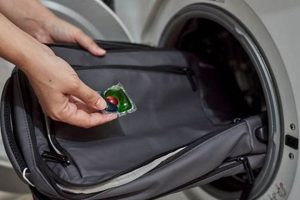
The practice of cleaning a carrying bag involves removing dirt, stains, and odors from its fabric and components. This process can be performed by hand or with a machine, depending on the bag’s material and construction. For instance, a canvas rucksack might be gently scrubbed with a brush and mild detergent, while a more durable nylon pack could potentially be machine-washed on a delicate cycle.
Maintaining a clean carrying bag extends its lifespan and improves hygiene. Regular cleaning prevents the build-up of bacteria and mold, mitigating potential health risks. Furthermore, a clean bag presents a more professional and aesthetically pleasing appearance. Historically, methods for cleaning carrying devices have evolved from simple rinsing to the use of specialized cleaning agents and equipment.
The subsequent sections will provide a detailed guide on how to properly prepare a bag for cleaning, the various cleaning methods available, appropriate drying techniques, and tips for maintaining its cleanliness and integrity over time.
Essential Considerations for Cleaning a Carrying Bag
The following recommendations are intended to optimize the cleaning process and preserve the integrity of carrying bags.
Tip 1: Empty All Compartments: Prior to initiating any cleaning procedure, ensure that all pockets and compartments are completely emptied. Overlooked items can cause damage to the bag or impede the cleaning process.
Tip 2: Remove Detachable Components: Detachable straps, frames, or accessories should be removed before cleaning. This allows for more thorough cleaning of both the bag and the removed components, and prevents potential damage to delicate attachments.
Tip 3: Consult the Care Label: The manufacturer’s care label provides crucial information regarding appropriate cleaning methods and water temperatures. Adherence to these instructions is paramount to avoid irreparable damage.
Tip 4: Spot Treat Stains: Address any visible stains prior to a full cleaning. A targeted stain remover, appropriate for the bag’s fabric, can improve overall cleaning effectiveness.
Tip 5: Use Mild Detergent: Harsh chemicals can degrade the bag’s fabric and compromise its water resistance. Opt for a mild, pH-neutral detergent specifically designed for delicate fabrics.
Tip 6: Air Dry Thoroughly: After cleaning, allow the bag to air dry completely in a well-ventilated area, away from direct sunlight. This prevents the growth of mold and mildew.
Tip 7: Consider Professional Cleaning: For valuable or intricately designed bags, professional cleaning services offer expertise and specialized equipment to ensure optimal results without risking damage.
Adhering to these recommendations contributes to the effective and safe cleaning of carrying bags, extending their usability and maintaining their aesthetic appeal.
The concluding section will summarize the key steps involved in maintaining the cleanliness and longevity of carrying bags.
1. Empty all pockets

The directive to “empty all pockets” is a non-negotiable prerequisite when preparing a carrying bag for cleaning. Failure to adhere to this instruction can lead to a cascade of detrimental consequences, impacting both the cleanliness of the bag and the integrity of its contents. Forgotten items left within the pockets during the cleaning process can introduce foreign substances into the wash water, potentially staining the bag’s fabric or compromising its material. For example, a forgotten pen could leak ink, or residual food particles could foster bacterial growth, leading to unpleasant odors and fabric degradation. Moreover, heavier items can cause uneven weight distribution during the cleaning cycle, placing undue stress on seams and potentially resulting in structural damage.
The implications extend beyond the immediate physical damage. Digital devices, documents, or other valuables inadvertently left in the pockets are highly susceptible to irreversible harm upon exposure to water and detergent. This not only renders the cleaning process counterproductive but also incurs potential financial losses and emotional distress. Conversely, diligent adherence to the “empty all pockets” directive facilitates a more thorough and effective cleaning. It ensures that all surfaces of the bag are accessible to cleaning agents, maximizing stain removal and odor elimination. This proactive measure also mitigates the risk of cross-contamination between the bag and its contents, promoting overall hygiene.
In conclusion, the instruction to “empty all pockets” is not merely a procedural formality but a crucial safeguard for the preservation of the carrying bag and its contents. Ignoring this step introduces significant risks that can undermine the entire cleaning effort, resulting in damage, contamination, and potential loss. Prioritizing this initial action represents a commitment to responsible bag maintenance and the protection of valuable belongings.
2. Detach removable parts

The separation of detachable components from a carrying bag prior to its immersion in water is a critical step that directly influences the efficacy and safety of the cleaning process. This action serves multiple purposes, including the prevention of damage to both the bag and its removable elements, as well as the optimization of cleaning agent penetration. Components such as straps, buckles, frames, and decorative attachments often consist of materials that react adversely to submersion, detergents, or the agitation of a washing machine. For instance, leather straps may stiffen and crack, while plastic buckles can become brittle or discolored. Metal frames may rust or corrode, potentially staining the surrounding fabric of the bag. Furthermore, the weight and bulk of these attached components can create uneven pressure within a washing machine, potentially leading to damage to the machine itself or to the structural integrity of the carrying bag.
By detaching these removable parts, individuals gain the ability to address each component with a cleaning method specifically tailored to its material composition. This might involve hand-washing delicate straps with a mild soap, applying a specialized cleaner to a metal frame to prevent rust, or simply wiping down plastic buckles with a damp cloth. This targeted approach not only ensures a more thorough cleaning but also minimizes the risk of causing irreversible damage. A practical example involves bags with removable padded hip belts or shoulder straps. These items often accumulate significant amounts of sweat and dirt. Detaching them allows for individual soaking and scrubbing, resulting in a more hygienic outcome than would be achievable if they remained attached to the bag during the cleaning process. Moreover, removing internal frames allows the shell to be easily turned inside out for a deeper clean.
In conclusion, the principle of detaching removable parts represents a proactive measure that safeguards the physical integrity of both the carrying bag and its individual components. This practice facilitates a more efficient and customized cleaning approach, minimizing the risk of damage and maximizing the likelihood of a successful outcome. This step contributes significantly to the overall maintenance and longevity of the carrying bag, thereby representing a prudent investment of time and effort.
3. Read care label

The act of reading the care label prior to cleaning a carrying bag directly influences the outcome of the cleaning process and the preservation of the bag’s integrity. The care label, affixed by the manufacturer, provides specific instructions regarding recommended cleaning methods, water temperatures, and permissible drying techniques. These instructions are formulated based on the bag’s material composition, construction, and any applied treatments (e.g., water resistance coatings). Ignoring these guidelines can result in irreversible damage, such as fabric shrinkage, color fading, or the degradation of specialized coatings. For instance, machine-washing a bag labeled “hand wash only” may cause structural damage, while using bleach on a colored bag can lead to discoloration.
The practical significance of adhering to care label instructions is demonstrated in numerous real-world scenarios. A carrying bag constructed from a delicate synthetic fabric may require hand washing with a mild detergent and air drying to prevent shrinkage and maintain its shape. Conversely, a durable nylon bag might be suitable for machine washing on a gentle cycle, followed by low-heat tumble drying. Incorrectly interpreting or disregarding these instructions can void warranties and necessitate costly repairs or replacements. A failure to heed a “do not iron” warning could result in melted fabric or permanent damage to heat-sensitive components. Similarly, neglecting a “dry clean only” instruction for a bag with intricate embellishments could lead to their detachment or damage during a washing cycle.
In summary, the care label functions as a crucial guide for the appropriate cleaning of a carrying bag. Its importance lies in its ability to mitigate risks of damage and ensure the bag’s longevity. Challenges in interpreting care label symbols may necessitate consulting manufacturer websites or seeking professional cleaning advice. Connecting adherence to care label instructions with the broader theme of responsible product maintenance underscores the commitment to extending the lifespan of belongings and minimizing environmental impact.
4. Mild detergent only

The selection of cleaning agents is critical to the process of washing a backpack. The recommendation to utilize “mild detergent only” stems from the potential adverse effects of harsh chemicals on the materials typically used in their construction. Backpack fabrics, often nylon, polyester, or canvas, are susceptible to degradation when exposed to strong detergents containing bleaching agents, enzymes, or high pH levels. Such exposure can result in color fading, weakening of fibers, and damage to water-resistant coatings. The use of a mild detergent, characterized by a neutral pH and the absence of aggressive additives, minimizes these risks and preserves the structural integrity and aesthetic appeal of the item. A case example illustrates this point: a backpack washed with a concentrated laundry detergent exhibited significant color loss and a noticeable reduction in the fabric’s water repellency, rendering it less functional and aesthetically unpleasing.
The practical significance of employing mild detergent extends beyond merely preventing immediate damage. Repeated exposure to harsh chemicals can accelerate the aging process of the fabric, leading to premature wear and tear. This, in turn, reduces the lifespan of the backpack, necessitating earlier replacement and contributing to increased consumer waste. Mild detergents, on the other hand, offer a gentler cleaning action that removes dirt and grime without compromising the long-term durability of the materials. Furthermore, the residue left behind by harsh detergents can attract dirt and allergens, creating a less hygienic environment within the backpack. Mild detergents are formulated to rinse cleanly, leaving minimal residue and promoting a more sanitary condition. Consider the scenario where a backpack used for carrying sports equipment is cleaned with a harsh detergent; the resulting residue could irritate skin and contribute to the growth of bacteria, negating the intended benefits of cleaning.
In summary, the directive to use “mild detergent only” when washing a backpack is not merely a preference but a necessity for maintaining its longevity, functionality, and hygiene. Challenges may arise in identifying genuinely mild detergents, requiring careful scrutiny of product labels and ingredients. Ultimately, adhering to this principle aligns with a broader commitment to responsible consumerism and the sustainable management of resources by extending the usable life of frequently used items.
5. Air dry completely
The directive to “air dry completely” subsequent to cleaning a carrying bag is a critical factor in preventing the proliferation of mold, mildew, and unpleasant odors. Residual moisture trapped within the fabric and seams creates an ideal environment for microbial growth, potentially leading to irreversible damage and rendering the bag unusable. For instance, a backpack stored while damp can develop a pervasive musty smell, necessitating further cleaning efforts or even disposal. Adequate air drying ensures thorough evaporation of moisture, inhibiting the development of these detrimental conditions and extending the bag’s lifespan. The process involves positioning the bag in a well-ventilated area, away from direct sunlight, which can cause discoloration or fabric degradation. Turning the bag inside out facilitates more effective drying of interior compartments and linings.
The practical significance of complete air drying is evident in various scenarios. Consider a student who washes a backpack after a muddy hike. Neglecting to ensure complete dryness before storing it can result in the development of mold spores within the bag’s interior, potentially triggering allergic reactions or respiratory issues upon subsequent use. Similarly, a traveler returning from a trip and cleaning a suitcase must prioritize thorough drying to prevent the transfer of moisture and associated odors to stored clothing. The practice also applies to specialized bags, such as camera bags or laptop backpacks, where trapped moisture can damage sensitive electronic equipment. Furthermore, the type of material influences the drying time; thicker fabrics require longer periods to dry completely, while synthetic materials may dry more rapidly. Therefore, adequate drying time must be allocated based on the bag’s material composition and environmental conditions.
In conclusion, the emphasis on “air dry completely” constitutes a non-negotiable step in the overall maintenance of a carrying bag. Failure to adhere to this principle introduces risks related to hygiene, structural integrity, and overall usability. While the drying time may vary depending on factors such as material and ambient humidity, the fundamental objective remains the same: to eliminate residual moisture and prevent the growth of harmful microorganisms. Integrating this practice into the regular cleaning routine ensures the long-term preservation of the bag and promotes a healthy, hygienic environment for its contents.
6. Spot clean first

The preliminary action of spot cleaning, prior to engaging in a complete cleaning cycle of a carrying bag, constitutes a strategic approach to stain management and material preservation. This method involves targeting localized areas of soiling with specific cleaning agents and techniques, thereby minimizing the need for extensive washing and reducing the potential for damage.
- Preservation of Fabric Integrity
Spot cleaning minimizes the exposure of the entire bag to water and detergent, thereby reducing the risk of color fading, shrinkage, or structural damage. Concentrated cleaning of affected areas prevents the unnecessary abrasion and chemical exposure that a full wash cycle entails. A typical example involves a small ink stain on a canvas bag; targeting the stain directly with a specialized ink remover prevents the need to wash the entire bag, safeguarding the integrity of the surrounding fabric.
- Targeted Stain Removal
Different types of stains require different cleaning agents and techniques. Spot cleaning allows for the selection of the most effective treatment for a specific stain, such as grease, mud, or ink. This targeted approach ensures optimal stain removal while minimizing the risk of damaging the bag’s material. For instance, a grease stain on a nylon bag can be addressed with a degreasing agent, while a mud stain on a canvas bag may require a gentle brush and mild soap. This tailored approach yields superior results compared to a generic wash cycle.
- Prevention of Stain Spreading
Pre-treating stains before a full wash cycle prevents them from setting or spreading during the washing process. Certain stains, when subjected to water and agitation, can become more deeply embedded in the fabric or transfer to other areas of the bag. Spot cleaning effectively isolates and removes these stains, preventing their propagation and ensuring a more thorough cleaning outcome. This is particularly relevant for stains caused by dyes or pigments, which tend to bleed when exposed to water.
- Conservation of Resources
Spot cleaning reduces the consumption of water and detergent compared to a full wash cycle. By addressing localized areas of soiling, it minimizes the environmental impact associated with cleaning. This practice aligns with principles of sustainability and promotes responsible consumer behavior. Furthermore, it saves time and energy by obviating the need for a more extensive cleaning process. For example, removing a small scuff mark with a damp cloth requires significantly less effort than washing the entire bag.
Integrating spot cleaning as a preliminary step in the overall cleaning strategy for carrying bags optimizes stain removal, minimizes fabric damage, conserves resources, and promotes the longevity of the item. This targeted approach represents a prudent investment of time and effort, yielding superior results compared to neglecting localized stains prior to a full wash cycle.
7. Gentle cycle
The utilization of a “gentle cycle” in the context of cleaning a carrying bag represents a critical mitigation strategy against mechanical damage. The aggressive agitation and high spin speeds characteristic of standard washing cycles can inflict substantial stress on the bag’s seams, straps, and delicate components. Such stress can lead to tearing, fraying, and the disintegration of structural elements. A gentle cycle, characterized by reduced agitation and lower spin speeds, minimizes these forces, thereby preserving the bag’s physical integrity. A practical example illustrates this point: a durable hiking backpack, washed on a normal cycle, exhibited significant seam separation and strap abrasion, rendering it less reliable for future use. In contrast, a similar bag, cleaned on a gentle cycle, showed minimal signs of wear.
Furthermore, the type of detergent used in conjunction with the gentle cycle affects the final result. Its essential to employ a mild detergent. The significance of gentle wash and rinse stems from the preservation of protective coatings often applied to carrying bags, such as water repellents. A harsh cycle and strong detergents can strip these coatings, diminishing the bag’s functionality and increasing its susceptibility to water damage. Washing machines with an impeller (a low-profile rotating hub at the bottom) instead of an agitator (a tall spindle in the center) are often more gentle. Washing items by hand removes the dangers of a washing machine entirely.
In summary, the application of a “gentle cycle” to the cleaning process of a carrying bag is not merely a recommendation, but a crucial step in prolonging its lifespan and maintaining its structural integrity. Challenges may arise in determining the appropriate cycle settings or in the absence of a dedicated “gentle” option. A proactive approach involves consulting the bag’s care label and experimenting with lower agitation settings. The integration of this practice into a routine bag maintenance program contributes to the responsible stewardship of resources and the minimization of waste.
Frequently Asked Questions
The following questions address common concerns and misconceptions regarding the proper procedures and considerations involved in cleaning carrying bags.
Question 1: Is machine washing permissible for all types of carrying bags?
Machine washing is not universally suitable for all carrying bags. The bag’s material composition, construction, and the presence of delicate components dictate the appropriate cleaning method. Consulting the manufacturer’s care label is essential. Bags constructed from durable synthetic fabrics may tolerate a gentle machine cycle, while those composed of leather or delicate materials typically require hand washing.
Question 2: What is the optimal water temperature for washing a carrying bag?
The optimal water temperature depends on the bag’s fabric. Cold water is generally recommended to prevent color fading and shrinkage. Hot water may be appropriate for heavily soiled bags constructed from durable, colorfast materials, but should only be used if explicitly indicated on the care label.
Question 3: How frequently should a carrying bag be cleaned?
The frequency of cleaning depends on usage patterns and exposure to dirt and contaminants. Bags used daily or subjected to harsh conditions may require more frequent cleaning than those used infrequently. Visible soiling, unpleasant odors, or exposure to spills warrant immediate cleaning.
Question 4: Are specialized detergents required for cleaning carrying bags?
While specialized detergents are not always mandatory, a mild, pH-neutral detergent is generally recommended to prevent damage to the bag’s fabric and water-resistant coatings. Avoid detergents containing bleach, enzymes, or harsh chemicals, as these can degrade the material.
Question 5: How should a carrying bag be dried after cleaning?
Air drying is the preferred method for drying carrying bags. Machine drying, even on low heat, can cause shrinkage, warping, or damage to delicate components. The bag should be placed in a well-ventilated area away from direct sunlight. Turning the bag inside out facilitates faster and more thorough drying.
Question 6: Can professional cleaning services be utilized for washing carrying bags?
Professional cleaning services are a viable option, particularly for valuable or intricately designed bags. Professional cleaners possess specialized equipment and expertise to ensure optimal cleaning results without risking damage to the bag’s materials or construction.
Properly executed, the washing of a backpack enhances sanitation, extends lifespan, and sustains functional performance. Understanding these nuanced practices ensures that cleaning interventions enhance, rather than diminish, the overall value of the item.
The concluding section will summarize key steps involved in maintaining the cleanliness and longevity of carrying bags, providing practical guidance for sustained care and upkeep.
Conclusion
This exploration has underscored the critical steps involved in the appropriate process. From the initial preparation stages of emptying pockets and detaching removable parts, to the judicious selection of mild detergents and the avoidance of harsh machine cycles, each element contributes to the preservation of the bag’s integrity. The emphasis on thorough air drying serves as a final safeguard against microbial growth and material degradation, thereby extending the item’s usable lifespan.
The knowledge imparted herein serves as a foundation for responsible bag maintenance. By adhering to these established procedures, individuals can proactively protect their investments and contribute to a more sustainable consumption model. Implementing these practices not only sustains the functional utility of carrying bags, but also minimizes the need for premature replacements, fostering a more environmentally conscious approach to product stewardship.