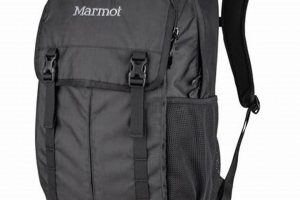
A substantial rucksack, traditionally constructed with a robust external frame, allows for the carriage of significant loads. This equipment configuration, often favored by individuals requiring substantial storage and organized compartmentalization, is particularly suited for extended expeditions or situations demanding the transport of bulky items. An example might include military personnel, experienced hikers, or rescue workers operating in remote locations.
The value of such a carrying system stems from its capacity to distribute weight evenly across the wearer’s back and shoulders, minimizing strain and maximizing comfort over prolonged periods. Historically, this design proved advantageous for various logistical challenges, enabling the efficient movement of supplies and equipment across diverse terrains. The durable construction and modular design further contribute to its reliability and adaptability to diverse operational needs.
The following sections will detail specific aspects of such a carrying system, covering factors like material composition, frame design variations, optimal packing techniques, and relevant user considerations for maximizing its effectiveness and longevity.
Effective Utilization Strategies for High-Capacity External Frame Rucksacks
The following guidelines are intended to facilitate the optimized use of robust external frame carrying systems, ensuring both user comfort and equipment protection.
Tip 1: Weight Distribution is Paramount: Heavier items should be positioned as close to the wearer’s back as feasible and centered within the pack. This minimizes strain and maintains balance, particularly on uneven terrain. For instance, securing dense objects like water containers or battery packs near the spinal column promotes stability.
Tip 2: Frame Adjustment for Torso Length: Prior to loading, adjust the frame to match the wearer’s torso length. An improperly fitted frame can lead to discomfort and inefficient weight transfer. Measurement should be taken from the C7 vertebra to the iliac crest to determine the correct frame size.
Tip 3: Utilize Modular Attachment Points: The external frame allows for the attachment of supplementary pouches and equipment. Strategically position frequently accessed items, such as first aid kits or communication devices, in easily reachable locations. Secure attachments to prevent shifting during movement.
Tip 4: Employ Compression Straps Effectively: Compression straps are designed to stabilize the load and minimize shifting. Tighten these straps to compress the contents and prevent items from moving within the pack, thus reducing potential wear and tear. An example is compressing sleeping bags or soft clothing to reduce volume.
Tip 5: Maintain Proper Posture: Consciously maintain correct posture to alleviate strain on the back and shoulders. Engage core muscles and avoid leaning excessively forward. Regular breaks for stretching and readjustment of the load are recommended on extended excursions.
Tip 6: Regular Equipment Inspection: Periodically inspect the frame, straps, and attachment points for signs of wear or damage. Promptly repair or replace compromised components to ensure the carrying system’s continued integrity. Pay particular attention to stress points such as buckle connections.
Tip 7: Waterproofing Measures: Implement appropriate waterproofing measures to protect the contents from moisture. This can include utilizing waterproof pack covers, dry bags for sensitive electronics, or lining the interior of the pack with a large trash bag.
Adherence to these strategies will enhance the functionality, longevity, and user experience associated with high-capacity external frame rucksacks.
The subsequent sections will explore specific scenarios where these optimization strategies are particularly applicable, alongside insights into long-term maintenance procedures.
1. Capacity and Dimensions

The capacity and dimensions of a large ALICE backpack are defining characteristics dictating its utility and suitability for specific applications. Increased volume, measured in liters or cubic inches, directly translates to the quantity of gear the rucksack can accommodate. Larger dimensions, encompassing height, width, and depth, influence the size and shape of individual items that can be stored within. The interplay of these factors impacts the user’s ability to efficiently organize and transport essential equipment. For example, a larger capacity allows for the carriage of bulkier items like sleeping bags or tents, crucial for extended field operations or multi-day expeditions. Conversely, exceeding optimal dimensions may compromise maneuverability and increase the risk of snagging on terrain.
The importance of capacity and dimensions extends beyond mere storage volume. The ALICE pack’s design, incorporating an external frame, relies on a balanced load distribution to mitigate strain. An inappropriately sized pack, either too large or too small, can disrupt this balance, leading to discomfort and potential injury. Military applications, for instance, necessitate a carrying system capable of accommodating mission-critical gear, including ammunition, communication equipment, and sustenance. The defined dimensions must also align with standard operating procedures and tactical maneuverability requirements, affecting soldier effectiveness. Real-world examples include instances where inadequate pack capacity forced the omission of essential supplies, hindering mission success or endangering personnel.
In summary, capacity and dimensions are foundational attributes of the large ALICE backpack, directly influencing its functionality, usability, and suitability for intended purposes. Selecting the appropriate size is paramount for achieving optimal load carriage, maintaining maneuverability, and ensuring mission effectiveness. Understanding the trade-offs between capacity, dimensions, and intended use remains critical for effective equipment selection and operational planning. Any deviation from size, weight, capacity, etc is not a large ALICE backpack anymore.
2. External Frame Design

The external frame is a defining characteristic of the large ALICE backpack, profoundly influencing its structural integrity, load-bearing capacity, and overall functionality. Its presence dictates how weight is distributed, how attachments are configured, and how the pack interacts with the wearer’s body.
- Frame Material and Construction
The frame, typically constructed from aluminum or steel, provides a rigid structure to support heavy loads. The specific materials and construction techniques (e.g., welding, rivets) directly impact the frame’s strength and durability, determining its ability to withstand stresses encountered during rigorous use. A robust frame is crucial for preventing deformation under load and ensuring the pack’s longevity in demanding environments. For example, military-grade ALICE packs often employ thicker gauge aluminum to withstand the rigors of combat deployments.
- Weight Distribution and Load Transfer
The external frame facilitates effective weight distribution by transferring the load from the pack to the wearer’s hips and shoulders. This is achieved through a combination of shoulder straps, a hip belt, and the frame’s structural design. The frame’s geometry and adjustability influence how evenly the weight is distributed, impacting comfort and reducing strain on the back. An improperly fitted or poorly designed frame can concentrate weight on specific pressure points, leading to discomfort and potential injury. Adjusting the frame size and strap configuration is therefore crucial to the optimal load distribution.
- Attachment Points and Modularity
The external frame provides a platform for attaching various accessories and equipment, enhancing the pack’s modularity and adaptability. Attachment points, such as loops, straps, and buckles, allow users to customize the pack according to their specific needs. This can include attaching additional pouches, sleeping bags, or tools to the exterior of the pack. The quantity, placement, and strength of these attachment points are critical for ensuring that additional gear can be securely carried without compromising the pack’s balance or structural integrity.
- Ventilation and Airflow
The space created between the pack body and the wearer’s back, facilitated by the external frame, promotes airflow and ventilation. This helps to reduce perspiration and improve comfort, particularly in hot or humid conditions. The frame’s design influences the degree of ventilation, with some frames incorporating mesh panels or channels to further enhance airflow. Improved ventilation can mitigate the risk of overheating and improve overall user endurance during strenuous activities.
In conclusion, the external frame is an integral component of the large ALICE backpack, directly influencing its load-carrying capacity, comfort, and versatility. The frame’s material, construction, design, and adjustability all contribute to its overall performance and suitability for various applications, ranging from military operations to extended backcountry expeditions. Understanding these aspects of the external frame is essential for selecting and utilizing a large ALICE backpack effectively.
3. Modular Attachment Points

Modular attachment points are a fundamental design element of the large ALICE backpack, enabling users to customize the carrying system to accommodate specific mission or task requirements. These points, typically consisting of webbing loops, grommets, or specialized attachment systems (e.g., MOLLE), are strategically positioned across the backpack’s exterior and, in some instances, interior surfaces. The presence of these attachment points allows for the integration of additional pouches, equipment carriers, and specialized tools, effectively expanding the backpack’s storage capacity and functional versatility. Without these modular points, the ALICE pack would be a much less adaptable and useful piece of kit for a wider range of uses.
The significance of modular attachment points stems from the diverse operational needs of military personnel, outdoors enthusiasts, and other users of the large ALICE backpack. For example, a soldier might attach ammunition pouches, a first-aid kit, and a hydration carrier to the exterior of the pack, ensuring quick access to essential items in combat situations. Similarly, a hiker might attach a sleeping bag, tent poles, or a water bottle carrier, tailoring the pack to the specific demands of a multi-day backpacking trip. The ability to rapidly reconfigure the pack based on changing circumstances is a crucial advantage, allowing users to adapt to evolving mission parameters or environmental conditions. This contrasts sharply with fixed-configuration backpacks, which lack the flexibility to accommodate varying load requirements.
In summary, modular attachment points are an integral feature of the large ALICE backpack, directly contributing to its adaptability and utility across a broad spectrum of applications. The ability to customize the pack with additional pouches and equipment carriers allows users to optimize the carrying system for specific tasks, enhancing efficiency and ensuring readiness in diverse operational environments. The strategic design and placement of these attachment points are therefore critical considerations for maximizing the backpack’s functional potential. Understanding the purpose and function of these attachment points makes the large ALICE backpack much more valuable.
4. Weight Distribution System

The weight distribution system is a critical element of the large ALICE backpack, fundamentally impacting user comfort, stability, and overall carrying efficiency. Given the potential for significant load carriage associated with this pack design, the system’s effectiveness is paramount for mitigating strain and preventing injury.
- Frame Integration and Load Transfer
The ALICE pack’s external frame serves as the primary load-bearing structure. It facilitates the transfer of weight from the pack body to the wearer’s hips and shoulders. The frame’s geometry and construction influence how efficiently this transfer occurs. For example, a poorly designed or improperly adjusted frame can concentrate weight on the shoulders, leading to fatigue and discomfort. Conversely, a well-integrated frame distributes the load more evenly, minimizing strain on specific muscle groups. The ability of the frame to effectively transfer weight to the hips is especially crucial for carrying heavier loads.
- Harness System: Shoulder Straps and Hip Belt
The shoulder straps and hip belt are key components of the weight distribution system. The shoulder straps should be padded and adjustable to conform to the wearer’s torso, distributing weight across the shoulders and upper back. The hip belt, ideally padded and contoured, plays a crucial role in transferring a significant portion of the load to the hips, the body’s strongest weight-bearing structure. An ill-fitting hip belt or poorly adjusted shoulder straps can negate the benefits of the frame, leading to inefficient weight distribution and increased strain. For example, if a hip belt rides too high, it will fail to effectively transfer weight to the hips.
- Load Stabilization Straps
Load stabilization straps, typically located on the sides and top of the pack, are designed to compress the load and prevent it from shifting during movement. Shifting loads can disrupt balance and increase energy expenditure. By tightening these straps, the user can minimize load movement and maintain a more stable center of gravity. In practical terms, stabilizing straps ensure that the contents of the ALICE pack remain compact and secure, preventing items from bouncing around and causing discomfort or instability, particularly when navigating uneven terrain.
- Torso Length Adjustment
The ability to adjust the torso length of the ALICE pack is essential for optimizing weight distribution. Different individuals have different torso lengths, and a pack that is not properly adjusted can lead to inefficient weight transfer and discomfort. Many ALICE pack frames feature adjustable shoulder strap attachment points, allowing the user to fine-tune the fit to their specific torso length. Failing to adjust the torso length can result in the shoulder straps bearing too much weight or the hip belt not sitting correctly on the hips, compromising the effectiveness of the entire weight distribution system.
In summary, the weight distribution system of the large ALICE backpack is a multifaceted system comprised of the frame, harness, stabilization straps, and adjustment mechanisms. A properly functioning system is essential for maximizing carrying efficiency, minimizing strain, and ensuring user comfort, particularly when transporting heavy loads over extended periods or challenging terrain. A careful selection and configuration are both vital.
5. Material Durability

The relationship between material durability and the large ALICE backpack is fundamental to the system’s intended purpose and operational longevity. Material selection directly affects the backpack’s resistance to wear and tear, abrasion, puncture, and environmental degradation. Inadequate material strength compromises the pack’s structural integrity, leading to premature failure, equipment damage, and potential risk to the user. For instance, the original ALICE packs were often constructed using nylon duck canvas, a material chosen for its balance of weight and abrasion resistance. Failure to use materials of sufficient quality will result in ripping or tearing during field use, making the pack useless.
The importance of material durability is underscored by the demanding conditions under which large ALICE backpacks are typically deployed. Military applications expose the packs to extreme temperatures, rough terrain, and prolonged exposure to the elements. Outdoor enthusiasts similarly subject the packs to rigorous use during backpacking trips, climbing expeditions, and search and rescue operations. In these scenarios, a backpack constructed from inferior materials is prone to degradation, potentially jeopardizing the user’s ability to transport essential equipment or complete mission objectives. A real-world example includes substandard ALICE packs used during the Vietnam War. They were quickly replaced due to seams ripping after minimal usage. Material strength is key.
In conclusion, material durability is a non-negotiable characteristic of the large ALICE backpack. It is a direct determinant of the pack’s lifespan, reliability, and ability to withstand the stresses of demanding operational environments. Understanding the specific material properties required for different applications is crucial for selecting a pack that meets the user’s needs and ensures long-term performance. It is vital to maintain quality control. The absence of durability compromises the pack’s utility, potentially impacting mission success and user safety.
6. Military Specifications

Military specifications are intrinsically linked to the large ALICE (All-Purpose Lightweight Individual Carrying Equipment) backpack, dictating its design, materials, and performance characteristics. These specifications, often documented in detail, ensure that the backpack meets the rigorous demands of military operations, including load-bearing capacity, durability, environmental resistance, and compatibility with other military equipment. Adherence to military specifications is not merely a formality; it directly affects the backpack’s reliability and the safety of the personnel using it. The large ALICE backpack exists as it is because military specifications have shaped its creation. Without the need for the US Military this backpack would not have been designed.
The significance of military specifications is evident in various aspects of the ALICE backpack. Material selection, for instance, is often guided by specific requirements for tensile strength, abrasion resistance, and water repellency. Stitching patterns, buckle strength, and frame construction are similarly governed by military standards to ensure the backpack can withstand heavy loads and harsh conditions. The standardized attachment points (e.g., MOLLE webbing) are also a direct result of military specifications, allowing for seamless integration with other modular equipment. For example, an ALICE pack failing to meet the military’s minimum load capacity during a field test would be deemed unacceptable, highlighting the practical importance of these standards.
In summary, military specifications are an indispensable component of the large ALICE backpack, shaping its design, construction, and performance. These specifications are not merely arbitrary requirements but are based on practical experience and rigorous testing to ensure that the backpack can meet the demands of military operations. Understanding the connection between military specifications and the ALICE backpack is crucial for appreciating its functionality, reliability, and its role in supporting military personnel in diverse and challenging environments. A challenge is maintaining high quality and also keeping production costs down.
Frequently Asked Questions
This section addresses common inquiries regarding the large ALICE (All-Purpose Lightweight Individual Carrying Equipment) backpack, providing clear and concise answers to frequently encountered questions.
Question 1: What is the standard capacity, in liters, of a large ALICE backpack?
The standard capacity of a large ALICE backpack typically ranges from 60 to 75 liters, although variations may exist depending on the specific manufacturer and model. This measurement refers to the internal volume available for storing equipment and supplies.
Question 2: Are all large ALICE backpacks constructed with an external frame?
Yes, the defining characteristic of the ALICE backpack system, including the large variant, is the presence of an external frame. This frame provides structural support and facilitates weight distribution.
Question 3: Is the large ALICE backpack waterproof?
The materials used in the construction of the large ALICE backpack are typically water-resistant but not fully waterproof. Additional measures, such as a rain cover or waterproof liners, are recommended to protect the contents from moisture.
Question 4: Can modern MOLLE pouches be attached to the older ALICE pack webbing?
While some MOLLE pouches can be attached to ALICE pack webbing due to similar dimensions, full compatibility is not guaranteed. Minor adjustments or modifications may be necessary for secure attachment. It is recommended to test compatibility before relying on this configuration in the field.
Question 5: What is the typical empty weight of a large ALICE backpack with a frame?
The empty weight of a large ALICE backpack with a frame typically ranges from 7 to 9 pounds. This weight can vary depending on the frame material and construction, as well as the fabric used in the pack body.
Question 6: What is the primary advantage of the external frame design of the large ALICE backpack compared to frameless packs?
The primary advantage is improved weight distribution and load-carrying capacity. The external frame allows for the transfer of weight to the hips and shoulders, reducing strain on the back and enabling the transport of heavier loads more comfortably.
This FAQ section provides essential information regarding the large ALICE backpack. Prospective users should carefully consider these factors when selecting and utilizing this type of equipment.
The next article section will delve into specific modifications and enhancements that can be made to the large ALICE backpack to further optimize its performance and functionality.
In Summary
This exploration has detailed the multifaceted aspects of the large ALICE backpack, emphasizing its design characteristics, utility, and operational considerations. The analysis encompasses frame design, material durability, weight distribution, modularity, and adherence to military specifications. Understanding these elements is paramount for effective selection and deployment of this carrying system. The large ALICE backpack, while mature in its design, continues to serve as a relevant platform for load carriage in demanding environments.
Continued awareness of evolving load carriage technologies and adaptation of best practices in equipment utilization remains crucial. A comprehensive understanding of the large ALICE backpack’s strengths and limitations will facilitate informed decision-making and optimized performance in diverse operational contexts. Further research and innovation in this domain should prioritize ergonomic improvements, enhanced material science, and adaptation to emerging operational requirements.
![The Best Good Motorcycle Backpack [Review 2024] | Ultimate Backpack Traveler Guide: Tips, Destinations & Budget Hacks](https://backpack-traveler.com/wp-content/uploads/2026/05/th-245-300x200.jpg "The Best Good Motorcycle Backpack [Review 2024] Ultimate Backpack Traveler Guide: Tips, Destinations & Budget Hacks")