



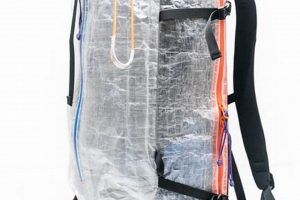
These specialized carrying systems, frequently chosen by long-distance hikers and minimalist backpackers, represent a commitment to lightweight design and durable construction. An example would be a frameless pack crafted from Dyneema Composite Fabric, favored for its water resistance and exceptional strength-to-weight ratio.
The significance of this class of equipment lies in its ability to reduce base weight, enabling increased efficiency and reduced strain on the user during extended trips. Historically, traditional backpacking packs were significantly heavier; these alternatives offer a modern solution, leveraging advanced materials to minimize load without compromising durability or functionality.
The following discussion will examine specific design features, material considerations, and practical applications relevant to understanding these advanced backpacking solutions. Factors such as volume capacity, weight distribution, and customization options will also be explored to provide a thorough overview.
Zpacks Backpacks
Optimizing the use of these specialized backpacks requires careful attention to several key aspects, ensuring both comfort and efficiency on the trail.
Tip 1: Pack Volume Selection: Choose the appropriate pack volume based on the length and type of trip. Shorter trips require smaller volumes (e.g., 40-50 liters), while extended expeditions may necessitate larger volumes (e.g., 55-65+ liters). Overpacking negates the weight-saving benefits.
Tip 2: Weight Distribution: Distribute weight evenly within the pack. Place heavier items closer to the spine and higher up in the pack to maintain balance and minimize strain. Use compression straps to stabilize the load.
Tip 3: Utilizing External Attachment Points: Employ external attachment points for items such as trekking poles, ice axes, or sleeping pads. Secure these items tightly to prevent swaying and maintain stability during movement.
Tip 4: Water Resistance Considerations: While many models are constructed from water-resistant materials, complete waterproofing is not always guaranteed. Utilize a pack liner or dry bags to protect sensitive items such as electronics, sleeping bags, and clothing from moisture.
Tip 5: Durability Management: Despite their lightweight construction, these packs are designed for durability. However, avoid excessive abrasion against rocks or sharp objects. Periodically inspect the pack for signs of wear and tear, addressing any issues promptly to prevent further damage.
Tip 6: Shoulder Strap and Hip Belt Adjustment: Proper adjustment of shoulder straps and hip belt is crucial for comfort and load transfer. The hip belt should bear the majority of the pack’s weight, relieving pressure on the shoulders. Experiment with different adjustments to find the optimal fit.
Tip 7: Pack Customization: Many manufacturers offer customization options, such as torso length adjustments or the addition of accessories like water bottle pockets or hip belt pouches. Consider these options to tailor the pack to individual needs and preferences.
Effective utilization of these lightweight carrying systems hinges on informed decision-making and careful execution. Prioritizing proper packing techniques, weight distribution, and pack maintenance will maximize the benefits of this specialized equipment.
The following sections will delve into specific product models, providing detailed analyses and comparative evaluations to aid in the selection process.
1. Ultralight construction

Ultralight construction is a defining characteristic in the design and application of these specialized backpacking packs. The reduction of weight, without sacrificing structural integrity, forms the core philosophy behind this class of equipment, influencing material selection, design features, and overall performance.
- Dyneema Composite Fabric (DCF) Utilization
DCF is frequently employed due to its exceptional strength-to-weight ratio compared to traditional pack fabrics. The implementation of DCF in the construction reduces overall pack weight while maintaining resistance to tearing and abrasion. For example, a DCF backpack can weigh significantly less than a comparable nylon pack without a commensurate decrease in durability, albeit at a higher material cost. This translates to reduced strain on the user during long-distance treks.
- Minimalist Design Philosophy
This design approach eliminates unnecessary features and components to minimize weight. Elements such as excessive padding, extraneous pockets, and heavy zippers are often omitted or replaced with lighter alternatives. For example, frameless pack designs eschew internal frames in favor of relying on proper packing techniques to provide structure and support. This approach directly reduces the overall mass of the pack.
- Component Selection & Optimization
Each component, from buckles and webbing to stitching and zippers, is selected based on its weight and performance characteristics. Lightweight alternatives are prioritized whenever possible without compromising functionality. For instance, smaller, lighter buckles may be chosen over larger, heavier ones if they meet the required strength specifications. The cumulative effect of these small weight savings contributes significantly to the overall ultralight nature of the pack.
- Impact on Pack User Experience
This design contributes to a more efficient and comfortable backpacking experience, particularly for long-distance hikers. The reduced weight allows users to cover greater distances with less exertion, minimizing fatigue and increasing overall enjoyment. However, it also necessitates careful packing and weight distribution to maintain stability and comfort, demanding a higher level of user expertise. A lighter pack allows for a higher proportion of consumable supplies (food, water) to be carried without exceeding optimal total pack weight.
The focus on ultralight construction in these packs represents a deliberate trade-off, prioritizing weight savings over certain traditional features. Understanding the design principles and material choices behind this approach is crucial for users seeking to maximize the benefits of lightweight backpacking.
2. Dyneema Composite Fabric and Backpacks

Dyneema Composite Fabric (DCF) represents a significant advancement in material science for lightweight backpacking equipment, playing a pivotal role in the performance characteristics of certain high-end backpacks.
- Exceptional Strength-to-Weight Ratio
DCF’s defining characteristic is its unparalleled strength-to-weight ratio, significantly exceeding that of traditional pack materials like nylon or polyester. This allows manufacturers to create extremely lightweight packs without compromising durability. For example, a DCF pack can withstand considerable abrasion and tearing forces despite weighing a fraction of a comparable nylon pack.
- Water Resistance and Waterproofing
DCF is inherently waterproof, providing a superior barrier against moisture compared to water-resistant coatings applied to conventional fabrics. This feature minimizes the need for additional pack covers or liners, reducing overall weight and complexity. Field tests demonstrate that DCF packs effectively protect contents even under prolonged exposure to rain or snow.
- UV Resistance and Degradation
While highly resistant to water, DCF’s long-term UV resistance is a consideration. Prolonged exposure to sunlight can degrade the Dyneema fibers over time, potentially reducing the fabric’s overall strength. Manufacturers sometimes incorporate UV-resistant coatings or suggest storage practices to mitigate this effect.
- Cost and Repair Considerations
DCF is a premium material, resulting in a higher price point for backpacks constructed from it. Repairing DCF can also be more challenging than repairing conventional fabrics, often requiring specialized adhesives or patches. However, the durability and weight savings often justify the increased cost for serious backpackers.
The integration of DCF into the design of backpacking equipment reflects a commitment to performance and weight reduction. Its properties contribute to the overall efficiency and user experience of the equipment, albeit with considerations for cost and long-term UV degradation.
3. Minimalist design

Minimalist design, as applied to specialized backpacking packs, represents a deliberate reduction of features and components, prioritizing functional efficiency and weight optimization.
- Weight Reduction Through Feature Elimination
The primary role of minimalist design is to reduce overall pack weight by removing non-essential elements. This may include eliminating internal frames, minimizing padding, and replacing heavy zippers with lighter alternatives. For example, a pack may forego multiple compartments in favor of a single main compartment, thereby decreasing weight and complexity. The implication is a lighter load for the user, enabling increased efficiency and reduced strain during long-distance travel.
- Focus on Essential Functionality
Minimalist design emphasizes essential functionality while discarding extraneous features. This entails a concentration on load carrying, weather protection, and durability, streamlining the pack to its core purpose. An example is the omission of extensive organizational pockets in favor of a simple, waterproof main compartment. This simplification improves ease of use and reduces potential failure points.
- Material Optimization for Efficiency
This design approach necessitates careful material selection, favoring lightweight and durable materials such as Dyneema Composite Fabric (DCF). The use of such materials allows for a reduction in the overall bulk and weight of the pack without compromising its structural integrity. A DCF pack, for instance, can achieve comparable strength to a nylon pack while weighing significantly less.
- Enhanced Packability and Adaptability
This design facilitates easier packability and adaptability to various load configurations. The absence of rigid frames and superfluous compartments allows for greater flexibility in packing different types of gear. An example is the ability to compress the pack to a smaller size when carrying less gear, optimizing space utilization. The result is a more versatile and efficient carrying system.
The minimalist design philosophy inherent in specialized backpacking packs translates to tangible benefits for the user, including reduced weight, increased efficiency, and enhanced adaptability. However, it also requires a more disciplined approach to packing and weight distribution, emphasizing the importance of user skill and experience.
4. Load capacity
Load capacity constitutes a critical specification for backpacking equipment, directly influencing the suitability of these packs for various trip durations and gear requirements. Understanding the interplay between volume, weight, and user needs is essential for optimal pack selection.
- Volume and Trip Length
Pack volume, typically measured in liters, dictates the amount of gear that can be carried. Shorter trips with minimal gear needs require smaller volumes (e.g., 40-50 liters), while extended expeditions necessitate larger capacities (e.g., 55-65+ liters). Overestimating volume results in unnecessary weight and bulk, while underestimating limits gear carrying capacity. Examples include weekend trips requiring less than 50 liters, compared to multi-week excursions often demanding 60 liters or more. Accurate trip planning is paramount for determining appropriate pack volume.
- Weight Limits and Material Strength
While pack volume indicates carrying capacity, weight limits define the maximum load the pack can safely support. Exceeding weight limits can compromise the pack’s structural integrity, leading to premature wear or failure. The pack’s material and construction determine its weight-bearing capabilities, with Dyneema Composite Fabric (DCF) offering a high strength-to-weight ratio. Exceeding recommended weight limits can void warranties and jeopardize safety. For instance, a pack might have a 55-liter volume but a recommended maximum weight of 30 pounds.
- Gear Distribution and Pack Stability
Effective load distribution is crucial for maintaining pack stability and comfort. Heavier items should be placed closer to the spine and higher up in the pack to minimize strain and promote balance. Uneven weight distribution can lead to discomfort, instability, and potential injury. The pack’s design, including features such as compression straps, plays a role in facilitating proper load distribution. Improper packing can make even a well-designed pack feel unstable and cumbersome.
- Impact on User Endurance
Carrying a heavy load significantly impacts user endurance and energy expenditure. Minimizing pack weight, through both volume selection and gear optimization, enhances efficiency and reduces fatigue during long-distance treks. Every pound saved contributes to improved performance and reduced strain on joints and muscles. For example, reducing pack weight by 5 pounds can translate to a noticeable difference in energy levels over the course of a multi-day hike.
These aspects demonstrate that load capacity is not solely a measure of volume but also encompasses weight limits, gear distribution considerations, and the impact on the user’s physical capabilities. Careful consideration of these factors is essential for selecting the appropriate equipment and maximizing its performance during backpacking endeavors.
5. Weather resistance
Weather resistance is a critical factor in the selection and performance of backpacking equipment. The ability to protect gear from the elements directly influences user safety, comfort, and the overall success of outdoor expeditions.
- Material Impermeability
The core of weather resistance resides in the inherent impermeability of the pack’s fabric. Materials such as Dyneema Composite Fabric (DCF) offer complete waterproofing, preventing water penetration even under sustained exposure to rain or snow. This characteristic eliminates the need for additional rain covers in many situations, reducing weight and simplifying pack management. An example includes a DCF pack maintaining dryness inside during prolonged downpours, protecting sensitive items like sleeping bags and electronics. The implication is increased reliability in adverse weather conditions.
- Seam Construction
Even waterproof materials can be compromised by poorly constructed seams. Taped or sealed seams are essential for preventing water ingress through needle holes and fabric junctions. This technique creates a continuous barrier, ensuring the pack’s overall water resistance. Untaped seams, conversely, can allow water to seep in, negating the benefits of a waterproof fabric. Quality seam construction directly correlates with the pack’s ability to withstand wet conditions.
- Closure Systems
The design of the pack’s closure system also impacts weather resistance. Roll-top closures, commonly found in minimalist designs, provide a secure and watertight seal when properly executed. Zippers, while convenient, are more vulnerable to water penetration and typically require water-resistant coatings or flaps. The choice of closure system reflects a balance between ease of access and weather protection. A properly rolled and buckled closure can prevent water from entering the main compartment, even when submerged briefly.
- Component Durability
Weather resistance extends beyond water impermeability to encompass the durability of components under varying environmental conditions. Buckles, straps, and zippers must withstand exposure to moisture, temperature fluctuations, and UV radiation without degrading or failing. Corrosion-resistant hardware is crucial for maintaining functionality over extended periods. The breakdown of these components can compromise the pack’s overall performance and lifespan.
These considerations underscore the significance of weather resistance in these specialized packs. A holistic approach, encompassing material selection, seam construction, closure design, and component durability, is essential for providing reliable protection against the elements and ensuring a safe and comfortable backpacking experience. The choice of these factors affects gear survival and user experience.
6. Modular accessories

The integration of modular accessories into specialized backpacking systems significantly enhances their adaptability and utility. This design principle allows users to customize their pack to meet specific needs, adjusting capacity and functionality based on the planned activity. A prime example is the attachment of external water bottle holders or hip belt pouches, augmenting the pack’s existing features without permanently altering its structure. The availability of modularity provides a distinct advantage in adapting to diverse environments and trip profiles.
The practical significance of modular accessories is evident in scenarios where users require specific gear arrangements. For instance, a photographer might add a specialized lens case to the hip belt, while a climber could attach external gear loops for carrying ice axes or ropes. Furthermore, damaged components, such as a broken water bottle pocket, can be replaced independently without requiring the replacement of the entire pack. This targeted repairability minimizes waste and extends the lifespan of the equipment.
In summary, modular accessories represent a deliberate design choice that enhances the versatility and longevity of backpacking systems. By allowing users to tailor their packs to specific needs and to replace individual components as needed, modularity promotes efficiency, reduces waste, and ultimately provides a more adaptable and sustainable backpacking experience. Challenges related to compatibility between different accessory brands and the potential for increased weight due to accessory additions warrant consideration in the selection and utilization process.
7. Durability
Durability is a critical attribute in specialized backpacking equipment, directly influencing its longevity and suitability for demanding outdoor environments. The relationship between durability and these packs centers on the materials used, the construction techniques employed, and the intended usage scenarios. High-quality materials such as Dyneema Composite Fabric (DCF) offer inherent tear resistance and abrasion resistance, crucial for withstanding the rigors of trail use. Reinforced stress points, such as those around shoulder strap attachments and zipper junctions, mitigate potential failure points. For example, a pack constructed with DCF and reinforced stitching is expected to endure significantly more wear and tear than a comparable pack made from conventional nylon. The practical significance of this enhanced durability lies in its ability to minimize the risk of equipment failure during extended trips, ensuring the user’s safety and comfort.
However, even with advanced materials and construction, factors such as improper usage and environmental conditions can impact long-term durability. Exposure to excessive UV radiation, abrasion against sharp rocks, and overloading beyond specified weight limits can accelerate wear and tear. For instance, regularly dragging the pack across abrasive surfaces or storing it in direct sunlight can degrade the fabric and reduce its lifespan. Therefore, understanding the pack’s limitations and adhering to recommended usage practices are essential for maximizing its durability. Furthermore, proper maintenance, including regular cleaning and prompt repair of any damage, contributes to prolonging the equipment’s usability. While these packs are designed for lightweight performance, prioritizing their durability also requires mindful handling and care.
In conclusion, durability forms an integral component of high-performance backpacking equipment. While materials and construction play a central role in determining its inherent robustness, user behavior and maintenance practices significantly influence its actual lifespan. The trade-off between weight savings and durability is a constant consideration, but ultimately, a durable pack provides enhanced reliability and long-term value. Despite the benefits of enhanced durability, challenges remain in balancing weight reduction with ensuring long-term reliability, especially in ultralight designs. The user is responsible for maintaining it.
Frequently Asked Questions
The following questions address common inquiries regarding specialized lightweight backpacking packs, focusing on their design, performance characteristics, and appropriate usage.
Question 1: What distinguishes these backpacks from conventional models?
These packs are primarily distinguished by their ultralight construction, achieved through the use of materials like Dyneema Composite Fabric (DCF) and minimalist design principles. This results in a significantly lower base weight compared to traditional packs.
Question 2: Are these packs suitable for heavy loads?
While designed for efficiency, these packs are not intended for excessively heavy loads. Exceeding recommended weight limits can compromise their structural integrity. Load capacity should align with the pack’s specifications and the user’s carrying ability.
Question 3: How durable are these backpacks compared to those made from nylon?
Durability depends on material selection and usage. DCF offers high tear resistance but may be more susceptible to abrasion than some types of nylon. Proper care and maintenance are crucial for maximizing longevity, regardless of material.
Question 4: Are these backpacks waterproof?
Many of these packs utilize waterproof materials like DCF, but seam construction and closure systems also impact water resistance. Taped seams and roll-top closures enhance waterproofing. However, complete submersion may still result in water ingress.
Question 5: What is the best way to pack these backpacks for optimal comfort?
Proper packing involves distributing weight evenly, placing heavier items closer to the spine and higher up in the pack. Compression straps can help stabilize the load. Frameless models require careful packing to provide structure and support.
Question 6: Can these backpacks be repaired if damaged?
Repairability depends on the type of damage and the pack’s construction. Minor tears in DCF can often be repaired with specialized tape or adhesives. More significant damage may require professional repair services.
These answers provide a foundation for understanding the capabilities and limitations of these specialized carrying systems.
The subsequent section will delve into the specifics of pack maintenance and care, offering guidance on prolonging the life and performance of the equipment.
The preceding exploration has illuminated key facets of these specialized backpacking systems, emphasizing their ultralight construction, material composition, design principles, and practical applications. A recurring theme has been the balance between weight reduction and performance, highlighting the importance of informed decision-making in selecting and utilizing appropriate equipment. Considerations such as load capacity, weather resistance, durability, and modularity all play a pivotal role in determining the suitability of a particular pack for a given undertaking.
Ultimately, the effectiveness of this class of equipment hinges on a thorough understanding of its capabilities and limitations, as well as a commitment to responsible usage and maintenance. The future of lightweight backpacking equipment likely will bring further advancements in materials science and design, potentially yielding even more efficient and durable solutions. The diligent application of current knowledge remains paramount for maximizing the benefits and minimizing the risks associated with these tools.

![The Ultimate Backpack With Screen: [Your Niche] Backpacker's Gear! | Ultimate Backpack Traveler Guide: Tips, Destinations & Budget Hacks](https://backpack-traveler.com/wp-content/uploads/2026/05/th-178-300x200.jpg "The Ultimate Backpack With Screen: [Your Niche] Backpacker's Gear! Ultimate Backpack Traveler Guide: Tips, Destinations & Budget Hacks")