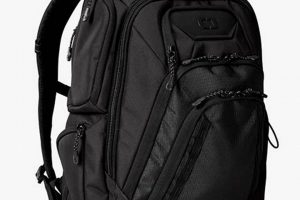
Devices designed to secure the closure mechanisms of bags are intended to deter theft and unauthorized access. These mechanisms often employ a small padlock or a combination lock that fastens the two zipper pulls together, preventing the bag from being easily opened. For example, a traveler might use such a device on their luggage to safeguard valuables while navigating public transportation.
The implementation of such security measures offers peace of mind and acts as a visible deterrent, potentially discouraging opportunistic thieves. While not foolproof, these additions can significantly increase the time and effort required to access the contents of a bag, making it a less attractive target. Historically, securing luggage and personal belongings has been a concern, leading to various innovations in lock technology, from simple keyed locks to more complex combination systems.
The following sections will delve into the types of devices available, their effectiveness in different scenarios, selection criteria, and best practices for their use, alongside a discussion on alternative security measures for backpacks and similar items.
Securing Backpacks
The following provides practical advice regarding enhanced security for personal belongings carried in backpacks, focusing on methods to deter unauthorized access and potential theft.
Tip 1: Select Robust Devices. Opt for mechanisms constructed from durable materials such as hardened steel or alloys. These offer greater resistance against cutting or forced entry compared to cheaper, less robust alternatives.
Tip 2: Consider Combination Locks. Combination-based locking systems eliminate the need for keys, reducing the risk of lost or stolen keys compromising security. Memorize the combination and avoid storing it within the backpack itself.
Tip 3: Regularly Inspect Devices. Periodically examine locking mechanisms for signs of wear, damage, or tampering. Replace any compromised devices immediately to maintain security integrity.
Tip 4: Secure Zipper Pulls Correctly. Ensure that both zipper pulls are fully engaged within the locking mechanism. A partially secured zipper presents a vulnerability that can be easily exploited.
Tip 5: Use in Conjunction with Other Security Measures. Consider combining security mechanisms with other deterrents such as cable locks to secure the entire backpack to a stationary object in high-risk environments.
Tip 6: Be Mindful of the Environment. The effectiveness of security mechanisms is influenced by the surrounding environment. In crowded areas, increased vigilance and proactive measures are particularly important.
Effective use of these security additions can significantly reduce the risk of theft and unauthorized access to the contents of backpacks. While no system is entirely impenetrable, implementing these strategies provides a valuable layer of protection.
The subsequent section will discuss alternative security methods and considerations for travel and daily commuting.
1. Durability

Durability, in the context of securing backpack closures, refers to the ability of a locking mechanism to withstand force, wear, and environmental factors over an extended period. Its importance stems from the fundamental need to deter unauthorized access and protect the contents of a bag from theft or damage.
- Material Composition and Strength
The selection of materials directly dictates the lock’s resistance to cutting, prying, and impact. Hardened steel, brass alloys, and reinforced polymers are commonly employed for their high tensile strength and resilience. A lock constructed from low-grade materials is inherently susceptible to failure, rendering it ineffective against even minimal force.
- Environmental Resistance
Exposure to moisture, extreme temperatures, and corrosive substances can degrade the structural integrity of a locking mechanism. Rust and corrosion can compromise the internal components, leading to malfunctions or complete failure. Seals and protective coatings can mitigate these risks, extending the lifespan of the lock under adverse conditions.
- Mechanism Robustness
The internal mechanisms of combination or keyed locks must be designed to endure repeated use without degradation. Wear and tear on the tumblers, levers, or pins can result in unreliable operation or susceptibility to manipulation. Precision engineering and high-quality components contribute to the long-term reliability of the locking mechanism.
- Resistance to Tampering
A durable lock should be designed to resist attempts at manipulation or circumvention. This includes protection against picking, shimming, and other common lock-defeating techniques. Complex internal designs and anti-pick features increase the difficulty and time required to compromise the lock, serving as a significant deterrent.
The facets of material composition, environmental resistance, mechanism robustness, and tamper resistance collectively define the durability of security mechanisms for backpack closures. Selecting a lock that addresses these factors is crucial for ensuring long-term protection and peace of mind. The absence of any of these qualities will quickly render the lock useless.
2. Locking Mechanism

The locking mechanism represents the critical component that transforms a standard zipper into a security feature, integral to the functionality of closure security for bags. Its effectiveness directly determines the ability to deter theft and unauthorized access. The principle of cause and effect is evident: a weak or poorly designed mechanism provides minimal security, while a robust and well-engineered one significantly increases the difficulty of forced entry. A basic padlock securing zipper pulls is one example of a locking mechanism; a more sophisticated example would be a combination lock integrated into the zipper itself.
The practical significance of understanding this connection lies in the ability to make informed purchasing decisions. Consider a traveler securing a backpack during international transit. A simple, easily defeated mechanism offers little protection against determined thieves. Conversely, a lock featuring hardened materials and complex internal components substantially reduces the risk of theft. Law enforcement agencies understand the importance of the locking mechanism when identifying security vulnerabilities. The proper locking mechanism also prevents an accidental opening or damage
In summary, the locking mechanism forms the core of any effective zipper security system. Its selection should be based on a thorough assessment of potential threats and the desired level of protection. Challenges remain in balancing security with user-friendliness, but a clear understanding of this relationship is essential for mitigating the risks associated with unsecured bags. The quality of the mechanism determines the quality of security.
3. Tamper Resistance

Tamper resistance, in the context of backpack zipper security, signifies the ability of a locking mechanism to withstand attempts at unauthorized manipulation, circumvention, or outright destruction. This attribute is central to the effectiveness of any security measure aimed at protecting the contents of a bag.
- Material Hardness and Composition
The inherent hardness and composition of materials used in the construction of security mechanisms directly influence their resistance to physical attacks. Hardened steel alloys, for example, offer a significantly higher level of protection against cutting, prying, and drilling compared to softer metals or plastics. For instance, a lock body constructed from case-hardened steel will resist attempts to saw through it, while a zinc alloy body may be more susceptible.
- Complexity of Internal Mechanisms
The complexity and precision of internal mechanisms, such as those found in combination locks or keyed locks, contribute to their resistance to picking or manipulation. Intricate designs with multiple tumblers, false gates, or security pins make it substantially more difficult for unauthorized individuals to gain access without the proper key or combination. A simple pin tumbler lock is more vulnerable to picking than a lock with spool pins or other security features.
- Design Against Common Attack Methods
Effective tamper resistance incorporates design elements specifically intended to thwart common attack methods. This includes features such as shrouded shackles to prevent bolt cutter attacks, anti-shim mechanisms to prevent bypassing the locking mechanism, and concealed access points to protect internal components. For example, a padlock with a recessed shackle is less vulnerable to bolt cutters than one with an exposed shackle.
- Resistance to Non-Destructive Entry
Tamper resistance also encompasses the ability to withstand non-destructive entry methods, such as lock picking or decoding combination locks. This requires precise manufacturing tolerances, tight clearances, and the incorporation of security features designed to disrupt or prevent these techniques. A lock with a high tolerance for manufacturing imperfections is more vulnerable than a lock with precision parts.
The combination of robust materials, complex mechanisms, and proactive design against common attack methods determines the overall tamper resistance of any backpack zipper security measure. A comprehensive approach to security considers all potential vulnerabilities and incorporates appropriate countermeasures to maximize protection against unauthorized access.
4. Portability

Portability, when assessing security mechanisms for backpack closures, refers to the ease with which the device can be carried and utilized across various contexts without imposing undue burden or inconvenience. The characteristic significantly affects user adoption and consistent application of security measures.
- Size and Weight Considerations
The dimensions and mass of a locking mechanism directly impact its portability. Bulky or heavy devices may deter users from carrying and employing them regularly, especially during travel or daily commuting. Compact and lightweight security measures are more likely to be consistently used. For instance, a small combination padlock weighing only a few ounces is significantly more portable than a large, heavy-duty chain lock. A heavy one may add stress and not portable in nature.
- Ease of Attachment and Detachment
The design of the attachment mechanism influences the speed and simplicity with which the securing device can be applied and removed. Cumbersome or intricate attachment processes can discourage users from employing security measures in situations where time is a constraint. A simple snap-hook or carabiner-style attachment offers greater convenience than a complex threaded fastener. Easy detachment is equally important.
- Integration with Backpack Design
The degree to which a locking mechanism integrates seamlessly with the existing features of a backpack affects its overall portability. Devices that can be discreetly attached to or incorporated into the backpack’s design minimize bulk and reduce the risk of snagging or interference. A lock designed to integrate with existing zipper pulls is more portable than a standalone device that dangles loosely.
- Durability vs. Weight Trade-offs
Achieving optimal portability often involves balancing the need for a lightweight device with the requirement for robust security. The selection of materials and design choices must consider the trade-offs between durability and weight. A lightweight aluminum lock may be more portable than a hardened steel lock, but it may also offer less resistance to forced entry. Proper balance must be maintained.
The interaction between size, weight, ease of attachment, integration with backpack design, and the trade-offs between durability and weight collectively define the portability of closure security devices. A security mechanism that is both effective and easily carried is more likely to be consistently used, thereby maximizing its protective value for backpack contents.
5. Visual Deterrent
The presence of closure security is a significant factor in deterring potential theft. The visual indication that a backpack is secured with a locking device serves as a warning to opportunistic thieves, potentially discouraging them from attempting to access the bag’s contents.
- Size and Prominence of Locking Mechanism
The dimensions and conspicuousness of the security device play a key role in its deterrent effect. Larger, more visible locks are more likely to discourage casual theft than smaller, more discreet options. A brightly colored padlock prominently displayed on the zippers signals a higher level of security to potential thieves, making the bag a less appealing target. This makes the theft less likely to occur.
- Type of Locking Device
The type of device employedwhether a combination lock, a keyed lock, or a more specialized security mechanisminfluences its visual impact. Complex or unusual devices may convey a stronger message of security than simple, commonly used locks. A high-security padlock with visible tamper-evident features sends a stronger signal to potential thieves than a basic luggage lock.
- Placement and Integration
The way the securing device is positioned on the backpack, and how well it integrates with the overall design, affects its visual deterrent value. A lock that appears to be an integral part of the backpack’s design may suggest a higher level of security than one that seems like an afterthought. If positioned at the front it can cause more visual impact to thieves.
- Perceived Difficulty of Access
The overall impression conveyed by the security device, in terms of the perceived difficulty of gaining unauthorized access, is a crucial deterrent. A system that appears difficult to bypass or compromise will likely dissuade potential thieves. A zipper lock combined with a cable securing the backpack to a fixed object conveys a higher level of security than the zipper lock alone.
In conclusion, the deterrent value of security measures is directly related to their visibility, complexity, and the perceived difficulty of overcoming them. Employing prominent and robust closure security systems effectively discourages theft by presenting a formidable obstacle to potential thieves. This adds a huge mental satisfaction.
6. Compatibility

Compatibility, concerning backpack zipper locks, refers to the degree to which a given securing device can be effectively integrated with the existing zipper system of a particular backpack model. This consideration is crucial for ensuring both the functionality of the closure system and the efficacy of the lock in preventing unauthorized access. Compatibility issues can render a lock ineffective or, in some cases, damage the backpack’s zippers.
- Zipper Size and Type
Backpacks utilize a variety of zipper sizes and types, ranging from small, lightweight zippers on smaller compartments to heavy-duty, weather-resistant zippers on the main compartment. Securing devices must be appropriately sized and designed to accommodate the specific zipper type. For instance, a padlock with a shackle too large for the zipper pull will be useless, while one too small may not provide sufficient security. Failure to match the lock to the zipper type can compromise security.
- Zipper Pull Hole Dimensions
The diameter of the holes in the zipper pulls through which a locking device must pass is a critical compatibility factor. If the diameter of the lock’s shackle or cable is larger than the hole, the lock cannot be attached. Conversely, if the shackle is too small, it may not adequately secure both zipper pulls, leaving a vulnerability. Measuring the zipper pull holes before purchasing a lock is necessary.
- Lock Body Clearance
The dimensions of the lock body itself must also be considered in relation to the surrounding backpack structure. A lock body that is too large may interfere with the backpack’s fabric or other components, preventing the zippers from being fully closed or creating undue stress on the zipper system. Ensuring adequate clearance prevents damage and maintains functionality.
- Zipper Pull Orientation
The orientation and placement of zipper pulls on the backpack’s compartments can also impact compatibility. Some backpacks feature zipper pulls that face each other, while others have pulls that are oriented in the same direction. The lock design must accommodate the pull orientation to effectively secure the closure. Incompatibility due to orientation can create security gaps.
The preceding considerations underscore the importance of verifying compatibility between a backpack’s zipper system and the chosen securing device. Failure to address these factors can negate the intended security benefits and potentially damage the backpack. Pre-purchase assessment and careful selection are essential for effective deployment of closure security.
7. Ease of Use

Ease of use, in the context of backpack zipper locks, directly influences the likelihood of consistent application and, consequently, the effectiveness of security measures. A complex or cumbersome system will likely be bypassed in favor of convenience, negating the intended protection. A simple, intuitive system encourages regular use, maximizing its deterrent effect and providing reliable security. For instance, a combination lock with small, difficult-to-manipulate dials is less user-friendly than one with larger, easily rotated dials, especially in situations where speed is essential.
The practical significance of understanding this relationship lies in the ability to select security mechanisms that balance robust protection with user-friendly design. Consider a student commuting to campus daily. A lock requiring significant time and effort to engage will likely be left unused, especially when rushing between classes. Conversely, a lock that can be quickly and easily secured promotes consistent use, safeguarding the backpack’s contents. Law enforcement agencies acknowledge the importance of ease of use, promoting security measures that are simple and intuitive for the general public.
In summary, the user experience is inextricably linked to the security outcomes provided by devices securing closures. Efforts to enhance security should prioritize ease of use to ensure consistent application and maximum effectiveness. Challenges remain in balancing robust protection with convenient operation, but the pursuit of user-friendly designs is essential for widespread adoption and reliable security. The more secure and easy to use, the more likely the closure will be secured.
Frequently Asked Questions
The following addresses common inquiries regarding devices designed to secure backpack closures.
Question 1: What constitutes an effective closure security mechanism for bags?
An effective device consists of robust materials, a tamper-resistant locking mechanism, and ease of use, providing a visual deterrent and integrating compatibly with the bag’s zipper system.
Question 2: How can the durability of such security be assessed?
Durability is assessed by examining material composition, resistance to environmental factors, mechanism robustness, and tamper resistance, ensuring long-term functionality.
Question 3: What are the key considerations when evaluating locking mechanisms?
Key considerations include the type of mechanism, its complexity, resistance to picking or forced entry, and overall reliability in securing the closure.
Question 4: How significant is tamper resistance in this context?
Tamper resistance is paramount, indicating the device’s ability to withstand attempts at unauthorized manipulation or destruction, ensuring the security of the bag’s contents.
Question 5: How does portability impact the utility of closure security?
Portability determines whether the locking device will be consistently used, influencing its effectiveness. Factors include size, weight, and ease of attachment.
Question 6: How does the visual deterrent factor into closure security?
The size, prominence, and type of the locking device play a critical role in discouraging potential thieves by presenting a visible obstacle.
Effective closure security relies on a multifaceted approach, addressing durability, locking mechanisms, tamper resistance, portability, visual deterrence, and ease of use.
The following section will discuss specific product recommendations and comparative analyses.
Conclusion
The preceding analysis has illuminated the critical factors governing the effectiveness of backpack zipper locks. Durability, locking mechanism integrity, tamper resistance, portability, visual deterrence, compatibility, and ease of use collectively determine the protective value of such devices. Selection must be predicated on a thorough assessment of potential threats and individual security requirements.
Ultimately, the implementation of suitable backpack zipper locks represents a proactive measure against opportunistic theft. While no single device guarantees absolute security, a judiciously chosen and consistently utilized mechanism significantly elevates the difficulty for unauthorized access, thereby mitigating risk and promoting responsible personal property management. Continued vigilance and adaptation to evolving security challenges remain paramount.