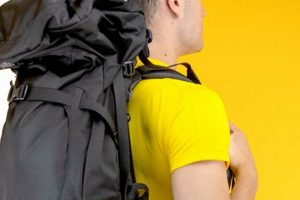
Lightweight, portable seating solutions designed for outdoor use are characterized by their integrability with backpacks. These compact chairs offer a convenient resting option for individuals engaged in activities such as hiking, camping, or backpacking. An example includes a foldable chair frame with attached fabric that can be easily secured to a backpack.
The significance of such seating lies in its ability to provide comfort and relief during extended outdoor excursions. These systems contribute to reduced fatigue, enhanced relaxation, and improved overall experience. Historically, makeshift seating has been utilized in outdoor settings, but modern iterations prioritize portability and ergonomic design.
The following sections will examine the various designs, materials, features, and selection criteria pertinent to choosing a suitable portable seating system for outdoor endeavors.
Selecting and Utilizing Portable Outdoor Seating
The following tips provide guidance on choosing and employing portable seating options effectively for camping and backpacking scenarios.
Tip 1: Prioritize Weight and Pack Size: Assess the item’s weight and dimensions when folded. Lower weight and a more compact form factor are critical for efficient backpack integration and reduced carry burden. For example, look for models weighing under two pounds and collapsing to a size comparable to a water bottle.
Tip 2: Evaluate Material Durability: Opt for seating constructed from robust materials like ripstop nylon or reinforced polyester. The frame should ideally be crafted from aluminum alloy or similar high-strength, lightweight metals to withstand repeated use and varied terrain. Consider waterproof/water-resistant fabrics.
Tip 3: Consider Seating Height and Back Support: Seating height and back support are crucial for comfort during extended rest periods. Taller individuals may require higher seats. Some models offer adjustable backrests or lumbar support for improved ergonomics.
Tip 4: Examine Assembly and Disassembly Mechanisms: Ease of setup and breakdown is paramount in outdoor settings. Choose a model with a straightforward, intuitive mechanism that can be operated quickly and efficiently, even in low-light conditions or with gloved hands.
Tip 5: Review Weight Capacity: Ensure the seating’s weight capacity meets or exceeds the user’s weight. Overloading the frame can lead to premature failure and potential injury. Always adhere to the manufacturer’s specified weight limit.
Tip 6: Inspect Foot Design: The feet of the seating should be designed to provide stability on uneven terrain. Wide feet or specialized designs can prevent sinking into soft ground, such as sand or mud.
Tip 7: Assess Storage and Accessory Options: Some models incorporate storage pockets or attachment points for accessories. Consider whether these features align with the user’s needs and preferences.
By adhering to these guidelines, one can maximize the utility and longevity of their lightweight, packable seating solution, thereby enhancing outdoor experiences.
The subsequent section will address the maintenance and care of this equipment to ensure continued performance and durability.
1. Weight (Ultralight, lightweight)

The weight of packable outdoor seating, categorized as ultralight or lightweight, directly impacts its practicality for backpacking and camping. Increased weight necessitates greater physical exertion during transport, potentially diminishing the overall enjoyment of the outdoor experience and limiting the distance or duration of travel. Conversely, a lighter seating option minimizes the load burden, conserving energy and enabling more efficient movement.
For example, consider a long-distance backpacking trip where every ounce counts. A chair weighing 3 pounds adds a significant amount to the total pack weight, impacting the hiker’s speed and endurance. In contrast, an ultralight model weighing less than 1 pound offers a comfortable seating solution without substantially increasing the load. This weight reduction is often achieved through the utilization of advanced materials like lightweight aluminum alloys and high-tenacity nylon fabrics. However, it’s essential to evaluate whether weight reduction compromises durability or stability, as extremely lightweight models may be less resilient in challenging terrain or under heavier loads.
Ultimately, the selection of a packable seating system requires a careful balance between weight, durability, comfort, and stability. While minimizing weight is a paramount consideration, it should not come at the expense of other critical performance attributes. Understanding the relationship between these factors allows for a more informed decision, enhancing the overall effectiveness and satisfaction derived from the outdoor seating solution.
2. Portability (Compact storage)
Compact storage defines a critical design parameter for lightweight seating intended for backpacking and camping. The ability to reduce the chair’s volume significantly when not in use directly influences its practicality for inclusion in a backpack alongside other essential gear. Insufficient compactness negates the weight-saving benefits, rendering the item less desirable than alternative seating solutions or forgoing seating entirely. Cause-and-effect is evident: greater compactness directly translates to increased pack space and reduced encumbrance. A practical example is a chair that folds down to the size of a water bottle, allowing it to fit within a side pocket of a backpack, as opposed to a bulkier chair requiring significant internal pack volume. This compact nature is paramount for maintaining freedom of movement and minimizing strain during extended treks.
The selection of materials and the folding mechanism are primary determinants of storage volume. Materials such as lightweight aluminum alloys and specialized fabrics contribute to reduced overall size. Innovative folding techniques, such as collapsible frames with articulating joints, further enhance compactness. Furthermore, the inclusion of a dedicated carrying bag or compression straps allows for further minimization of the packed dimensions. Examples of successful compact storage designs include chairs that utilize a system of shock-corded poles and a fabric seat that can be rolled or folded into a small package. This careful engineering directly impacts the user’s ability to efficiently organize and transport their gear, thereby promoting a more streamlined and enjoyable outdoor experience.
In summary, compact storage is not merely a desirable feature, but an essential characteristic that defines the utility of portable seating solutions for camping and backpacking. The ability to minimize packed volume directly translates to increased carrying capacity, reduced physical strain, and enhanced overall mobility. Challenges arise in balancing compactness with durability and comfort, necessitating careful consideration of materials, design, and construction techniques. Understanding the practical significance of compact storage is crucial for selecting a seating system that effectively addresses the unique demands of outdoor activities.
3. Durability (Material strength)

The longevity and performance of packable outdoor seating are fundamentally determined by the durability and material strength of its components. The intended use case, which involves repeated setup, breakdown, transport, and exposure to various environmental conditions, subjects these items to considerable stress. Weak materials are prone to failure, rendering the seating unusable and potentially hazardous. A direct cause-and-effect relationship exists: insufficient material strength leads to premature wear, tear, and eventual breakage, negating the benefits of portability and convenience. For instance, a chair frame constructed from low-grade aluminum is susceptible to bending or fracturing under typical usage conditions, while a seat fabric made of thin, non-ripstop nylon is likely to tear with minimal abrasion. The importance of material strength is therefore paramount in ensuring the reliability and extended lifespan of these products.
Material selection plays a crucial role in achieving adequate durability. High-tenacity fabrics, such as ripstop nylon or reinforced polyester, are preferred for the seat and backrest due to their resistance to tearing and abrasion. Frame components commonly employ aluminum alloys known for their strength-to-weight ratio, or in some cases, steel for enhanced load-bearing capacity. Reinforced stitching, durable hardware, and protective coatings further contribute to the overall resilience of the seating system. A practical example illustrates this point: a chair employing aircraft-grade aluminum for its frame, coupled with a 600D ripstop polyester seat, will significantly outperform a comparable chair using inferior materials in terms of longevity and resistance to damage. Understanding this relationship allows consumers to make informed purchasing decisions, selecting seating that can withstand the rigors of outdoor use.
In summary, durability, as dictated by material strength, is a non-negotiable attribute for reliable packable outdoor seating. Its influence extends beyond mere product longevity, impacting user safety, convenience, and the overall enjoyment of outdoor activities. The challenge lies in balancing the need for robust materials with the constraints of weight and cost. Careful material selection, informed design, and adherence to stringent manufacturing standards are essential for producing seating solutions that can withstand the demands of the outdoor environment. Furthermore, responsible usage and maintenance practices contribute to maximizing the lifespan and performance of these items.
4. Comfort (Ergonomic design)
Ergonomic design, in the context of lightweight outdoor seating, addresses the optimization of human well-being and overall system performance. Applying ergonomic principles to camping backpack chairs aims to minimize physical strain, maximize comfort during rest periods, and enhance the user’s overall experience in outdoor settings.
- Lumbar Support and Posture
Adequate lumbar support is critical for maintaining proper spinal alignment and reducing back pain during prolonged sitting. Ergonomic camping chairs often incorporate adjustable lumbar support features or a contoured backrest that conforms to the natural curvature of the spine. For example, a chair with adjustable lumbar support allows the user to customize the level of support based on individual needs and preferences, promoting a more comfortable and sustainable sitting posture. This design element directly influences the reduction of muscle fatigue and discomfort.
- Seat Height and Depth
Appropriate seat height and depth are essential for ensuring proper leg circulation and reducing pressure on the thighs. An ergonomically designed chair will consider the average user’s leg length and provide a seat height that allows the feet to rest comfortably on the ground or a stable surface. In addition, the seat depth should be sufficient to support the thighs without restricting blood flow to the lower legs. A real-world example includes chairs with adjustable seat height to accommodate users of varying heights, fostering proper posture and reducing lower extremity discomfort.
- Backrest Angle and Recline
The angle and recline of the backrest play a significant role in distributing body weight and reducing stress on the spine. An adjustable backrest allows the user to customize the angle of recline, promoting relaxation and minimizing muscle tension. A chair with a slight recline can help to reduce pressure on the lower back, while a more upright position may be preferred for activities such as reading or eating. This feature directly contributes to enhanced comfort and reduced fatigue during extended use.
- Breathable Materials and Ventilation
The selection of breathable materials and the incorporation of ventilation features are crucial for regulating body temperature and preventing discomfort caused by excessive sweating. Ergonomic camping chairs often utilize mesh fabrics or perforated materials in the seat and backrest to promote airflow and wick away moisture. This helps to maintain a comfortable microclimate around the user’s body, reducing the risk of overheating or discomfort in warm weather conditions. A practical example includes chairs with mesh panels in the backrest to enhance ventilation, particularly in humid environments.
These ergonomic design facets of camping backpack chairs collectively contribute to improved user comfort, reduced physical strain, and enhanced overall satisfaction during outdoor activities. By prioritizing these elements, manufacturers can create seating solutions that effectively address the unique demands of the outdoor environment and promote a more enjoyable experience for campers and backpackers. This considered approach leads to an integration of support and convenience that is paramount for extended outdoor use.
5. Stability (Terrain adaptability)

The ability of packable outdoor seating to maintain equilibrium across diverse landscapes defines its practicality in wilderness settings. Terrain adaptability is paramount for user safety and comfort, ensuring the seating remains functional regardless of ground conditions. Inadequate stability can lead to tipping, discomfort, or even injury. This is especially relevant as ideal campsites are not always perfectly level or firm.
- Foot Design and Surface Area
The design of the chair feet significantly impacts its ability to maintain stability on varied surfaces. A larger surface area distributes weight more evenly, preventing sinking into soft ground such as sand or mud. Swivel feet adapt to uneven terrain, maintaining contact with the ground even when the chair is not perfectly level. Conversely, small, pointed feet are prone to sinking and instability. An example would be chairs with wide, flat feet designed for beach use, versus those with narrow feet suitable for rocky terrain. The appropriate foot design is crucial for ensuring a stable seating platform.
- Frame Geometry and Center of Gravity
The overall geometry of the chair frame influences its center of gravity and subsequent stability. A low center of gravity enhances stability, reducing the likelihood of tipping. Wide-set legs provide a broader base of support, further improving resistance to overturning. The relationship between the seat height and the leg spread is a key factor. A chair with a high seat and narrow legs is inherently less stable than one with a lower seat and wider leg base. Some designs incorporate adjustable leg lengths to compensate for uneven ground, directly influencing the chair’s center of gravity. An example is a chair with a triangular leg structure, which inherently provides more stability compared to a chair with four legs positioned close together.
- Material Rigidity and Frame Flex
The rigidity of the frame material impacts its ability to resist deformation and maintain stability. Excessive flex in the frame can compromise stability, especially when subjected to uneven weight distribution or unstable ground conditions. While some degree of flex is desirable for comfort, excessive movement indicates insufficient rigidity. Materials such as high-strength aluminum alloys and reinforced polymers offer a balance between rigidity and flexibility. An example is a chair frame constructed from thick-walled aluminum tubing, which provides superior resistance to bending compared to a frame made from thinner-walled tubing. The choice of material is thus a critical determinant of stability, particularly on uneven terrain.
- Weight Distribution and User Position
User positioning within the chair significantly affects its stability. Shifting weight to one side or leaning excessively can create instability, especially on uneven ground. A well-designed chair should distribute weight evenly and provide adequate support to prevent tipping. Some chairs incorporate features such as armrests or side supports to encourage proper posture and weight distribution. An example is a chair with a deep seat pocket that cradles the user and prevents them from sliding or shifting their weight excessively. The chair’s geometry in conjunction with proper user positioning are key to stability in unpredictable outdoor environments.
These facets of stability, from foot design to frame rigidity and user positioning, collectively determine a packable chair’s effectiveness across various terrains. The selection of a suitable seating solution requires careful consideration of these factors, ensuring a balance between portability, comfort, and the ability to remain stable on unpredictable ground conditions. A chair’s terrain adaptability is a crucial element in maximizing the user experience in the outdoors.
6. Capacity (Weight support)

Weight support, specified as capacity, represents a primary determinant of a camping backpack chair’s suitability for individual users. This characteristic defines the maximum load, typically measured in pounds or kilograms, that the seating structure can safely and reliably bear. Exceeding the stated capacity introduces the risk of structural failure, leading to potential injury and rendering the chair unusable. The chair’s capacity directly influences user safety and the product’s longevity, establishing a critical design parameter. A real-world example involves a user exceeding a 250-pound capacity limit on a chair, resulting in a collapsed frame and subsequent injury. This highlights the practical significance of adhering to specified weight limits.
Material selection and frame design directly dictate a camping backpack chair’s weight support capabilities. High-strength aluminum alloys, reinforced polymers, and robust fabrics contribute to enhanced load-bearing capacity. The chair’s geometry, including leg placement and support structure, further influences its ability to distribute weight effectively. Different chair models offer varying weight capacities, reflecting differences in materials and construction. A backpacking chair designed for ultralight use may prioritize weight reduction over maximum capacity, offering a lower weight limit compared to a heavier, more robust chair intended for general camping purposes. The selection of an appropriate chair, therefore, requires careful consideration of the user’s weight and anticipated load.
In summary, weight support capacity constitutes a crucial consideration when selecting a camping backpack chair. The specification provides a quantitative measure of the chair’s ability to safely and reliably accommodate users of varying sizes. Exceeding this limit introduces potential safety risks and reduces product lifespan. Careful evaluation of the chair’s weight capacity, alongside other factors such as weight, portability, and durability, ensures a suitable selection that meets individual needs and promotes safe and comfortable outdoor experiences. The challenge lies in balancing the need for high weight capacity with other desirable attributes, necessitating a thorough understanding of design trade-offs.
7. Assembly (Easy setup)
The ease of assembly, or “easy setup,” constitutes a pivotal attribute of camping backpack chairs, directly influencing their practicality and user satisfaction. The time and effort required to assemble and disassemble a chair significantly impact its usability in outdoor environments, where efficiency and convenience are paramount. A complex or cumbersome setup process negates the portability benefits, discouraging frequent use. The cause-and-effect relationship is evident: difficult assembly leads to user frustration and diminished utilization, while a straightforward setup promotes frequent and enjoyable use. For example, a chair requiring multiple steps, specialized tools, or significant physical exertion for assembly is less desirable than one that can be deployed quickly and intuitively.
The design and mechanism of the camping backpack chair are fundamental to easy setup. Simplified designs, utilizing shock-corded poles, single-piece frames, or intuitive locking systems, minimize the number of steps required for assembly. Color-coded components or clear visual instructions further streamline the process. Conversely, designs with numerous detachable parts, intricate folding mechanisms, or ambiguous instructions increase the potential for errors and delays. A practical application illustrates this point: a chair employing a single-pull cord system for assembly can be deployed in seconds, compared to a chair requiring the manual connection of multiple frame sections, which may take several minutes. This difference in assembly time is particularly significant in situations where speed and efficiency are critical, such as during inclement weather or when setting up camp in low-light conditions.
In summary, easy setup is not merely a desirable feature but a defining characteristic of effective camping backpack chairs. The design and mechanism must prioritize simplicity and intuitiveness to minimize assembly time and user effort. The understanding of the relationship between assembly ease and user experience is essential for manufacturers in designing practical and user-friendly seating solutions. By focusing on simplified designs and intuitive mechanisms, the efficiency of using camping backpack chairs is augmented. This encourages frequent use and increases user satisfaction, thereby enhancing the overall outdoor experience. A challenge lies in balancing ease of assembly with durability and stability, necessitating careful engineering and design considerations.
Frequently Asked Questions
The following section addresses common inquiries and misconceptions surrounding portable seating solutions for camping and backpacking activities.
Question 1: What is the maximum weight capacity that should be considered when selecting such a seating device?
The maximum weight capacity represents a critical safety parameter. It is imperative to select a chair with a capacity exceeding the user’s weight, including any gear typically carried while seated. Adherence to manufacturer-specified limits mitigates the risk of structural failure and potential injury.
Question 2: How does seat height impact overall comfort and suitability for different users?
Seat height directly influences posture and leg circulation. Taller individuals generally require higher seats to avoid discomfort and maintain proper leg alignment. Conversely, shorter individuals may prefer lower seats for optimal foot placement. Adjustable seat height features enhance versatility and accommodate a wider range of users.
Question 3: What materials offer the best balance of weight, durability, and weather resistance?
High-tenacity nylon or polyester fabrics, often treated with water-resistant coatings, provide a favorable balance of weight, durability, and protection from the elements. Aluminum alloy frames offer structural integrity without excessive weight. Material selection directly influences product longevity and performance in outdoor conditions.
Question 4: How do different foot designs affect stability on varied terrain types?
Wide feet distribute weight more evenly, preventing sinking on soft ground such as sand or mud. Articulating or swivel feet conform to uneven surfaces, enhancing stability on rocky or uneven terrain. Foot design should align with the intended usage environment to maximize stability and prevent tipping.
Question 5: What are the key considerations for minimizing pack size and weight during transport?
Select models utilizing lightweight materials and compact folding mechanisms. Look for chairs that compress to a minimal size and weight for efficient integration with a backpack. Prioritize models with dedicated carrying bags or compression straps for further size reduction.
Question 6: How can the lifespan of a camping backpack chair be extended?
Proper care and maintenance contribute to product longevity. Avoid exceeding weight limits, store the chair in a dry environment when not in use, and periodically inspect for signs of wear or damage. Clean the fabric with mild soap and water as needed, and lubricate moving parts to prevent corrosion.
The selection and utilization of portable seating for camping and backpacking requires a thoughtful consideration of individual needs and environmental factors. Prioritizing safety, comfort, and durability ensures a positive and sustainable outdoor experience.
The following section will provide a comparison and recommendations regarding leading options currently available.
Conclusion
This article has explored the multifaceted characteristics of lightweight, portable seating solutions suitable for camping and backpacking. The analysis considered factors ranging from weight and pack size to material durability, comfort, stability, capacity, and ease of assembly. Each characteristic significantly influences the suitability and utility of these chairs in diverse outdoor environments.
The selection of a camping backpack chair requires careful evaluation and informed decision-making. A chair that aligns with individual needs and environmental demands enhances outdoor experiences. As material science and design continue to evolve, further advancements in portable seating are anticipated, increasing the availability and overall effectiveness of these devices. Continued research and development may lead to seating that offers enhanced comfort and durability while minimizing weight and pack size, creating seating solutions that further empower outdoor enthusiasts.