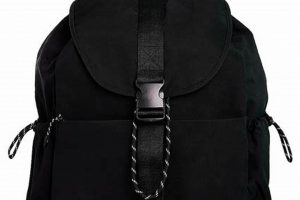
A specialized type of bag, often resembling a standard backpack, is designed to discreetly carry a concealed handgun. It typically includes a dedicated compartment, often padded and with a retention system, to secure the firearm. An example would be a daypack modified with a hidden, easily accessible pocket intended for safe storage and quick deployment of a weapon.
The value of such a carrying method lies in its ability to blend in with everyday surroundings while providing immediate access to self-defense. Historically, individuals requiring personal protection have sought methods to carry arms inconspicuously. This approach offers increased security without attracting undue attention, particularly in environments where open carry is restricted or discouraged. The design allows for a more balanced weight distribution than traditional holster carry, potentially enhancing comfort during extended periods.
The following sections will delve into critical considerations when selecting this type of equipment, examine various designs and features available, and discuss legal ramifications and safety precautions crucial for responsible ownership and use. Furthermore, it will explore alternative concealed carry methods and assess their relative strengths and weaknesses.
Critical Considerations for Utilizing a Firearm-Concealing Rucksack
Selecting and employing a firearm-concealing rucksack requires careful deliberation. Safety, accessibility, and legal compliance are paramount. The following guidelines offer crucial points for consideration.
Tip 1: Prioritize Safety: Secure storage within the dedicated compartment is essential. The firearm must be shielded from accidental discharge and unauthorized access, particularly from children. Regular practice drills are crucial to develop proficiency in accessing and deploying the weapon swiftly and safely.
Tip 2: Accessibility Assessment: Access to the firearm should be rapid and unhindered. The user should be able to draw the weapon smoothly in various situations without fumbling or alerting potential threats. Consider the access point and its ease of use with either hand.
Tip 3: Legal Compliance is Mandatory: Familiarize oneself with all applicable federal, state, and local laws regarding concealed carry. Regulations vary significantly, and non-compliance can result in severe legal consequences. Understand where the carrying of a concealed weapon is prohibited.
Tip 4: Quality of Construction Matters: The rucksack’s durability is paramount, as it will be subjected to regular use and potential stress. Invest in a high-quality product constructed from robust materials with reinforced stitching. The integrity of the firearm compartment is especially critical.
Tip 5: Discretion is Key: The primary purpose is to conceal the weapon discreetly. Select a rucksack that does not obviously advertise its intended function. Avoid models with overt tactical aesthetics that could attract unwanted attention.
Tip 6: Consider Off-Body Carry Risks: Off-body carry presents increased risk of unauthorized access to the firearm. One must maintain possession and control of the rucksack at all times. If the rucksack is separated from the user, the firearm is vulnerable to theft or misuse.
Tip 7: Practice Drawing Under Stress: Regularly practice drawing the firearm from the rucksack under simulated stress conditions. This training is essential to develop muscle memory and maintain composure in a real-world self-defense situation. Safe handling practices are paramount during all training exercises.
Adhering to these guidelines promotes safe, responsible, and legally compliant use of a firearm-concealing rucksack. Careful consideration of these factors enhances personal security while minimizing potential risks.
The following section will analyze various types and designs of this rucksack, allowing informed purchase decision.
1. Concealment effectiveness

Concealment effectiveness represents a paramount consideration in the context of “ccw backpack” design and utilization. The primary function of such a backpack is to facilitate the discreet carry of a firearm, thereby minimizing the potential for alarming or attracting undue attention in public spaces.
- Aesthetic Design and Profile
The external appearance of the backpack significantly influences its concealment effectiveness. A design resembling a standard, non-tactical backpack helps avoid scrutiny. Features such as external MOLLE webbing, visible firearm logos, or overtly tactical color schemes compromise discretion. A low-profile design that blends seamlessly into everyday environments is essential. Real-world examples include backpacks resembling school bags, hiking packs, or commuter bags, effectively masking their true purpose.
- Internal Compartmentalization
The internal layout and construction of the backpack are crucial for maintaining concealment. A dedicated, padded compartment specifically designed for firearm storage is essential. This compartment should be discreetly integrated into the overall design, preventing printing (the visible outline of the firearm through the bag’s material). Furthermore, the compartment should be positioned in a manner that allows for quick and unobtrusive access without broadcasting the user’s intent.
- Accessibility and Draw Speed
While concealment is vital, accessibility must not be sacrificed. A design that prioritizes draw speed is crucial for effective self-defense. This necessitates a balance between security and rapid access, achieved through features such as quick-release straps, ambidextrous access points, and strategically positioned zippers. However, these features must be integrated discreetly to avoid compromising the overall concealment.
- Material and Construction Quality
The choice of materials and construction techniques contributes significantly to concealment effectiveness. Durable, non-reflective materials are preferred to avoid attracting attention. Sturdy construction prevents the backpack from sagging or deforming, which could reveal the presence of a concealed firearm. High-quality zippers and fasteners also contribute to a low-profile appearance, minimizing noise and visible wear that could compromise concealment.
The interaction of aesthetic design, internal compartmentalization, accessibility, and material quality dictates the overall effectiveness of a “ccw backpack” in maintaining discreet firearm carry. A well-designed “ccw backpack” balances these competing factors to achieve optimal concealment without compromising safety or accessibility.
2. Rapid accessibility
Rapid accessibility is a critical design and functional element of any “ccw backpack.” The ability to quickly and efficiently deploy a firearm from the concealed compartment can be the determining factor in a self-defense situation. Therefore, design considerations must prioritize ease of access without compromising security or concealment.
- Access Point Design
The location and type of access point are primary determinants of accessibility speed. Top-loading designs inherently require more time for access compared to side-access or rear-access systems. Zippers, magnetic closures, or quick-release buckles can be employed, each offering varying degrees of speed and security. A common example is a side-access zipper located near the shoulder strap, allowing for a swift draw while the backpack is slung over one shoulder.
- Compartment Layout and Retention System
The internal layout of the firearm compartment and the type of retention system used significantly influence draw speed. A cluttered compartment can impede access, while a well-organized space allows for a smooth and unhindered draw. Retention systems, such as elastic straps or adjustable holsters, secure the firearm but must not excessively restrict access. Some designs incorporate hook-and-loop fasteners to allow for customizable holster placement, maximizing user comfort and draw efficiency.
- Practice and Training
Regardless of the design features, consistent practice is essential to develop proficiency in accessing the firearm. Muscle memory plays a crucial role in executing a rapid and efficient draw under stress. Training should involve simulating various scenarios and conditions to ensure the user can reliably access the firearm in a self-defense situation. Dry-fire drills and range practice are essential components of responsible firearm ownership and concealed carry preparedness.
- Ambidextrous Design Considerations
For individuals who are ambidextrous or may need to draw the firearm with either hand, an ambidextrous access design is crucial. This involves ensuring that the access point and retention system are easily accessible and operable from either side of the backpack. Some designs incorporate mirrored access points or adjustable retention systems that can be configured for left- or right-handed use. This adaptability enhances accessibility and provides a tactical advantage in unpredictable situations.
In summary, rapid accessibility in a “ccw backpack” is achieved through a combination of thoughtful design, secure firearm retention, and consistent practice. Design elements such as access point location, compartment layout, and ambidextrous considerations play a pivotal role, but are only effective when paired with proper training and responsible firearm handling practices.
3. Secure firearm retention
Secure firearm retention constitutes a critical safety and functional requirement in the design and utilization of a “ccw backpack.” The primary purpose of such retention is to prevent accidental discharge, unauthorized access, and firearm displacement within the concealed compartment. Failure to ensure adequate retention introduces significant risks, including unintentional injury, theft, or legal repercussions. The absence of a secure retention system negates the intended purpose of the “ccw backpack,” transforming it into a potential liability rather than an asset for personal protection. For instance, a poorly designed compartment could allow the firearm to shift during movement, potentially leading to an accidental discharge if the trigger becomes snagged or making it easier for a thief to steal if left unattended.
Effective firearm retention mechanisms typically involve a combination of structural design and active components. The internal compartment should be sized appropriately for the intended firearm, minimizing movement while allowing for rapid access. Active retention components may include adjustable holsters, elastic straps, or hook-and-loop fastening systems that securely hold the firearm in place. The selection of an appropriate retention system depends on factors such as the type of firearm, user preference, and the intended use of the backpack. A level of retention suited for static environments may not be sufficient for dynamic activities such as running or climbing. The consequences of inadequate retention extend beyond personal safety to encompass potential legal liabilities in the event of an accidental discharge or theft of the firearm. A real-world example of the importance of retention is a scenario where a carrier trips; if the firearm is not properly secured, it could fall out of the backpack and cause harm to the carrier or bystanders.
In summary, secure firearm retention is an indispensable element of a “ccw backpack,” serving as a primary safeguard against accidental discharge, theft, and unauthorized access. The design and implementation of retention mechanisms must be carefully considered, balancing security with accessibility to ensure both safety and functionality. Neglecting this aspect compromises the overall purpose of the “ccw backpack” and introduces significant risks. Responsible ownership and operation necessitate prioritizing secure firearm retention as a non-negotiable design feature and operational practice. Proper training that encompasses retention methods is, therefore, an unavoidable aspect of this carrying method.
4. Durable construction
The correlation between durable construction and a “ccw backpack” is one of direct consequence: the longevity and reliability of the latter are intrinsically linked to the former. Substandard materials and construction methods compromise the bag’s primary function discreetly and securely carrying a firearm. A failure in stitching, zippers, or fabric can lead to exposure of the weapon, accidental discharge resulting from compromised retention, or outright failure of the bag under stress. For example, a backpack constructed with low-grade nylon may tear under the weight of a firearm and accompanying gear, negating its purpose and potentially creating a hazardous situation. The importance of durable construction extends beyond the immediate safety of the carrier; it encompasses the security of the surrounding environment.
Practical significance is evident in the choice of materials employed. High-denier ballistic nylon or Cordura fabrics, known for their abrasion resistance and tensile strength, are commonly used in quality “ccw backpacks.” Reinforced stitching at stress points, such as shoulder strap attachments and zipper seams, is another hallmark of durable construction. Furthermore, the quality of zippers is critical; heavy-duty YKK zippers are often specified due to their reliability and resistance to failure. A real-world application of this understanding can be seen in the selection process of law enforcement agencies, which prioritize backpacks with proven track records of durability in demanding operational environments. These agencies often subject equipment to rigorous testing to ensure it can withstand harsh conditions and maintain its functionality under duress.
In conclusion, durable construction is not merely a desirable feature of a “ccw backpack” but a fundamental requirement. It ensures the reliable and secure carry of a firearm, mitigating risks associated with accidental discharge, unauthorized access, and equipment failure. The selection of high-quality materials, reinforced construction techniques, and rigorous testing are essential considerations in evaluating the durability and suitability of a “ccw backpack.” Understanding this correlation enables informed purchasing decisions and promotes responsible ownership and use. The challenge lies in discerning quality construction from superficial features, requiring careful examination and, ideally, independent verification of product specifications and performance.
5. Legal compliance

Legal compliance represents a non-negotiable prerequisite for any individual choosing to utilize a “ccw backpack” for concealed firearm carry. Ignorance or disregard of applicable laws and regulations carries significant legal consequences, potentially resulting in criminal charges, fines, imprisonment, and the loss of firearm ownership rights. Navigating the complexities of concealed carry laws requires diligent research and a commitment to adhering to both letter and spirit of the law.
- Permitting Requirements and Reciprocity
Many jurisdictions require individuals to obtain a permit or license to carry a concealed firearm, regardless of the carrying method. These permits typically involve background checks, firearms training, and adherence to specific regulations. Furthermore, reciprocity agreements between states dictate whether a permit issued in one state is valid in another. Individuals traveling across state lines must verify the reciprocity laws of each state to avoid violating local regulations. For example, carrying a firearm in a state that does not recognize one’s permit, even if concealed within a “ccw backpack,” constitutes a criminal offense.
- Restricted Locations and Prohibited Areas
Concealed carry laws commonly designate specific locations where firearms are prohibited, even with a valid permit. These locations may include schools, government buildings, courthouses, airports, and private businesses that post signage prohibiting firearms. Carrying a firearm in a prohibited area, regardless of the carrying method, can result in arrest and prosecution. Individuals must familiarize themselves with the specific restrictions in their jurisdiction to ensure compliance. For instance, some states prohibit carrying a firearm in any establishment that serves alcohol, regardless of whether the individual intends to consume alcohol.
- Firearm Handling and Storage Regulations
Legal compliance extends beyond concealed carry permits and restricted locations to encompass safe firearm handling and storage practices. Many jurisdictions have laws requiring firearms to be stored unloaded and secured in a locked container when not in use. These laws aim to prevent accidental shootings, theft, and unauthorized access to firearms. While a “ccw backpack” may offer a degree of security while in transit, it does not substitute for secure storage at home or in a vehicle. Non-compliance with storage regulations can result in criminal charges, particularly if a firearm is stolen or used in a crime.
- Disclosure Requirements and Duty to Inform
Some jurisdictions impose a duty to inform law enforcement officers that one is carrying a concealed firearm during any interaction. This requirement varies depending on the state, but typically involves informing the officer upon initial contact. Failure to disclose the presence of a firearm, even if carried legally within a “ccw backpack,” can result in legal repercussions. Individuals must be aware of the disclosure requirements in their jurisdiction and prepared to comply with them during any encounter with law enforcement.
The multifaceted nature of legal compliance underscores the importance of responsible firearm ownership and informed decision-making when utilizing a “ccw backpack.” Adherence to all applicable laws and regulations is paramount to avoid legal consequences and ensure the safe and responsible exercise of the right to bear arms. Consulting with legal counsel and participating in firearms training courses can provide valuable guidance and ensure a thorough understanding of the legal landscape. The presence of a weapon in a ccw backpack does not supersede legal obligations.
Frequently Asked Questions Regarding “CCW Backpack”
The following section addresses common inquiries concerning concealed carry backpacks, providing factual and legally sound information. These questions are intended to clarify common misunderstandings and promote responsible ownership and usage.
Question 1: Does possessing a concealed carry permit automatically authorize the use of a “ccw backpack” in all jurisdictions?
No. Concealed carry permits are jurisdiction-specific, and reciprocity agreements between states vary. Furthermore, even with a valid permit, specific locations may be restricted or prohibited. It is incumbent upon the permit holder to verify the legality of carrying a concealed firearm, regardless of the carrying method, in each jurisdiction.
Question 2: Does utilizing a “ccw backpack” offer superior legal protection compared to traditional concealed carry methods?
No. The legal ramifications of carrying a concealed firearm are independent of the carrying method. The legality hinges upon compliance with applicable laws regarding permitting, restricted locations, and firearm handling. A “ccw backpack” offers no inherent legal advantage or immunity.
Question 3: Is it permissible to leave a “ccw backpack” containing a firearm unattended in a vehicle?
Regulations regarding firearm storage in vehicles vary by jurisdiction. Many states require firearms to be stored unloaded and secured in a locked container. Leaving a “ccw backpack” containing a firearm unattended in a vehicle may violate these storage regulations and subject the owner to legal penalties. Consult local laws for specific requirements.
Question 4: How can accidental discharge be prevented when using a “ccw backpack”?
Preventing accidental discharge necessitates adherence to safe firearm handling practices, including keeping the finger off the trigger until ready to fire, ensuring the firearm is properly maintained, and utilizing a secure retention system within the “ccw backpack” to prevent unintended movement. Regular training and practice are essential components of responsible firearm ownership.
Question 5: Does modifying a standard backpack to function as a “ccw backpack” satisfy legal requirements for concealed carry?
Modifying a standard backpack does not inherently guarantee compliance with concealed carry laws. The backpack must securely retain the firearm, prevent unauthorized access, and not outwardly advertise its purpose. Furthermore, compliance with permitting requirements and restricted location laws remains paramount. Professional design is preferable.
Question 6: If stopped by law enforcement, what is the recommended course of action when carrying a firearm in a “ccw backpack”?
Certain jurisdictions mandate a duty to inform law enforcement officers of the presence of a concealed firearm upon initial contact. It is advisable to remain calm, comply with all instructions, and disclose the presence of the firearm in a clear and respectful manner. Failure to do so may result in legal repercussions.
These responses provide a basic overview of common questions. However, specific legal requirements vary by jurisdiction, and it is imperative to consult local laws and seek legal counsel for personalized guidance.
The subsequent section will provide a comparative analysis of various concealed carry methods, assessing their relative strengths and weaknesses.
CCW Backpack
This exploration has illuminated critical aspects of the “ccw backpack,” ranging from design considerations to legal obligations. The analysis underscored the vital balance between concealment, accessibility, secure retention, and durable construction. Further, adherence to applicable laws was established as a paramount responsibility, irrespective of carrying method. The assessment has clarified the practical implications and potential challenges associated with this particular mode of concealed firearm carry.
Ultimately, the decision to utilize a “ccw backpack” must be predicated upon a comprehensive understanding of its inherent limitations, the prevailing legal framework, and a commitment to responsible firearm ownership. Individuals should prioritize thorough training, diligent legal research, and consistent adherence to safe handling practices. The responsible implementation of this method demands vigilance and a clear understanding of the gravity and consequences involved.