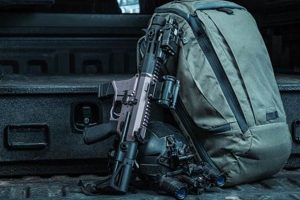
A fortified rucksack designed to mitigate the risk of penetration from projectiles, offering a degree of personal security by incorporating ballistic-resistant materials. These specialized items are designed to shield the wearer’s vital organs, particularly the back and chest, from potential harm. An example includes a standard school backpack retrofitted with a lightweight ballistic panel.
The utilization of such protective gear provides a tangible enhancement to individual safety in environments where the threat of gunfire exists. These products can offer a psychological sense of security and may reduce the severity of injuries sustained during an active shooter event or similar incidents. Ballistic protection integrated into everyday items has seen increased interest alongside evolving security concerns and heightened awareness of potential dangers.
Subsequent sections will delve into specific considerations when selecting a fortified pack, examine available threat levels and associated protection standards, and analyze construction materials and relevant testing methodologies.
Selecting a Ballistically Reinforced Rucksack
Careful evaluation is paramount when procuring a pack designed to offer ballistic protection. Several factors must be weighed to ensure the selected product meets the user’s specific needs and circumstances.
Tip 1: Threat Level Assessment: Determine the potential threats anticipated. Different ballistic materials offer varying levels of protection against different caliber firearms. Consult NIJ standards for detailed protection levels.
Tip 2: Coverage Area: Evaluate the size of the ballistic panel and the area of the body it protects. A larger panel provides greater coverage, but may add weight and bulk.
Tip 3: Weight and Comfort: Consider the weight of the pack, especially when loaded with everyday items. Excessive weight can lead to fatigue and reduced mobility. Evaluate the harness system and padding for comfortable wear.
Tip 4: Material Durability: Examine the quality of the pack’s outer material. Durable materials, such as reinforced nylon or Cordura, resist wear and tear, ensuring the panel remains protected.
Tip 5: Panel Concealment: Assess how well the ballistic panel is concealed within the pack. A discreet design minimizes attention and prevents alarming others in public settings.
Tip 6: Storage Capacity: Evaluate the pack’s internal storage capacity. Ensure sufficient space for essential items such as laptops, books, or personal belongings, without compromising the panel’s integrity.
Tip 7: Independent Testing and Certification: Verify that the ballistic panel has been independently tested and certified by a reputable laboratory, meeting established standards for ballistic resistance.
Prioritizing these considerations helps ensure the selection of a protective pack that effectively mitigates risk while remaining practical and comfortable for everyday use. Proper evaluation enhances the likelihood of acquiring a product that delivers genuine protection when needed.
The following sections will explore the specific ballistic materials employed in these packs, the certifications that validate their protective capabilities, and the legal considerations surrounding their ownership and use.
1. Protection Level

The protection level defines the ballistic resistance of a reinforced rucksack. This directly correlates to its ability to mitigate injury from firearm projectiles. Higher protection levels, as defined by standards like NIJ 0101.06, signify the capacity to withstand impacts from more powerful rounds. For example, a Level IIIA pack is designed to stop common handgun rounds like .44 Magnum, offering enhanced safety compared to an unrated bag.
The selection of an appropriate protection level is not arbitrary; it is a function of the anticipated threat environment. An individual operating in a higher-risk area may require a pack capable of defeating rifle rounds, necessitating a Level III or IV rating. Conversely, in a lower-threat environment, a lighter Level IIA or IIIA pack may suffice. Real-world scenarios, such as school shootings or active shooter events, underscore the practical importance of understanding protection levels; a correctly rated pack can provide crucial seconds for evasion or defense.
Ultimately, the protection level dictates the efficacy of a ballistic rucksack as a defensive tool. However, achieving higher protection levels often entails increased weight and bulk, potentially affecting maneuverability and everyday usability. Therefore, a balance must be struck between the degree of protection and the practical constraints of daily life. Choosing the right protection level represents a critical decision in optimizing the protective capabilities of the rucksack.
2. Material Composition

The protective effectiveness of a fortified rucksack is intrinsically linked to its material composition. The ballistic resistance is not an inherent property of the bag itself, but rather a characteristic imparted by specialized materials integrated within its construction. Common materials include aramid fibers (e.g., Kevlar, Twaron), ultra-high-molecular-weight polyethylene (UHMWPE), and composite laminates. The arrangement and layering of these materials directly influence the backpack’s ability to absorb and dissipate the energy of projectile impacts, thus mitigating potential harm to the wearer. A pack constructed from low-grade or improperly arranged materials will demonstrably fail to provide adequate protection, regardless of its marketing claims.
The specific choice of materials impacts several key factors beyond baseline ballistic resistance. For instance, aramid fibers offer excellent tensile strength and heat resistance, but can be susceptible to degradation from UV exposure and moisture. UHMWPE, conversely, provides superior resistance to moisture and chemicals, and often exhibits a higher strength-to-weight ratio than aramids. The selection process should consider environmental factors and the desired balance between protection, weight, and long-term durability. For example, a backpack intended for use in humid climates might prioritize UHMWPE-based panels to minimize moisture-related degradation. The correct arrangement and lamination of these materials are crucial; improperly layered composites can delaminate upon impact, severely compromising ballistic performance.
In conclusion, material composition is a foundational element dictating the protective capabilities of a fortified rucksack. Understanding the properties of different ballistic materials, their strengths and weaknesses, and their appropriate application is critical for informed decision-making. While marketing claims often highlight generic terms like “ballistic protection,” a discerning evaluation of the specific materials and their construction is essential to ensure the backpack delivers genuine, reliable protection. Without scrutiny of material composition, the end-user risks relying on a product that offers a false sense of security, potentially with dire consequences.
3. Weight Distribution

Effective weight distribution is a critical factor in evaluating the practicality and long-term usability of a protective rucksack. A design neglecting this aspect, even with high ballistic ratings, can lead to discomfort, reduced mobility, and potential strain-related injuries. The optimal configuration ensures the load is carried efficiently, minimizing fatigue and maximizing the user’s ability to react effectively in dynamic situations.
- Center of Gravity and Stability
A low and centered weight distribution enhances stability and reduces the pendulum effect associated with heavier loads. For a ballistic pack, this means positioning the protective panel and other heavy items close to the wearer’s back and near the body’s natural center of gravity. Failure to do so can result in instability, especially during running or evasive maneuvers, compromising balance and increasing the risk of falls. Military rucksacks often employ internal frames to achieve this stable load carriage, a principle equally applicable to civilian ballistic packs.
- Harness System Design
The harness system, including shoulder straps, sternum strap, and waist belt, plays a vital role in distributing weight across the torso. Wide, padded shoulder straps help prevent pressure points and evenly distribute the load across the shoulders. A sternum strap connects the shoulder straps, preventing them from sliding off the shoulders, particularly during movement. A waist belt transfers a significant portion of the weight to the hips, relieving pressure on the shoulders and back. A poorly designed harness system will concentrate the weight on the shoulders, leading to rapid fatigue and potential nerve compression.
- Load Balancing and Compartmentalization
Internal compartments and organizational features contribute to effective load balancing. Separating heavy items and distributing them evenly within the pack prevents uneven weight distribution, which can cause the pack to pull to one side. Dedicated compartments for items like laptops or water bottles help maintain a consistent weight distribution profile. A poorly designed interior can result in shifting weight, leading to discomfort and reduced stability.
- Ergonomic Considerations and Posture
Improper weight distribution can lead to poor posture, resulting in back pain and muscle strain. An ergonomically designed pack promotes proper spinal alignment by distributing weight evenly and supporting the natural curvature of the back. Features like adjustable torso lengths and lumbar support further enhance comfort and reduce strain. A pack that forces the wearer to hunch forward to compensate for an unbalanced load will negatively impact posture and increase the risk of long-term musculoskeletal issues.
The interplay of these factors determines whether a protective rucksack is a practical asset or a burdensome liability. A well-designed system prioritizes not only ballistic protection but also the user’s comfort and mobility, ensuring the pack can be worn for extended periods without undue strain or fatigue. Ultimately, the effectiveness of even the most advanced protective materials is contingent upon a weight distribution design that allows the wearer to move freely and confidently.
4. Ergonomic Design

Ergonomic design constitutes a non-negotiable element in the functionality and practicality of a fortified rucksack. A ballistic panel and protective materials introduce inherent weight and stiffness; without deliberate ergonomic consideration, the resultant pack can induce discomfort, impede mobility, and negatively affect posture. The purpose of ergonomic design, in this context, is to mitigate these negative effects, integrating protective capabilities without sacrificing the user’s comfort and ability to perform necessary tasks. For example, a backpack with a poorly contoured back panel can create pressure points, leading to pain and reduced stamina during prolonged wear, diminishing its utility in real-world scenarios.
The implementation of ergonomic principles translates into specific design features. Contoured shoulder straps, often incorporating padding and breathable materials, distribute weight evenly and reduce pressure on the shoulders and neck. Adjustable torso lengths accommodate varying body sizes, ensuring the pack sits properly on the wearer’s back. A robust waist belt transfers a significant portion of the weight to the hips, relieving strain on the spine. Internal frame systems provide structural support and maintain the pack’s shape, preventing sagging and uneven weight distribution. These features are not merely cosmetic enhancements; they are integral to maintaining user comfort and optimizing mobility. Law enforcement personnel, for instance, rely on ergonomically designed packs to carry essential equipment while maintaining the agility required for effective performance. Inadequate ergonomic considerations can lead to fatigue, muscle strain, and impaired decision-making in high-pressure situations.
In summary, ergonomic design is paramount to the overall effectiveness of a protective rucksack. It dictates the wearer’s comfort, mobility, and long-term well-being, directly influencing their ability to perform tasks efficiently under duress. While ballistic protection remains the primary function, a disregard for ergonomic principles undermines the pack’s utility. Prioritizing ergonomically sound designs, incorporating features such as contoured straps, adjustable fits, and supportive frames, transforms a potentially cumbersome piece of equipment into a practical and reliable tool that enhances, rather than hinders, the user’s capabilities. Manufacturers who overlook this crucial aspect produce products that, despite their purported protective capabilities, ultimately fail to meet the demands of real-world applications.
5. Concealment Options

The integration of concealment options into a reinforced rucksack is a pivotal consideration, particularly within civilian contexts. While overt displays of ballistic protection may attract undue attention or incite alarm, subtle integration allows for discreet personal security, facilitating unobtrusive preparedness in diverse environments.
- Discreet Panel Integration
The primary element of concealment resides in the seamless integration of the ballistic panel itself. The panel should be indiscernible from the exterior, avoiding any telltale bulges or unusual stiffness that might betray its presence. Some manufacturers achieve this by utilizing flexible, lightweight materials and strategically positioning the panel within the pack’s existing structure. For instance, a panel might be sewn into a laptop compartment or behind an internal organizer, masking its true function. This approach contrasts sharply with overtly tactical designs that draw attention and potentially defeat the purpose of concealed protection.
- Aesthetic Camouflage
The overall aesthetic of the rucksack contributes significantly to its concealment. Avoiding overtly tactical designs, such as MOLLE webbing or military-style camouflage patterns, is essential for maintaining a low profile in civilian settings. Opting for commonplace designs, colors, and materials minimizes the risk of drawing unwanted attention. A reinforced rucksack resembling a standard school backpack or a professional laptop bag is far less likely to raise suspicion than one with a distinctly military appearance. This aesthetic neutrality is a critical component of effective concealment.
- Quick Access and Deployment
Effective concealment must not compromise the ability to quickly access and deploy the rucksack as a shield. Design features enabling rapid removal and positioning of the pack in front of the body are paramount. This might involve strategically placed grab handles or quick-release straps that facilitate swift deployment in emergency situations. A rucksack that is difficult to maneuver or requires excessive manipulation to use as a shield is effectively useless, regardless of its ballistic rating. Therefore, ease of access and deployment are integral to the functionality of concealed protection.
- Compartmentalization and Organization
The internal organization of the rucksack can contribute to or detract from its overall concealment. Excessive compartmentalization or specialized pockets might suggest a tactical purpose, while a simple and uncluttered interior is more consistent with everyday use. Minimizing the visibility of internal compartments and avoiding the storage of overtly tactical items further enhances concealment. Strategic placement of everyday items, such as books or laptops, can also serve to obscure the presence of the ballistic panel. Thoughtful organization is essential for maintaining a low profile and avoiding unintentional exposure.
These elements of concealment, when effectively integrated, transform a reinforced rucksack from a conspicuous defensive tool into a discreet and readily accessible form of personal protection. The efficacy of such a product hinges on its ability to blend seamlessly into everyday life, providing security without attracting unwanted attention or inciting unnecessary alarm.
6. Storage Capacity

Storage capacity, in the context of a reinforced rucksack, extends beyond mere volume; it directly influences the practicality and utility of the product as an everyday carry item. An inadequate capacity renders the rucksack unsuitable for daily use, while excessive volume can compromise its concealability and maneuverability.
- Essential Item Accommodation
The primary function of storage capacity is to accommodate essential items necessary for daily activities. This includes textbooks, laptops, documents, personal electronics, and emergency supplies. A ballistic rucksack with insufficient space for these items becomes impractical, relegating it to a specialized, infrequently used piece of equipment. Conversely, a pack exceeding necessary volume introduces unnecessary bulk and weight, hindering mobility and drawing unwanted attention. The optimal capacity strikes a balance, accommodating essential items without compromising usability.
- Impact on Weight Distribution
The effective management of storage capacity directly affects weight distribution within the rucksack. Poorly designed compartments or inadequate internal organization can lead to uneven weight distribution, causing discomfort, fatigue, and reduced stability. For instance, a single large compartment with no dividers allows items to shift freely, disrupting balance and potentially compromising the protective panel’s position. Thoughtful compartmentalization and dedicated pockets promote even weight distribution, enhancing comfort and stability, thereby maximizing the rucksack’s utility.
- Compromise of Ballistic Integrity
Overloading a ballistic rucksack beyond its designed storage capacity can compromise the ballistic integrity of the protective panel. Excessive strain on the seams, zippers, and external fabric can weaken the overall structure, potentially creating vulnerabilities in the panel’s coverage. Additionally, compressing the panel with excessive contents can alter its ballistic performance, reducing its ability to effectively stop projectiles. Therefore, adhering to the manufacturer’s recommended weight limits and avoiding overstuffing is crucial for maintaining the rucksack’s protective capabilities.
- Integration with Emergency Preparedness
Storage capacity facilitates the integration of emergency preparedness essentials into the rucksack. This includes first-aid kits, water bottles, flashlights, communication devices, and survival tools. A well-designed ballistic rucksack incorporates dedicated compartments or attachment points for these items, enabling rapid access in emergency situations. Insufficient capacity limits the ability to carry these critical supplies, compromising the user’s preparedness and self-sufficiency. A balanced approach ensures adequate space for both daily essentials and emergency provisions, enhancing the rucksack’s overall utility and protective value.
Therefore, storage capacity represents a crucial element in the overall design and functionality of a protective rucksack. A thoughtful balance between accommodating essential items, managing weight distribution, maintaining ballistic integrity, and facilitating emergency preparedness is paramount. A reinforced rucksack with inadequate or poorly managed storage capacity is ultimately less effective, regardless of its ballistic rating, as it compromises its practicality and utility as an everyday carry item.
7. Durability Testing

Durability testing constitutes an indispensable element in verifying the long-term performance and reliability of a protective rucksack. The capacity of a ballistic pack to withstand daily wear and tear, environmental stressors, and potential abuse directly affects its ability to consistently provide the intended level of protection. Rigorous testing protocols are, therefore, essential to validate the product’s structural integrity and ensure its sustained effectiveness over time.
- Material Abrasion Resistance
The outer materials of a fortified rucksack are subjected to constant abrasion from contact with surfaces, clothing, and other objects. Durability testing evaluates the material’s resistance to abrasion through standardized tests such as the Martindale abrasion test or the Taber abrasion test. These tests simulate extended wear, quantifying the material’s ability to withstand rubbing and friction without significant degradation. For example, a rucksack constructed from a material exhibiting low abrasion resistance may develop tears or worn patches, exposing the ballistic panel to the elements and potentially compromising its protective capabilities. High abrasion resistance is, therefore, a critical characteristic for a durable ballistic pack.
- Environmental Exposure Resistance
Ballistic rucksacks are often exposed to a range of environmental conditions, including temperature extremes, humidity, and ultraviolet (UV) radiation. Durability testing assesses the material’s resistance to these environmental stressors through accelerated aging tests, such as exposure to high temperatures, humidity chambers, and UV radiation sources. These tests simulate years of exposure in a compressed timeframe, revealing potential degradation mechanisms such as material embrittlement, color fading, or loss of tensile strength. For example, a ballistic panel susceptible to UV degradation may lose its protective properties over time, rendering the rucksack ineffective. Resistance to environmental exposure is, therefore, essential for ensuring the long-term performance of a protective pack.
- Seam and Stitch Strength
The seams and stitches of a reinforced rucksack are critical points of structural integrity. Durability testing evaluates the strength of these seams through pull tests, which measure the force required to break the stitching. These tests identify potential weak points in the construction, ensuring that the seams can withstand the stresses imposed by heavy loads and rough handling. For example, a rucksack with weak seams may experience seam failure under heavy load, compromising the bag’s structural integrity and potentially exposing the contents to damage. Robust seams and stitches are, therefore, essential for a durable ballistic pack.
- Hardware Durability
Zippers, buckles, straps, and other hardware components are integral to the functionality of a reinforced rucksack. Durability testing evaluates the performance of these components through repeated use tests, simulating opening and closing zippers, adjusting straps, and fastening buckles. These tests identify potential failures, such as zipper breakage, buckle malfunction, or strap tearing. For example, a rucksack with flimsy zippers may experience zipper failure, rendering the bag difficult or impossible to close. Durable hardware components are, therefore, essential for ensuring the reliable performance of a ballistic pack.
These facets of durability testing are integral to ensuring a fortified rucksack provides consistent and reliable protection throughout its lifespan. A ‘best bulletproof backpack’ is not solely defined by its initial ballistic rating, but also by its capacity to maintain that rating over extended periods of use and exposure to various environmental conditions. Therefore, consumers should prioritize products that have undergone rigorous durability testing, as this provides assurance of long-term performance and genuine protective value.
Frequently Asked Questions
The following section addresses common inquiries concerning reinforced rucksacks, providing factual information to aid in informed decision-making.
Question 1: What level of ballistic protection is typically offered in these rucksacks?
Ballistic protection levels vary, generally ranging from NIJ Level IIA to Level IIIA. Some models may offer Level III protection against rifle rounds with the addition of supplemental plates. The protection level determines the type of firearm projectiles the pack is designed to stop.
Question 2: Are reinforced rucksacks legal to own?
In most jurisdictions, the ownership of ballistic rucksacks is legal. However, specific regulations may exist concerning the use of such items in certain locations or the transportation across state lines. Consultation with local legal counsel is advisable to ensure compliance with applicable laws.
Question 3: How much does a fortified rucksack typically weigh?
Weight varies depending on the size, materials, and protection level of the pack. Empty, a ballistic rucksack can weigh between 4 to 10 pounds. Adding contents will further increase the overall weight. Consideration should be given to the potential for fatigue associated with carrying heavier loads.
Question 4: Can a ballistic rucksack guarantee complete protection from gunfire?
No device can guarantee absolute protection from all forms of gunfire. Ballistic rucksacks are designed to mitigate the risk of injury by stopping specific types of projectiles. However, factors such as the angle of impact, distance, and projectile type can influence the level of protection provided. A ballistic rucksack provides a degree of protection, not an impenetrable shield.
Question 5: What is the expected lifespan of a ballistic rucksack?
The lifespan of a fortified rucksack depends on its materials, construction, and usage. The ballistic panel itself has a limited lifespan, typically ranging from 5 to 10 years, depending on the material and environmental conditions. Regular inspection for signs of wear and tear is essential.
Question 6: How should a ballistic rucksack be cleaned and maintained?
Cleaning and maintenance procedures vary depending on the specific materials used in the rucksack. Generally, spot cleaning with a mild detergent and water is recommended. Harsh chemicals or abrasive cleaners should be avoided as they may damage the ballistic panel or the outer fabric. Consult the manufacturer’s instructions for specific cleaning recommendations.
These FAQs provide a foundational understanding of reinforced rucksacks. Further research and evaluation are encouraged before making a purchasing decision.
The subsequent section will explore the legal and ethical considerations surrounding the use of protective gear, as well as relevant training and safety protocols.
Best Bulletproof Backpack
This exploration has illuminated the multifaceted nature of selecting a fortified rucksack. Criteria such as protection level, material composition, weight distribution, ergonomic design, concealment options, storage capacity, and durability testing represent critical considerations. A comprehensive assessment of these factors is essential for identifying a product that effectively balances protection with practicality and usability.
The acquisition of any protective measure necessitates responsible evaluation of personal needs and potential threats. Continued advancements in materials science and manufacturing techniques promise to further refine the capabilities and usability of these protective devices. Informed awareness and diligent research remain paramount in ensuring individual safety and security preparedness.