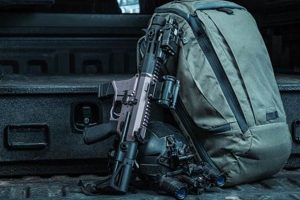
A compact, single-strap carrying solution, optimized for rapid access to essential gear, represents a specific category of bags. These packs are designed for individuals requiring immediate deployment of items such as medical supplies, communication devices, or defensive tools. The streamlined design minimizes bulk and maximizes maneuverability in confined spaces, proving advantageous in tactical situations or outdoor environments. As an example, emergency medical technicians might use this type of bag to carry life-saving equipment on scene.
The utility of this carrying solution stems from its efficient design and accessibility. Its single-strap configuration allows for swift transitions between carrying modes and immediate access to contents without completely removing the pack. This design offers a significant advantage over traditional backpacks in scenarios demanding speed and agility. Historically, specialized units within law enforcement and the military have adopted similar concepts for carrying specialized tools and weaponry. Its evolution into the civilian market addresses the needs of outdoor enthusiasts, survivalists, and individuals seeking a highly functional everyday carry option.
The following sections will delve into the key features to consider when selecting such a pack, including size and capacity, material durability, organizational layout, and strap configuration. Further discussion will address relevant applications and user considerations for informed purchasing decisions.
Essential Considerations
The acquisition of an appropriate equipment-carrying solution necessitates careful evaluation of several crucial aspects. These considerations will impact the functionality and suitability of the pack for its intended purpose.
Tip 1: Capacity Assessment: Determine the required volume based on the anticipated contents. Overpacking can compromise mobility, while insufficient space negates the purpose of the pack.
Tip 2: Material Durability: Prioritize high-denier fabrics with water-resistant coatings to withstand rigorous use and exposure to environmental elements. Consider materials like Cordura nylon for enhanced tear resistance.
Tip 3: Organizational Layout: Evaluate the internal and external pocket configuration. Specialized compartments for specific items, such as magazines or medical kits, can improve efficiency and accessibility.
Tip 4: Strap Ergonomics: Inspect the shoulder strap’s padding and adjustability. A comfortable and secure fit is crucial for extended periods of use, minimizing strain and maximizing stability.
Tip 5: Attachment Points: Consider the presence of MOLLE (Modular Lightweight Load-carrying Equipment) webbing or similar attachment systems. These features allow for customization and the addition of supplementary pouches or accessories.
Tip 6: Concealment Considerations: Assess the pack’s color and profile. Neutral colors and low-profile designs may be preferable in certain operational environments, minimizing visual detection.
Tip 7: Closure Systems: Examine the zippers and buckles for quality and reliability. Durable closures are essential for securing contents and preventing accidental opening during movement.
Adherence to these considerations will facilitate a more informed purchase decision, resulting in a reliable and effective equipment-carrying solution.
The following section provides a synthesis of the key information presented, offering a concise overview of the subject matter.
1. Capacity

Capacity, in the context of a tactical sling backpack, dictates the volume of gear that can be effectively transported. The selection of an appropriate capacity is paramount, as it directly impacts the user’s ability to fulfill mission objectives or address emergent situations. Insufficient capacity will limit the essential equipment available, potentially hindering operational effectiveness. Conversely, excessive capacity may result in an unwieldy and cumbersome load, reducing agility and increasing the risk of fatigue. For instance, a medic operating in a close-quarters environment requires a pack with adequate capacity for basic life support equipment, but minimal bulk to maintain maneuverability. The link is causal: capacity selection causes certain operational outcomes.
The practical significance of understanding capacity requirements is evident in various scenarios. Law enforcement officers on patrol may require a smaller capacity pack to carry a sidearm, spare magazines, and a first-aid kit, prioritizing a low-profile appearance and ease of movement. Search and rescue personnel, however, may need a larger capacity pack to accommodate navigation tools, communication devices, extra layers of clothing, and emergency rations for extended operations. Therefore, matching the pack’s capacity to the specific demands of the intended application is critical for optimal performance and user comfort. The appropriate capacity is a key component for the “best” tactical sling backpack.
In summary, capacity serves as a critical determinant of a tactical sling backpack’s utility. Determining appropriate capacity requires careful assessment of the user’s needs, the operational environment, and the type of gear that must be carried. Balancing the need for sufficient storage with the imperative of maintaining agility and comfort represents a central challenge in selecting an effective tactical sling backpack.
2. Durability

Durability constitutes a fundamental characteristic of a tactical sling backpack and directly correlates to its long-term utility and performance under adverse conditions. Material selection, construction techniques, and hardware quality are key determinants of a pack’s resilience to wear, tear, and environmental factors. A pack failing to withstand operational stress poses significant risks to the user and compromises the mission.
- Material Strength
The denier rating of the fabric used in construction directly influences its resistance to abrasion and tearing. Higher denier fabrics, such as 500D or 1000D nylon, offer superior protection against damage from rough surfaces, sharp objects, and repeated use. In practical terms, a pack constructed from lower denier fabric may quickly develop holes or tears when subjected to the rigors of field operations, while a higher denier counterpart will maintain structural integrity. Consider, for instance, a wilderness search and rescue team requiring a bag that can handle harsh terrain, rocks and undergrowth without falling apart.
- Seam Reinforcement
The method of seam construction and reinforcement significantly impacts the pack’s overall strength. Double-stitched and bar-tacked seams enhance the load-bearing capacity and prevent separation under stress. Weak or poorly constructed seams represent a critical failure point, potentially leading to catastrophic pack failure. Military-grade packs, for example, often employ reinforced seams at stress points to ensure the bag can withstand the weight of heavy equipment and resist tearing during dynamic movements.
- Hardware Quality
Buckles, zippers, and other hardware components must exhibit high tensile strength and resistance to corrosion. Substandard hardware can fail under load, rendering the pack unusable and potentially compromising the security of its contents. Durable zippers, such as those manufactured by YKK, and robust buckles made from materials like acetal or nylon enhance the pack’s reliability. This is vital for emergency medical personnel who need quick access to their supplies without worrying about a zipper breaking.
- Water Resistance
A durable pack often incorporates water-resistant or waterproof coatings to protect contents from exposure to moisture. This feature is particularly crucial in wet or humid environments, preventing damage to sensitive equipment such as electronics or medical supplies. The effectiveness of water resistance depends on the quality of the coating and the sealing of seams and closures. A photographer covering outdoor events in inclement weather requires a durable sling bag with excellent water resistance.
In summation, durability is not merely a desirable attribute but a critical requirement for any tactical sling backpack intended for professional use or demanding environments. Careful consideration of material strength, seam reinforcement, hardware quality, and water resistance will ensure that the pack can withstand the rigors of use and provide reliable performance when it is needed most. A best tactical sling backpack cannot be one without high durability.
3. Organization
Organization, within the context of a tactical sling backpack, constitutes a critical factor determining its efficiency and usability. The internal layout and external configuration of compartments, pockets, and attachment points directly influence the user’s ability to access and manage gear effectively. A well-organized pack facilitates rapid retrieval of essential items, minimizing downtime in critical situations. Conversely, a poorly organized pack can lead to fumbling, delays, and potential compromise of mission objectives. The selection is causal: Organization of the components causes the best tactical sling backpack.
The practical significance of effective organization is evident in numerous scenarios. Law enforcement officers responding to an active shooter incident require immediate access to spare magazines, medical supplies, and communication devices. A sling backpack with dedicated compartments for each item enables swift retrieval, minimizing response time and maximizing effectiveness. Similarly, a search and rescue team operating in a wilderness environment needs to efficiently manage navigation tools, first-aid kits, and survival equipment. A well-organized pack allows team members to quickly locate necessary items, improving coordination and increasing the chances of a successful rescue. As an example, the best tactical sling backpack should feature a system where similar type of equipments are kept close together.
In summary, organization is not merely an aesthetic consideration but a fundamental requirement for a tactical sling backpack. A thoughtfully designed organizational layout improves accessibility, enhances efficiency, and contributes to the overall effectiveness of the user. Consideration of the intended application and the specific gear to be carried is paramount in selecting a pack with an optimal organizational structure. Prioritizing organization is key, not just an extra component, in searching for the best tactical sling backpack.
4. Ergonomics
Ergonomics, in the domain of tactical gear, represents the science of designing and arranging items to optimize human interaction and well-being. When considered in the context of a sling backpack, ergonomics directly influences user comfort, efficiency, and overall operational performance. Neglecting ergonomic principles can lead to discomfort, fatigue, and even injury, thereby hindering mission effectiveness.
- Shoulder Strap Design
The shoulder strap serves as the primary point of contact and weight distribution. A well-designed strap incorporates adequate padding, breathable materials, and adjustable length to accommodate varying body types and load weights. An improperly designed strap can cause pressure points, chafing, and muscle strain, particularly during extended periods of use or under heavy loads. A best tactical sling backpack can’t cause pain, even when using the backpacj for a long time.
- Weight Distribution
An ergonomically sound sling backpack distributes weight evenly across the torso, minimizing stress on specific muscle groups. Features like a stabilizing strap or adjustable compression straps contribute to balanced weight distribution. Uneven weight distribution can lead to postural imbalances, back pain, and reduced mobility. One of the things that needs to be considered in using the best tactical sling backpack is safety in carrying things.
- Accessibility and Reach
Ergonomics also encompasses the ease with which items can be accessed within the pack. A well-designed pack allows for quick and intuitive retrieval of essential gear without requiring excessive reaching, twisting, or bending. Strategic placement of compartments and attachment points enhances accessibility. A disorganized pack that forces the user to fumble for items compromises efficiency and can be dangerous in time-sensitive situations. If a thing is easy to get, it can be one of the factor to be the best tactical sling backpack.
- Material Breathability
The materials used in constructing the pack’s back panel and shoulder strap influence breathability and moisture management. Breathable materials, such as mesh or perforated foam, promote airflow and reduce sweat accumulation, enhancing comfort in warm environments. Inadequate breathability can lead to discomfort, skin irritation, and decreased performance. The more features that can be combined, the more it makes it the best tactical sling backpack.
In conclusion, ergonomics represents a critical determinant of a tactical sling backpack’s overall effectiveness. Careful consideration of shoulder strap design, weight distribution, accessibility, and material breathability ensures that the pack enhances, rather than hinders, user performance and well-being. Investing in an ergonomically sound sling backpack translates to improved comfort, reduced fatigue, and increased operational efficiency.
5. Accessibility

Accessibility, in the context of a tactical sling backpack, signifies the ease and speed with which a user can retrieve stored items. This characteristic is paramount in situations demanding immediate action, rendering it a critical component of any effective carrying solution. The ability to rapidly access essential equipment can directly impact mission success, personal safety, or the well-being of others.
- Single-Handed Operation
The design of the best tactical sling backpack often prioritizes single-handed operation. Zippers, buckles, and compartments are configured to allow access and manipulation with one hand, freeing the other for other tasks. For example, a law enforcement officer might need to access a sidearm or radio while maintaining control of a suspect. This design feature is crucial for maintaining situational awareness and responsiveness.
- Strategic Compartment Placement
The location of compartments and pockets within the pack directly influences accessibility. High-priority items, such as medical supplies or ammunition, are typically positioned in easily accessible locations. This arrangement reduces the time required to retrieve necessary equipment, particularly in stressful or low-light conditions. The best tactical sling backpack considers the use case of the consumer to make the best layout.
- Rapid Deployment Systems
Some sling backpacks incorporate specialized rapid deployment systems. These systems, such as tear-away compartments or quick-release straps, allow the user to instantly access the pack’s contents in emergency situations. This feature is particularly beneficial for medical personnel or first responders who need to quickly deploy life-saving equipment.
- Intuitive Design
The best tactical sling backpack features an intuitive design, minimizing the cognitive load required to locate and retrieve items. Clear labeling, color-coded compartments, and logical organization contribute to ease of use. A user should be able to operate the pack efficiently without prior training or familiarization.
The facets of accessibility single-handed operation, strategic compartment placement, rapid deployment systems, and intuitive design converge to define the usability and effectiveness of a tactical sling backpack. These elements are vital considerations for professionals operating in high-stakes environments, where seconds can make a difference. A design that compromises accessibility ultimately diminishes the pack’s utility and value.
6. Concealment

Concealment, in the context of a tactical sling backpack, refers to the ability of the pack to minimize visual detection and avoid drawing unwanted attention. This aspect is particularly relevant for individuals operating in sensitive environments, where discretion and maintaining a low profile are paramount. The effectiveness of concealment hinges on several design and material considerations.
- Color and Pattern Selection
The choice of color and pattern significantly influences the pack’s visibility. Neutral colors, such as black, gray, or earth tones, tend to blend in with urban or natural environments, reducing the likelihood of detection. Avoidance of overtly tactical or military-style patterns can further minimize attention. The best tactical sling backpack should blend into its environment.
- Low-Profile Design
A streamlined design that avoids excessive bulk or extraneous features enhances concealment. A pack with a smooth, uncluttered exterior is less likely to attract attention than one with numerous external pouches or straps. The best tactical sling backpack doesn’t have a lot of things sticking out.
- Logo Minimization
Prominent logos or branding can compromise concealment. A pack with subtle or no visible logos is preferable for maintaining a low profile. Removal of existing logos may be necessary in certain operational contexts.
- Material Texture and Reflectivity
The texture and reflectivity of the pack’s materials can affect its visibility. Matte finishes and non-reflective fabrics minimize glare and reduce the likelihood of detection, particularly in low-light conditions. Shiny or highly reflective materials should be avoided.
Achieving effective concealment requires a holistic approach, encompassing color, design, branding, and materials. The optimal level of concealment depends on the specific operational environment and the user’s objectives. A well-concealed tactical sling backpack enhances the user’s ability to operate discreetly and avoid unwanted attention, thereby improving overall security and effectiveness. Concealment should always be considered in looking for the best tactical sling backpack.
7. Attachment Points

Attachment points on a tactical sling backpack serve as a critical interface for expanding its carrying capacity and adapting it to specific mission requirements. These points, commonly implemented as MOLLE (Modular Lightweight Load-carrying Equipment) webbing or similar systems, provide a standardized method for attaching pouches, accessories, and other gear to the exterior of the pack. Their presence significantly enhances the pack’s versatility and functionality. The best tactical sling backpack should therefore have some attachment points.
The integration of attachment points has a causal relationship with the functionality of a tactical sling backpack. The inclusion of such a system enables users to configure the pack to meet the demands of diverse operational environments. For instance, a medic might attach a dedicated medical pouch to the exterior, ensuring immediate access to life-saving equipment. Similarly, a law enforcement officer could add a magazine pouch or a radio holster, optimizing readiness and response time. Without attachment points, the pack’s carrying capacity would be limited to its internal volume, restricting its adaptability and diminishing its utility in dynamic situations. It would hinder the qualities of the best tactical sling backpack.
In summary, attachment points constitute a defining characteristic of a tactical sling backpack, directly influencing its adaptability and overall effectiveness. By enabling users to customize the pack’s configuration and expand its carrying capacity, attachment points enhance its utility in a wide range of operational scenarios. The lack of robust and strategically placed attachment points significantly diminishes the value of such a carrying solution, highlighting their importance in any evaluation of the best tactical sling backpack. This is vital for a consumer who’s aiming to buy the best tactical sling backpack.
Frequently Asked Questions
The following section addresses common inquiries regarding tactical sling backpacks, providing concise and informative answers to aid in informed decision-making.
Question 1: What distinguishes a tactical sling backpack from a standard sling backpack?
Tactical sling backpacks are typically constructed from more durable materials, such as high-denier nylon, and incorporate features like MOLLE webbing for attaching additional pouches and gear. They prioritize ruggedness, organization, and accessibility in demanding environments, unlike standard sling backpacks intended for general use.
Question 2: How should the appropriate capacity for a tactical sling backpack be determined?
Capacity should be determined based on the anticipated contents and the mission requirements. Consider the volume of essential equipment, such as medical supplies, communication devices, and defensive tools, while also accounting for the need for maneuverability and comfort. Overpacking should be avoided.
Question 3: Is water resistance a critical feature for a tactical sling backpack?
Water resistance is a highly desirable feature, particularly for individuals operating in wet or humid environments. Water-resistant coatings protect sensitive equipment from damage and maintain functionality. However, the level of water resistance required depends on the anticipated exposure to moisture.
Question 4: What role does organization play in the effectiveness of a tactical sling backpack?
Organization is crucial for facilitating rapid access to essential items. Dedicated compartments, pouches, and attachment points enable efficient management of gear, minimizing downtime in critical situations. A well-organized pack enhances situational awareness and responsiveness.
Question 5: How important is ergonomics in a tactical sling backpack design?
Ergonomics directly impacts user comfort, efficiency, and long-term health. A well-designed shoulder strap, balanced weight distribution, and breathable materials minimize strain and fatigue, enabling extended periods of use without compromising performance.
Question 6: Should concealment be a primary consideration when selecting a tactical sling backpack?
Concealment is relevant for individuals operating in sensitive environments where discretion is paramount. Neutral colors, low-profile designs, and minimal branding contribute to reducing visual detection. However, the importance of concealment depends on the specific operational context.
In summary, selecting a tactical sling backpack involves careful consideration of several factors, including material durability, capacity, organization, ergonomics, and concealment. Prioritizing these elements ensures that the pack meets the specific needs and demands of the user.
The subsequent section will delve into specific use cases and provide recommendations based on different operational environments.
The Enduring Value of the Best Tactical Sling Backpack
Throughout this exploration, multiple facets have been examined to define what constitutes the “best tactical sling backpack.” Material durability, organizational capacity, ergonomic design, accessibility, concealment capabilities, and the presence of attachment points each contribute to a solution optimized for rapid deployment and efficient gear management. The selection process demands a rigorous assessment of these intertwined characteristics, tailored to specific operational requirements.
Ultimately, the decision rests on a thorough understanding of individual needs and the environments in which the pack will be deployed. Choosing wisely ensures not only preparedness but also the confidence to face challenging situations effectively. Continuous refinement and innovation in this sector promise even more capable and adaptable solutions in the future, further solidifying the importance of informed selection criteria.