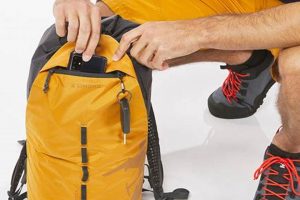
The selection of a supportive carrying device can significantly impact spinal health. Such a device is designed to distribute weight evenly across the back and shoulders, mitigating strain and discomfort. For example, a backpack featuring padded straps, a hip belt, and adjustable torso length aims to alleviate pressure points and promote proper posture, thereby reducing the likelihood of back pain exacerbation.
Employing an ergonomically designed backpack offers several benefits. It can improve posture, reduce muscle fatigue, and minimize the risk of chronic back pain. Historically, the design of carrying devices has evolved from simple slings to complex systems incorporating load-bearing frames and customizable adjustments. This evolution reflects a growing understanding of the biomechanics of load carriage and its effects on the human musculoskeletal system.
The subsequent sections will explore specific features, materials, and design elements that contribute to the effectiveness of backpacks in minimizing back pain. Furthermore, different backpack types, carrying strategies, and considerations for individual needs will be discussed to provide a comprehensive understanding of optimal backpack selection.
Recommendations for Selecting a Spine-Supportive Backpack
Choosing an appropriate carrying device is paramount for preventing and managing back discomfort. The following recommendations provide guidance on selecting a backpack that promotes proper posture and minimizes strain.
Tip 1: Prioritize Ergonomic Design: Seek backpacks featuring adjustable shoulder straps, a sternum strap, and a padded hip belt. These elements enable customized weight distribution, shifting the load from the spine to the hips and core.
Tip 2: Assess Torso Length Compatibility: A backpack’s torso length should align with the user’s. Many manufacturers provide sizing charts to ensure a proper fit, crucial for effective weight distribution.
Tip 3: Evaluate Strap Padding and Design: Opt for wide, padded shoulder straps that contour comfortably to the shoulders. Avoid straps that dig into the skin or create pressure points.
Tip 4: Consider Backpack Weight: The empty backpack’s weight should be as minimal as possible. Excess weight adds to the overall load and increases strain on the back.
Tip 5: Organize Contents Strategically: Place heavier items closer to the back and at the bottom of the backpack to maintain balance and minimize strain.
Tip 6: Utilize Multiple Compartments: Compartments facilitate even weight distribution and prevent items from shifting during movement.
Tip 7: Explore Backpack Material Durability: Select a backpack crafted from durable, lightweight materials. Reinforcements at stress points enhance longevity and prevent tearing.
By adhering to these guidelines, individuals can significantly reduce the risk of back pain associated with carrying a loaded backpack. Proper selection and utilization contribute to improved posture, reduced muscle fatigue, and enhanced overall comfort.
The subsequent section will address specific backpack types and carrying techniques that further optimize spinal health and minimize discomfort.
1. Ergonomic Design

Ergonomic design, in the context of backpacks, is a crucial element in minimizing the physical strain associated with carrying loads. The principles of ergonomics aim to optimize the interaction between the user and the device, reducing the risk of musculoskeletal issues, particularly back pain. A well-designed backpack integrates features that distribute weight effectively and promote proper posture.
- Adjustable Shoulder Straps and Torso Length
Adjustability is paramount in ergonomic backpack design. Shoulder straps that can be lengthened or shortened allow the user to position the backpack correctly on the back, ensuring the load is carried close to the body’s center of gravity. Adjustable torso length accommodates varying body sizes, preventing the backpack from sitting too high or low, which can lead to uneven weight distribution and strain. In real-world scenarios, this means a user can customize the fit to their specific measurements, mitigating potential pressure points and promoting a more natural spinal alignment.
- Padded Hip Belt
A padded hip belt is an integral component of an ergonomically sound backpack. Its function is to transfer a significant portion of the backpack’s weight from the shoulders and spine to the stronger muscles of the hips and legs. When properly fitted and secured, the hip belt can bear up to 80% of the total load, substantially reducing stress on the back. For instance, a student carrying heavy textbooks benefits from a hip belt that offloads weight, preventing slouching and minimizing the risk of developing back pain over time.
- Contoured Back Panel
The back panel’s design is crucial for both comfort and support. A contoured back panel that conforms to the natural curvature of the spine helps distribute weight evenly across the back. Padding and ventilation incorporated into the back panel minimize pressure points and promote airflow, reducing heat and moisture buildup. Consider a hiker carrying gear for extended periods; a well-designed back panel ensures comfort and prevents localized pressure that could lead to discomfort or pain.
- Internal Frame and Load Stabilization
An internal frame within the backpack provides structure and support, preventing the pack from collapsing or sagging. This is especially important when carrying heavy or irregularly shaped items. Load stabilization features, such as compression straps, secure the contents within the backpack, preventing shifting and maintaining a balanced load. For example, a photographer carrying delicate equipment benefits from an internal frame that protects the gear and stabilizes the load, reducing the likelihood of sudden movements that could strain the back.
The incorporation of these ergonomic design elements is paramount in the development of a backpack intended to minimize back pain. By prioritizing adjustability, weight distribution, support, and comfort, manufacturers can create backpacks that promote spinal health and reduce the risk of musculoskeletal issues associated with carrying heavy loads. The integration of these features represents a crucial advancement in backpack design, shifting the focus from simple load carriage to user well-being and long-term health.
2. Proper Weight Distribution

Proper weight distribution is a cornerstone in mitigating back pain associated with backpack usage. The manner in which a load is arranged and carried significantly influences the stress exerted on the spine and supporting musculature. Optimizing weight distribution is, therefore, a critical feature of any backpack intended to alleviate or prevent back discomfort.
- Strategic Packing and Load Placement
The arrangement of items within a backpack directly impacts weight distribution. Heavier objects should be positioned closer to the wearer’s back and centered within the pack to minimize leverage and prevent the load from pulling away from the body. Lighter items can be placed further away or in outer compartments. For instance, textbooks should be placed against the back panel, while lighter items like notebooks or stationery can be stored in front pockets. Incorrect load placement creates imbalance, increasing the strain on back muscles as they compensate to maintain stability.
- Compression Straps and Load Stabilization
Compression straps play a vital role in stabilizing the load and preventing shifting during movement. These straps compress the contents of the backpack, consolidating the load and reducing the likelihood of items moving around, which can lead to uneven weight distribution and instability. A backpacker using compression straps to secure a sleeping bag and tent ensures the load remains compact and stable, minimizing unnecessary strain caused by shifting weight during a hike.
- Internal Compartments and Organizational Features
Internal compartments and organizational features within a backpack contribute to even weight distribution by providing designated spaces for different items. These compartments prevent items from settling at the bottom of the pack and creating a concentrated load. Separating books, electronics, and other belongings into individual compartments ensures that the weight is distributed more evenly throughout the backpack, reducing pressure points and promoting better balance. A student with a backpack featuring multiple compartments can distribute the weight of their school supplies more effectively, reducing the likelihood of back pain.
In summary, proper weight distribution is not merely a matter of convenience but a critical component in reducing the risk of back pain associated with carrying a backpack. Strategic packing, load stabilization, and the utilization of internal compartments work in concert to ensure that the load is carried efficiently and comfortably, minimizing strain on the spine and promoting overall musculoskeletal health. Backpacks designed with these principles in mind represent a significant advancement in addressing the biomechanical challenges of load carriage and offer a proactive approach to preventing back discomfort.
3. Adjustable Fit

Adjustable fit constitutes a crucial element in the selection of a backpack designed to minimize back pain. The human torso exhibits considerable variation in length and shape. A backpack lacking adjustable features cannot accommodate this diversity, leading to uneven weight distribution and concentrated pressure points. An ill-fitting backpack compels the wearer to compensate through postural adjustments, exacerbating strain on the spinal muscles and potentially leading to chronic discomfort. The absence of adjustability undermines the fundamental principle of ergonomic design, which emphasizes a customized interface between the individual and the load-carrying device. For instance, a backpack with a fixed torso length that is too long for the user will cause the weight to shift downwards, pulling on the shoulders and creating a hunched posture, thereby intensifying strain on the lower back.
Conversely, a backpack equipped with adjustable shoulder straps, a sternum strap, and a hip belt allows for precise customization of the fit. The shoulder straps enable the user to position the backpack appropriately on the back, ensuring that the load is carried close to the body’s center of gravity. The sternum strap prevents the shoulder straps from sliding outwards, maintaining proper posture and distributing weight evenly across the shoulders. The hip belt transfers a significant portion of the backpack’s weight from the shoulders and spine to the hips and legs, reducing stress on the back. A backpacker embarking on a multi-day trek can adjust these features to accommodate changes in clothing layers or load volume, ensuring a consistent and comfortable fit throughout the journey.
In conclusion, the concept of adjustable fit is not merely a superficial consideration but a fundamental aspect of backpack design that directly impacts spinal health. A backpack offering a customizable fit allows for optimal weight distribution, minimizes pressure points, and promotes proper posture, effectively mitigating the risk of back pain. Prioritizing adjustable fit in the selection process is, therefore, paramount in choosing a backpack that supports both comfort and long-term musculoskeletal well-being. Failing to recognize the significance of adjustable fit can negate the benefits of other ergonomic features, rendering the backpack ineffective in preventing or alleviating back pain.
4. Durable Material

The selection of durable materials in backpack construction is intrinsically linked to its ability to minimize back pain. Material integrity directly affects a backpack’s long-term support, weight distribution, and overall structural stability. Compromised materials contribute to uneven load bearing, increased stress on the back, and a diminished lifespan, ultimately negating ergonomic design principles.
- Tear Resistance and Structural Integrity
Durable materials, such as high-denier nylons or reinforced polyesters, exhibit superior tear resistance, preventing rips and punctures that can compromise the backpack’s structure. A compromised structure results in sagging, uneven weight distribution, and increased strain on the wearer’s back. A backpack used for carrying heavy textbooks, constructed from a material susceptible to tearing, will likely fail prematurely, leading to discomfort and potential injury. Conversely, a robust material maintains its shape under load, providing consistent support.
- Water Resistance and Protection of Contents
Water-resistant or waterproof materials safeguard the contents from moisture damage. Wet and heavy items increase the overall load and shift the center of gravity, exacerbating back strain. Materials with a high hydrostatic head rating provide a barrier against water penetration, preserving the integrity of the load. For example, a backpack used by a student commuting in inclement weather must protect books and electronics from water damage, preventing added weight and maintaining proper balance.
- Abrasion Resistance and Longevity
Abrasion-resistant materials, often incorporating reinforced weaves or coatings, withstand friction and wear, extending the backpack’s lifespan. A backpack constructed from a material prone to abrasion will degrade rapidly, losing structural integrity and compromising its ability to distribute weight effectively. Backpacks used by hikers navigating rough terrain necessitate materials capable of resisting abrasion from rocks and branches, ensuring long-term durability and consistent support.
- Weight-to-Strength Ratio and Overall Load
Durable materials often possess a high weight-to-strength ratio, providing robust support without adding excessive weight to the overall load. A heavier backpack, even before it is loaded, increases the strain on the wearer’s back. Modern materials like ripstop nylon offer a balance between strength and weight, minimizing the burden on the user. A lightweight yet durable backpack is crucial for individuals prone to back pain, as it reduces the initial weight and minimizes the potential for aggravation.
In conclusion, durable materials are not merely a matter of aesthetic appeal or product longevity but a fundamental element in ensuring a backpack’s ability to minimize back pain. The material’s ability to resist tearing, abrasion, and water penetration, while maintaining a favorable weight-to-strength ratio, directly impacts the backpack’s structural integrity, weight distribution, and long-term performance. Backpacks constructed from inferior materials inherently compromise these critical aspects, rendering them unsuitable for individuals seeking to mitigate back discomfort.
5. Adequate Padding

Adequate padding within a backpack serves as a critical interface between the load and the wearer’s body, directly influencing the potential for back pain. Insufficient or poorly positioned padding concentrates pressure, creating discomfort and exacerbating existing spinal conditions. Effective padding, conversely, distributes weight more evenly, minimizing localized stress points and promoting better blood circulation. The relationship between padding and back pain is a direct cause-and-effect; inadequate padding leads to increased pressure, muscle strain, and ultimately, pain. This principle underlies the design of any backpack intended for comfort and spinal health. For example, a backpack lacking sufficient padding in the shoulder straps will cause the straps to dig into the shoulders, compressing nerves and restricting blood flow, leading to pain and fatigue in the upper back and neck. Similarly, a lack of padding in the back panel can result in direct pressure on the spinal column, particularly when carrying rigid or irregularly shaped items.
The practical application of this understanding extends to the selection and utilization of backpacks. Consumers should prioritize backpacks featuring strategically placed padding in key areas such as the shoulder straps, hip belt, and back panel. The density and composition of the padding material are also relevant; denser foams provide greater support, while breathable materials help to minimize heat and moisture buildup. Individuals carrying heavier loads or those with pre-existing back conditions should opt for backpacks with enhanced padding features. For instance, hikers carrying heavy gear for extended periods benefit from backpacks with contoured and heavily padded back panels that conform to the natural curvature of the spine, distributing weight evenly and preventing localized pressure points. Furthermore, the proper adjustment of the backpack, including the shoulder straps and hip belt, is essential to ensure that the padding is positioned correctly and effectively mitigating pressure.
In summary, adequate padding is an indispensable component of any backpack designed to minimize back pain. The strategic placement and density of padding materials directly influence weight distribution, pressure reduction, and overall comfort. Understanding the connection between padding and spinal health allows consumers to make informed decisions regarding backpack selection and usage, ultimately promoting long-term musculoskeletal well-being. Challenges remain in accurately assessing the quality and effectiveness of padding without physically testing the backpack under realistic load conditions. However, prioritizing backpacks with well-padded features and adjusting them properly can significantly reduce the risk of back pain associated with carrying loads. The relationship between padding and spinal health is a fundamental consideration in backpack design and usage, linking directly to the broader theme of ergonomic principles and musculoskeletal health.
Frequently Asked Questions
The following addresses common inquiries regarding the selection and utilization of backpacks to minimize back pain. These answers provide evidence-based guidance to promote spinal health and comfort.
Question 1: Does a higher price point guarantee a superior backpack for mitigating back pain?
No. Price does not always correlate directly with ergonomic design or effective weight distribution. Evaluate specific features such as adjustable straps, hip belts, and padded back panels, irrespective of cost.
Question 2: How critical is the weight of the empty backpack itself?
The empty backpacks weight is significant. A heavier empty pack adds to the overall load, increasing strain. Opt for lightweight yet durable materials to minimize the initial burden.
Question 3: Are specific backpack brands universally recommended for back pain sufferers?
No universal recommendation exists. Individual needs vary. Focus on backpacks possessing adjustable features, proper fit, and ergonomic design, rather than relying solely on brand reputation.
Question 4: Is it possible to overload even the most ergonomically designed backpack?
Yes. Overloading any backpack, regardless of its design, exceeds its intended capacity and significantly increases stress on the spine. Adhere to recommended weight limits.
Question 5: How frequently should a backpack be replaced to maintain its ergonomic benefits?
The lifespan of a backpack depends on usage frequency and intensity. Inspect regularly for signs of wear, such as torn straps or compressed padding, and replace as needed to ensure continued support.
Question 6: Can alternative carrying methods, such as messenger bags, be as effective as backpacks in preventing back pain?
Messenger bags typically distribute weight unevenly across one shoulder, increasing the risk of back and neck pain. Backpacks, when used correctly, distribute weight more evenly, making them a preferable option.
Key takeaways emphasize personalized selection criteria, adherence to weight limits, and proactive maintenance to maximize ergonomic benefits. Focusing on adjustability, weight distribution, and individual fit remains paramount.
The subsequent section will delve into advanced strategies for managing backpack weight and optimizing carrying techniques to further minimize back strain.
Conclusion
The preceding analysis has illuminated the critical factors in selecting a suitable carrying device. The discussion emphasized ergonomic design, proper weight distribution, adjustable fit, durable material, and adequate padding as primary determinants in minimizing spinal stress. Selection requires a discerning approach, focusing on the interplay of these factors rather than relying solely on marketing claims or superficial features. A well-chosen carrying system significantly mitigates the risk of musculoskeletal discomfort.
Effective load carriage represents a proactive approach to spinal health. By adhering to the principles outlined and prioritizing individual needs, individuals can safeguard against potential back pain. The pursuit of the appropriate solution is a worthwhile investment in long-term well-being, underscoring the importance of informed decision-making in the selection of devices intended for daily use.