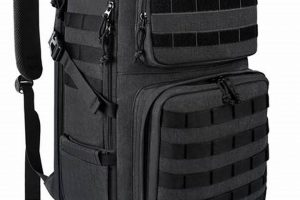
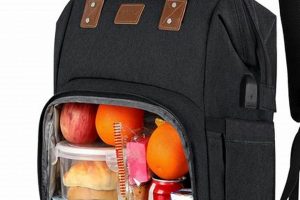
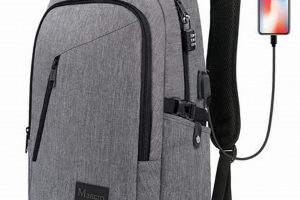
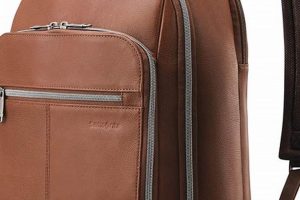
A combination of a rolling suitcase and a traditional rucksack designed to carry a portable computer, this hybrid luggage offers versatility for individuals requiring mobility and the capacity to transport electronic devices. Users can either pull the unit behind them using a telescoping handle and wheels, or wear it on their back utilizing shoulder straps, depending on the terrain and travel conditions. This type of bag is commonly employed by students, business travelers, and individuals with back issues who need to carry heavy loads.
The value of this type of conveyance lies in its adaptability. It provides a means to alleviate strain from the back and shoulders when rolling is feasible, while also offering the option of backpack-style carrying where rolling is impractical. Its utility is further amplified by the inclusion of padded compartments specifically designed to protect laptops from damage during transit. The integrated wheel system and telescoping handle represent a significant development in personal luggage, offering a compelling alternative to traditional backpacks and suitcases.
The subsequent discussion will delve into the specific features to consider when selecting one, encompassing aspects such as wheel quality, handle durability, compartment organization, and the overall ergonomic design. Furthermore, this overview will explore the various sizes and materials available, empowering informed decision-making based on individual needs and intended usage scenarios.
Guidance for Selecting a Wheeled Backpack Laptop Bag
Choosing the appropriate model requires careful consideration of various factors to ensure it effectively meets individual needs and usage patterns. These guidelines aim to provide a clear framework for evaluating potential purchases.
Tip 1: Evaluate Wheel Quality and Durability: Inspect the wheels for robust construction and smooth rolling action. Higher-quality wheels, often made from polyurethane, provide better traction and longevity, especially on uneven surfaces. Test the wheels on different floor types before purchase, if possible.
Tip 2: Assess Handle Stability and Extension Mechanism: The telescoping handle should extend and retract smoothly, locking securely at different heights. Ensure the handle is made of sturdy materials like aluminum to withstand repeated use and potential stress. Look for handles with minimal wobble when fully extended.
Tip 3: Examine Laptop Compartment Padding and Security: The laptop compartment must offer ample padding to protect the device from impacts and scratches. Verify the presence of a secure closure mechanism, such as a padded strap or zippered pocket, to prevent the laptop from shifting during transit.
Tip 4: Consider Organizational Compartments and Capacity: Evaluate the number and size of internal and external compartments to accommodate accessories, documents, and personal items. A well-organized design optimizes space utilization and facilitates easy access to essential items.
Tip 5: Prioritize Ergonomic Design and Comfort: If the unit will be used as a backpack, assess the shoulder straps for adequate padding and adjustability. A padded back panel enhances comfort during extended wear. Consider the overall weight of the bag, especially when fully loaded.
Tip 6: Investigate Material Durability and Water Resistance: Opt for models constructed from durable, water-resistant materials like nylon or polyester to protect contents from the elements. Reinforced stitching and robust zippers contribute to the bag’s overall longevity.
Tip 7: Review Warranty and Customer Support Policies: Understanding the manufacturer’s warranty and customer support options provides peace of mind in case of defects or issues. A reputable brand typically offers a comprehensive warranty and responsive customer service.
By carefully evaluating these aspects, a suitable model that balances functionality, durability, and comfort can be selected. Making an informed choice will lead to a more efficient and comfortable transport experience.
The next section will address the proper use and maintenance of this type of luggage to maximize its lifespan and performance.
1. Rolling Resistance

Rolling resistance, a force opposing motion when an object rolls on a surface, significantly impacts the usability of wheeled backpack laptop bags. Minimizing this resistance is crucial for reducing user exertion and enhancing maneuverability.
- Wheel Material and Rolling Resistance
The material composition of the wheels directly affects rolling resistance. Polyurethane wheels, commonly found in higher-quality bags, exhibit lower rolling resistance compared to plastic or rubber alternatives. This is due to polyurethane’s ability to deform less under load, resulting in less energy dissipation as heat. Consequently, less force is required to propel the bag forward, improving ease of use.
- Wheel Diameter and Rolling Resistance
Larger diameter wheels generally exhibit lower rolling resistance than smaller ones. This is because larger wheels deform less at the point of contact with the surface, leading to a smaller contact area and reduced energy loss. For wheeled backpack laptop bags, larger wheels can be particularly advantageous on uneven surfaces such as sidewalks or carpeted areas, where smaller wheels may encounter increased resistance.
- Bearing Quality and Rolling Resistance
The quality of the wheel bearings significantly influences rolling resistance. Precision bearings, typically sealed and lubricated, minimize friction within the wheel assembly. This allows the wheels to rotate more freely, reducing the force required to overcome static friction and maintain momentum. Inferior bearings can introduce significant drag, increasing the effort needed to pull the bag, especially over longer distances.
- Surface Texture and Rolling Resistance
The texture of the rolling surface plays a crucial role in determining rolling resistance. Smooth, hard surfaces like polished concrete or asphalt offer minimal resistance. Conversely, rough or yielding surfaces such as gravel, grass, or thick carpets increase resistance due to greater deformation of the wheel and the surface. Wheeled backpack laptop bags are often used in varied environments, necessitating wheels designed to perform adequately across a range of surface conditions.
The interplay between wheel material, diameter, bearing quality, and surface texture collectively dictates the overall rolling resistance experienced when using this type of luggage. Understanding and optimizing these factors are essential for selecting and maintaining a bag that provides effortless mobility and minimizes user fatigue.
2. Laptop Security

Laptop security within a wheeled backpack laptop bag encompasses the measures taken to protect the device from physical damage and theft. The inherent design of the bag, combining the functionality of a rolling suitcase and a backpack, introduces specific security considerations. The portability advantages can also create vulnerabilities if security features are not adequately addressed. For instance, a weakly padded laptop compartment offers insufficient protection against impacts during transit, potentially resulting in hardware damage. Furthermore, easily accessible exterior pockets can become targets for opportunistic theft, especially in crowded environments. Securing the laptop requires integrated design features and user awareness.
The effectiveness of laptop security features directly impacts the longevity and operational integrity of the device. A well-designed laptop compartment should include thick padding, preferably constructed from closed-cell foam, to absorb shocks. A snug fit within the compartment prevents excessive movement during transport, reducing the risk of internal component damage. Additionally, lockable zippers or concealed compartments deter unauthorized access. Examples of compromised security can be observed in instances where laptops are damaged due to inadequate padding after being dropped or jostled within the bag. Similarly, laptops left unattended in easily accessible exterior pockets have been reported stolen in public areas.
Ultimately, ensuring laptop security within a wheeled backpack laptop bag is a shared responsibility between the manufacturer and the user. Manufacturers should prioritize robust design and security features, while users must exercise caution and implement best practices, such as using laptop locks, avoiding leaving the bag unattended, and being aware of surroundings. Failure to address either aspect can lead to financial loss, data breaches, and significant inconvenience. By recognizing the importance of laptop security as an integral component of the wheeled backpack design, both manufacturers and users can mitigate risks and ensure the safe transport of valuable electronic assets.
3. Handle Durability

Handle durability is a critical determinant of the overall lifespan and utility of a wheeled backpack laptop bag. The telescoping handle, the primary interface for rolling the bag, is subjected to repeated extension, retraction, and torsional forces during use. Insufficient handle strength leads to premature failure, rendering the rolling functionality ineffective and necessitating costly repairs or replacement. The handle’s capacity to withstand these forces directly impacts the user’s ability to transport the bag efficiently and comfortably.
The correlation between handle material, construction, and longevity is significant. Handles constructed from lightweight yet robust materials such as aircraft-grade aluminum alloys exhibit greater resistance to bending and breakage compared to those made from less durable plastics or thin-walled metals. Reinforced joints and a secure locking mechanism further enhance the handle’s ability to endure repeated stress. For instance, handles with flimsy locking mechanisms are prone to collapsing under moderate loads, causing the bag to drop unexpectedly. In contrast, handles with telescoping tubes that are prone to bending can hinder smooth operation and create difficulty when the handle is extended or retracted. Field observations frequently reveal that handles that are frequently placed under higher volumes or weight tend to perform worse or fail.
Ultimately, prioritizing handle durability is essential for consumers seeking a reliable wheeled backpack laptop bag. Manufacturers who invest in quality materials and construction techniques offer a product that withstands the rigors of daily use. Inspecting the handle’s construction and material during the purchase process, and selecting models with positive user reviews regarding handle longevity, will ensure a longer-lasting, and more satisfactory ownership experience.
4. Weight Distribution

Effective weight distribution is paramount in the design and utilization of a wheeled backpack laptop bag. The configuration directly impacts user comfort, maneuverability, and the structural integrity of the bag itself. Improper distribution leads to uneven strain, potentially causing discomfort, instability, and accelerated wear and tear.
- Location of the Laptop Compartment
The placement of the laptop compartment, typically the heaviest element, significantly influences weight distribution. Positioning this compartment closer to the wearer’s back, when used in backpack mode, minimizes leverage and reduces strain on the shoulders and back. Conversely, situating it further away increases the perceived weight and can lead to postural imbalances. The proximity of the laptop compartment also influences stability when the bag is rolled; a centrally located compartment promotes a balanced load, reducing the likelihood of tipping.
- Organization of Internal Compartments
The arrangement of internal compartments dictates how the overall load is distributed. Strategically placed compartments allow for the even distribution of books, documents, and accessories. Concentrating heavier items in the center and lighter items towards the periphery maintains a balanced load, reducing strain on the seams and zippers. Poor organization results in uneven weight distribution, increasing the risk of tearing and making the bag more difficult to manage.
- Impact on Rolling Stability
Weight distribution directly affects the stability of the bag when rolled. An unevenly distributed load increases the likelihood of the bag tipping over, particularly when navigating uneven surfaces or making turns. This instability not only creates inconvenience but also poses a risk to the contents, especially the laptop. A low center of gravity, achieved through proper weight distribution, enhances stability and prevents unwanted tipping.
- Ergonomic Considerations for Backpack Mode
When used as a backpack, weight distribution influences the ergonomic impact on the wearer. A balanced load reduces strain on specific muscle groups, preventing discomfort and fatigue. Adjustable shoulder straps and a sternum strap are essential for optimizing weight distribution and ensuring a secure and comfortable fit. Improper weight distribution in backpack mode contributes to back pain, shoulder strain, and postural problems.
The principles of weight distribution are integral to the design and use of a wheeled backpack laptop bag. By carefully considering the placement of the laptop compartment, organizing internal compartments effectively, and optimizing for both rolling stability and ergonomic comfort in backpack mode, manufacturers and users can maximize the benefits of this versatile luggage solution while minimizing potential risks and discomfort.
5. Capacity vs. Size

The relationship between capacity and size constitutes a critical design consideration for wheeled backpack laptop bags. Achieving an optimal balance between internal storage volume and external dimensions directly impacts the bag’s usability, portability, and compliance with airline carry-on regulations. Compromises in either area can diminish the bag’s overall practicality and appeal.
- Internal Volume and Laptop Accommodation
Internal volume dictates the bag’s capacity to hold a laptop along with necessary accessories and personal items. A sufficient volume ensures that the laptop, typically ranging from 13 to 17 inches, fits comfortably within a dedicated, padded compartment without undue compression. Inadequate volume necessitates forcing the laptop into the compartment, increasing the risk of damage to the screen or internal components. Furthermore, a larger internal volume provides space for essential accessories such as chargers, mice, and documents, enhancing the bag’s functionality as a mobile workstation.
- External Dimensions and Carry-On Compliance
External dimensions determine the bag’s compliance with airline carry-on size restrictions, typically around 22 x 14 x 9 inches. Exceeding these dimensions may result in the bag being gate-checked, potentially subjecting the laptop to rough handling and increasing the risk of loss or damage. Maintaining compliance requires careful optimization of internal volume within the allowable external dimensions. This involves strategic design of compartments and the utilization of lightweight materials.
- Weight Considerations and Load Management
Increased capacity invariably translates to increased weight, both when empty and when fully loaded. Managing weight becomes crucial, particularly when the bag is carried as a backpack. Excessive weight leads to discomfort, fatigue, and potential strain on the shoulders and back. Conversely, a smaller capacity may necessitate carrying additional bags, negating the convenience of the wheeled backpack design. The selection of lightweight materials and the strategic distribution of weight are essential for mitigating these challenges.
- Maneuverability and Storage Space
Larger bags, while offering greater capacity, can be more cumbersome to maneuver, especially in crowded environments such as airports or train stations. Their increased size also necessitates more storage space at home or in the office. Smaller bags, while more maneuverable and easier to store, may compromise on storage capacity, requiring the user to prioritize essential items. Choosing an appropriate size requires a careful assessment of individual needs and travel habits.
Ultimately, the optimal balance between capacity and size in a wheeled backpack laptop bag depends on the user’s specific requirements. Individuals who frequently travel with a significant amount of gear may prioritize a larger capacity, while those who prioritize portability and adherence to carry-on regulations may opt for a smaller, more compact model. A careful evaluation of these factors is essential for selecting a bag that effectively meets individual needs and preferences.
Frequently Asked Questions
This section addresses common inquiries and concerns regarding wheeled backpack laptop bags, offering insights into their functionality, usage, and maintenance.
Question 1: What is the typical weight capacity a wheeled backpack laptop bag can safely handle?
The weight capacity varies depending on the bag’s construction and materials. However, most models are designed to accommodate between 20 and 30 pounds safely. Exceeding this limit may compromise the integrity of the wheels, handle, or seams.
Question 2: How should the laptop compartment be properly utilized to ensure optimal protection?
The laptop compartment should be used to house the laptop exclusively. Ensure the laptop fits snugly and is secured with any provided straps or closures. Avoid placing other heavy items in the same compartment, as this may exert undue pressure on the device.
Question 3: What are the recommended cleaning procedures for a wheeled backpack laptop bag?
Cleaning procedures depend on the bag’s material. Generally, spot cleaning with a damp cloth and mild detergent is recommended. Avoid immersing the bag in water or using harsh chemicals. For more stubborn stains, consult the manufacturer’s care instructions.
Question 4: How can the longevity of the telescoping handle be maximized?
The telescoping handle’s longevity can be maximized by avoiding excessive force when extending or retracting it. Ensure the locking mechanism is engaged securely before lifting or pulling the bag. Regularly inspect the handle for any signs of damage or wear.
Question 5: Are there any specific storage recommendations to prevent damage when the bag is not in use?
When not in use, the bag should be stored in a cool, dry place away from direct sunlight. Avoid placing heavy objects on top of the bag, as this may distort its shape or damage internal components. Empty the bag completely before storing it for extended periods.
Question 6: How often should the wheels be inspected and maintained?
The wheels should be inspected regularly, ideally before each use. Check for any signs of wear, damage, or debris. Lubricate the axles periodically with a silicone-based lubricant to ensure smooth rolling. Replace worn or damaged wheels promptly to prevent further issues.
These frequently asked questions offer fundamental guidance for the effective utilization and maintenance of a wheeled backpack laptop bag. Adhering to these recommendations ensures optimal performance and extends the lifespan of the product.
The following section will address potential issues, troubleshooting and considerations during purchase.
Conclusion
This exploration of the wheeled backpack laptop bag has underscored its multifaceted nature, extending beyond a mere carrying accessory. Its suitability depends on a nuanced understanding of its components the rolling resistance, laptop security, handle durability, weight distribution, and the balance between capacity and size and their interplay in fulfilling specific user needs. Each attribute contributes to its overall functionality, affecting convenience, protection, and the bag’s long-term value.
Recognizing the critical design elements and user considerations associated with the wheeled backpack laptop bag empowers informed decision-making. Continued refinement in design and material science promises enhanced durability, security, and ergonomic features. Potential consumers and manufacturers must prioritize these aspects to maximize the utility and longevity of this increasingly vital tool for mobile professionals and students.