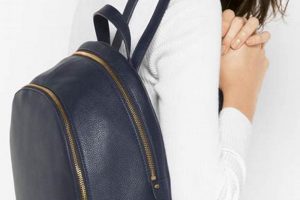
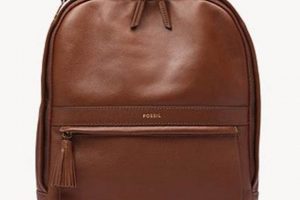
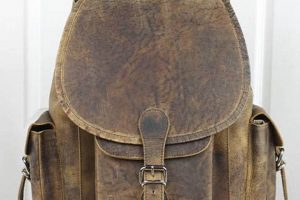
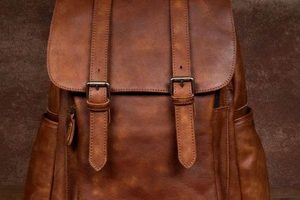
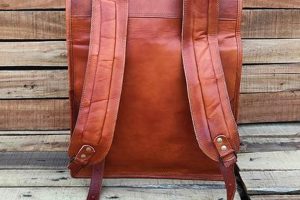
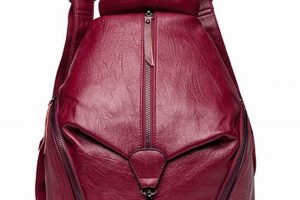
A backpack crafted from strips of hide meticulously interlaced to form a distinct texture and design, represents a synthesis of functionality and artisanal craftsmanship. This type of bag utilizes the natural durability of tanned animal skin, enhancing it with a visually appealing and structurally sound interwoven construction.
Such a method of construction offers increased resilience compared to single-layer leather, as the interwoven structure distributes stress across multiple points. Historically, the practice of interweaving strips of material provided both strength and breathability in various applications, from shields to baskets. Applying this technique to carrying solutions combines aesthetic appeal with robust utility, resulting in a durable and often stylish item.
The subsequent sections will delve into the specific characteristics of this type of backpack, covering aspects such as the diverse methods of manufacturing, material considerations, design variations, and proper care techniques.
Maximizing the Longevity and Utility of Woven Leather Backpacks
The following recommendations aim to guide owners in preserving the aesthetic quality and structural integrity of these uniquely constructed carriers.
Tip 1: Routine Cleaning: Dust and debris accumulation can abrade the hide over time. Employ a soft-bristled brush to gently remove particulate matter from the woven surface regularly. Subsequently, wipe the exterior with a slightly damp, lint-free cloth.
Tip 2: Hydration and Conditioning: Leather, being a natural material, requires periodic moisturizing to prevent cracking and maintain suppleness. Apply a high-quality leather conditioner specifically designed for smooth leather every 3-6 months, following the manufacturer’s instructions. This will help retain the material’s elasticity and prevent premature aging.
Tip 3: Storage Considerations: When not in use, store the bag in a dust bag within a cool, dry environment, away from direct sunlight. Stuffing the bag with acid-free paper helps maintain its shape and prevents creasing or collapsing of the woven structure.
Tip 4: Avoid Overloading: While these bags are often durable, consistently exceeding the manufacturer’s recommended weight capacity places undue stress on the woven seams and straps, potentially leading to premature failure. Distribute weight evenly within the bag.
Tip 5: Water Resistance Measures: While leather possesses some natural water resistance, prolonged exposure to moisture can damage the material. Consider applying a leather protectant spray to enhance water repellency, particularly if the bag is frequently used in inclement weather. Reapply the protectant as needed, according to the product’s guidelines.
Tip 6: Professional Maintenance: For deep cleaning, repairs, or reconditioning, consult a professional leather specialist. Attempting to perform such tasks without the requisite expertise can potentially cause irreversible damage to the woven structure.
These strategies, implemented conscientiously, will contribute significantly to extending the lifespan and preserving the inherent beauty of the described product.
The subsequent section will explore common problems associated with this product and their remedies.
1. Material Durability

The longevity and utility of a woven leather backpack are intrinsically linked to the durability of the hide employed in its construction. Material degradation compromises the structural integrity of the interwoven design, leading to premature wear, potential failure of seams, and diminished aesthetic appeal. The selection of high-quality, properly tanned leather is therefore paramount to ensuring the backpack withstands the stresses of regular use. Inferior hides, prone to cracking, stretching, or tearing, significantly reduce the lifespan of the finished product, regardless of the craftsmanship invested in the weaving process. For example, a woven backpack constructed from vegetable-tanned full-grain leather will exhibit superior resistance to abrasion and environmental factors compared to one made from chrome-tanned split leather.
The weave pattern itself contributes to overall durability by distributing stress across multiple strands of the material. However, this structural advantage is negated if the individual strands are susceptible to damage. Constant flexing, exposure to moisture, and abrasion against other surfaces all contribute to wear and tear. The quality of the leather’s finish, including protective coatings or treatments, also plays a critical role. These treatments enhance resistance to water damage, staining, and UV degradation, further prolonging the backpack’s service life. A well-maintained woven backpack crafted from durable leather can offer years of reliable service, while a poorly constructed one may quickly become unusable.
Ultimately, the material’s durability dictates the backpack’s ability to perform its intended function reliably over an extended period. While design and aesthetic considerations are important, the inherent strength and resilience of the leather form the foundation of a woven backpack’s value. A thorough understanding of leather types, tanning processes, and appropriate care practices is essential for both manufacturers and consumers seeking a long-lasting and functional product.
2. Weave Integrity

The structural soundness of a woven leather backpack is directly determined by its weave integrity. The interlacing of leather strips, if executed improperly, results in a product susceptible to premature failure. Weak or inconsistent weaving leads to stretching, distortion, and ultimately, separation of the leather strands under load. Consider, for instance, a backpack used for carrying books: if the weave is loose or uneven, the weight of the books will cause the leather to stretch unevenly, compromising the bag’s shape and potentially leading to tearing at stress points. The initial quality of the leather is critical. However, without sound weave integrity, even the highest quality leather will fail.
Practical significance lies in the backpack’s ability to withstand daily use. A tightly woven structure distributes force across multiple leather strands, enhancing overall strength and resilience. This results in a backpack capable of carrying heavier loads without deformation. Consider the difference between a backpack with a simple over-under weave compared to one employing a more complex, interlocking pattern: the latter provides significantly greater resistance to stress and wear. Furthermore, the type of thread used to secure the weave at critical junctions, such as stress points around zippers and strap attachments, is equally crucial. Weak or improperly applied stitching can unravel, negating the benefits of a strong weave.
In summary, the weave integrity is an essential component dictating the durability and functionality of a woven leather backpack. The interlacing method distributes force, but it must be executed precisely and supported by robust stitching. Improper weave integrity causes stretch and the backpack will not be able to hold heavy weights and will damage the overall structure of backpack.
3. Design Aesthetics

The visual appeal of a woven leather backpack directly influences its market value and user satisfaction. Aesthetic design considerations extend beyond mere ornamentation; they encompass the harmonious integration of form and function, creating a product that is both visually appealing and practically useful. The choice of weaving pattern, the color and texture of the hide, the placement of hardware, and the overall silhouette all contribute to the aesthetic impression. For example, a backpack employing a complex geometric weave in rich, dark brown leather, accented with antique brass hardware, projects an image of sophistication and durability, appealing to a consumer seeking a high-end product. Conversely, a backpack with a simpler weave in brightly colored leather and contrasting stitching might target a younger demographic seeking a more casual and playful aesthetic. The inherent connection between design and desired function underscores the backpack’s value proposition.
Ignoring design aesthetics can lead to a product that, while functionally sound, lacks market appeal. A well-designed woven leather backpack balances visual appeal with practical considerations, such as accessibility, comfort, and durability. The placement of pockets and compartments, the shape and padding of the shoulder straps, and the overall weight distribution all contribute to the user experience, affecting how the backpack is perceived aesthetically. Consider, for example, a backpack with an overly complicated weave pattern that, while visually interesting, makes it difficult to access the main compartment. Such a design, despite its artistic merit, would likely be deemed impractical and aesthetically unappealing by many users. The same is true for a bag with a design that isn’t ergonomically sound or comfortable for everyday use.
In conclusion, design aesthetics are a critical component of the woven leather backpack, influencing its market appeal, perceived value, and overall user satisfaction. The successful integration of visual appeal with functional considerations is essential for creating a product that is not only aesthetically pleasing but also practical and durable. Challenges in woven leather backpack design include making the backpack aesthetically pleasing without damaging functionality, and without compromising its durable structure. A well-considered design strategy will therefore involve a thorough understanding of both the target market and the inherent properties of the materials used in construction. A woven leather backpack requires more than just functional purpose, it requires the design aspect to be considered to be able to make an impact.
4. Compartment Functionality
Compartment functionality, or the organization and accessibility of storage spaces within a backpack, directly influences user experience and practical utility. The woven leather construction, while aesthetically distinctive, presents unique challenges and opportunities for integrating functional compartments. Ill-conceived compartment designs undermine the inherent durability and visual appeal of the woven structure. As a consequence, a backpack with insufficient or poorly placed compartments compromises its effectiveness as a carrying solution. For example, a woven leather backpack intended for professional use requires dedicated padded compartments for electronic devices and secure pockets for documents. The absence of such features diminishes its appeal and renders it unsuitable for its intended purpose.
Real-world applications highlight the practical significance of compartmentalization. Consider a student utilizing a woven leather backpack for academic purposes. A well-designed backpack would include separate compartments for textbooks, notebooks, writing instruments, and a water bottle, facilitating organization and preventing damage to fragile items. Similarly, a traveler might seek a woven leather backpack with concealed pockets for valuables and easy-access compartments for travel documents, enhancing security and convenience. Understanding these requirements informs the design and manufacturing process, leading to more functional and user-friendly products. A product without practical use is just a design aspect that wouldn’t bring any value to the user.
In summary, compartment functionality is an indispensable element of a well-designed woven leather backpack. Challenges include maintaining the structural integrity and aesthetic appeal of the woven construction while maximizing storage efficiency and accessibility. Ignoring this critical aspect diminishes the backpack’s overall value and limits its practical applications. Balancing form and function is paramount to creating a woven leather backpack that is both visually appealing and functionally effective. A well-designed bag makes sure that every space is well used without comprimising the structure of the backpack.
5. Strap Comfort
Strap comfort is a pivotal aspect of a woven leather backpack’s overall usability, influencing user satisfaction and long-term wearability. The design and construction of the straps directly impact the distribution of weight, mitigating strain and preventing discomfort during extended periods of use. Neglecting this element diminishes the value of the bag, regardless of its aesthetic appeal or storage capacity.
- Padding Material and Thickness
The material and thickness of the padding within the straps determine the degree of cushioning and shock absorption. Dense, closed-cell foam, for instance, offers superior support and resists compression compared to less resilient alternatives. Insufficient padding can result in pressure points and chafing, particularly when carrying heavy loads. The quantity and quality of padded materials impacts shoulder health and overall satisfaction with the backpack.
- Strap Width and Shape
Wider straps distribute weight over a larger surface area, reducing localized pressure on the shoulders. The shape of the strap also contributes to comfort. Contoured straps, which conform to the natural curvature of the shoulders, provide a more ergonomic fit than straight straps. A wider straps helps the user to distribute weight and makes it bearable to wear the bag for longer period of time.
- Adjustability and Placement
Adjustable straps allow users to customize the fit of the backpack, ensuring proper weight distribution and preventing the bag from swaying or shifting during movement. The placement of the strap attachment points on the bag’s body also influences comfort. Attachment points that are too close together can cause the straps to dig into the neck, while attachment points that are too far apart can result in the straps sliding off the shoulders. This means that strap adjustability and placement affects not only the shoulder, but the back as well.
- Woven Leather Integration
The integration of the woven leather design into the straps presents unique challenges. The weaving pattern can create a textured surface that, if not properly finished, can irritate the skin. Furthermore, the thickness and stiffness of the woven leather can affect the strap’s flexibility and ability to conform to the wearer’s body. Thoughtful design considerations are essential to ensure that the woven leather straps are both aesthetically pleasing and comfortable to wear.
These facets collectively underscore the importance of strap comfort in the overall design of a woven leather backpack. A comfortable and well-designed strap system enhances the user experience, promoting long-term use and satisfaction. Conversely, neglecting strap comfort compromises the bag’s functionality and diminishes its perceived value. The strap is integral, alongside design, to a functional woven leather backpack.
6. Hardware Quality
The durability and functionality of a woven leather backpack are inextricably linked to the quality of its hardware components. The hardware, encompassing buckles, zippers, clasps, and rivets, experiences significant stress during regular use. Consequently, substandard hardware can compromise the bag’s structural integrity and overall lifespan, negating the benefits of high-quality leather and meticulous weaving.
- Material Composition and Durability
The composition of the metal alloys used in the hardware directly affects its resistance to corrosion, wear, and breakage. Solid brass or stainless steel hardware, for example, exhibits superior durability compared to zinc alloy or plated alternatives. Consider a buckle crafted from low-grade metal: under repeated stress, it may bend, break, or corrode, rendering the closure mechanism ineffective and potentially damaging the leather straps. Premium materials increase the reliability and longevity of the bag.
- Zipper Construction and Functionality
Zippers are critical for securing compartments and pockets. Robust zipper construction, featuring strong teeth, a smooth sliding mechanism, and durable fabric tape, is essential for reliable performance. Inferior zippers, prone to jamming, separating, or breaking, compromise the security of the bag’s contents and can lead to premature failure of the compartment closure. A high-quality zipper functions seamlessly, enhancing the user experience and protecting the contents.
- Buckle and Clasp Security
Buckles and clasps serve as primary closure mechanisms for straps and flaps. Secure and reliable engagement is paramount. Weak or poorly designed buckles and clasps can inadvertently release, causing the bag to open unexpectedly or straps to detach. A sturdy buckle or clasp provides peace of mind, ensuring that the bag remains securely closed during use.
- Rivets and Reinforcement Strength
Rivets reinforce stress points, such as strap attachments and corner seams. High-quality rivets, properly set and constructed from durable materials, prevent these areas from tearing or separating under load. Weak or improperly installed rivets can fail, compromising the structural integrity of the bag and potentially leading to irreparable damage. Properly reinforced points increases the structure integrity of the backpack and strap and helps prevent damage to the backpack as well.
In summary, the quality of the hardware is not merely an aesthetic detail but a critical determinant of a woven leather backpack’s overall performance and longevity. Investing in bags with high-quality hardware ensures reliable functionality, enhances the user experience, and protects the bag’s contents from damage or loss. The quality of the hardware is integral to the quality of the backpack.
7. Weight Distribution

Effective weight distribution is a critical attribute of any backpack, but its importance is amplified in the context of a woven leather backpack due to the unique structural properties of the material. The woven construction, while aesthetically appealing and potentially durable, can exhibit uneven stretching or deformation if weight is not distributed uniformly. This unevenness not only detracts from the visual appeal of the backpack but also accelerates wear and tear on specific points within the woven structure. For example, a backpack consistently loaded with heavy items concentrated at the bottom will place excessive stress on the lower portion of the weave, leading to stretching or even breakage of the leather strips over time. Consider a student carrying heavy textbooks: if these books are not properly positioned within the backpack, the resulting uneven weight distribution will strain the seams and accelerate wear on the leather, ultimately shortening the lifespan of the bag.
Practical applications of understanding weight distribution principles are crucial for maximizing the longevity and user comfort associated with woven leather backpacks. Incorporating internal dividers or compartments facilitates organized packing and prevents items from shifting during transport, contributing to a more balanced load. External compression straps can further stabilize the contents and prevent sagging, which can distort the woven structure. A backpack designed with a dedicated laptop compartment positioned close to the wearer’s back minimizes leverage and reduces strain. Users can optimize weight distribution by placing heavier items closer to the back and lighter items towards the front and top of the backpack. This principle reduces strain on the back and shoulders. Regularly assessing and adjusting the contents of the backpack to minimize unnecessary weight is also important. Therefore the user needs to be very aware of weight distribution for backpack that uses woven leather.
In summary, weight distribution is a key factor influencing the performance and durability of a woven leather backpack. The challenges associated with maintaining uniform load distribution within a woven structure necessitate careful design considerations and user awareness. By incorporating features that promote organized packing and employing proper packing techniques, it is possible to mitigate stress on the woven leather and enhance both the comfort and lifespan of the backpack. Thus ensuring that woven leather backpack is not damaged with improper weight distribution.
Frequently Asked Questions
The following addresses common inquiries and concerns regarding the selection, care, and maintenance of backpacks constructed from woven leather.
Question 1: What is the typical lifespan of a backpack constructed from woven leather?
The lifespan varies considerably based on the quality of the leather, the intricacy and tightness of the weave, frequency of use, and adherence to proper care procedures. A well-maintained backpack utilizing high-grade leather and a robust weave can endure for many years, potentially exceeding a decade with appropriate care.
Question 2: Are woven leather backpacks more susceptible to water damage compared to those made from solid leather panels?
The interwoven structure can potentially offer less inherent water resistance than a single piece of treated leather. However, proper application of leather protectants and regular conditioning can significantly enhance water repellency. Avoid prolonged exposure to heavy rain or submersion.
Question 3: How should stains be removed from a woven leather backpack?
Prompt action is crucial. Gently blot the stain with a clean, damp cloth. Avoid rubbing, which can spread the stain and damage the leather. For persistent stains, consult a professional leather cleaner. Avoid using harsh chemicals or abrasive cleaners.
Question 4: Can the woven structure of the backpack stretch or deform over time?
Some stretching is possible, particularly if the backpack is consistently overloaded or subjected to uneven weight distribution. Employing proper packing techniques and avoiding excessive weight can minimize this risk.
Question 5: Are woven leather backpacks more difficult to repair than traditional backpacks?
Repairing the woven structure can be more complex, requiring specialized skills and tools. It is advisable to seek the services of a qualified leather repair professional for any significant damage to the weave.
Question 6: Do woven leather backpacks require specialized cleaning products?
Generally, standard leather cleaning and conditioning products suitable for smooth leather are appropriate. However, it is prudent to test the product on an inconspicuous area first to ensure compatibility and prevent discoloration.
Proper care and maintenance are crucial for maximizing the longevity and aesthetic appeal of a woven leather backpack. Neglecting these aspects can significantly reduce its lifespan and diminish its value.
The subsequent section will delve into various purchasing considerations when selecting a backpack of this type.
Conclusion
The preceding analysis has elucidated the multifaceted nature of the woven leather backpack, encompassing its construction, durability, design, functionality, and maintenance. Each element, from the selection of high-quality leather to the meticulous execution of the weave and the integration of robust hardware, contributes significantly to the overall value and longevity of the product. Understanding these characteristics enables consumers to make informed purchasing decisions and to implement appropriate care practices, thereby maximizing the investment.
The woven leather backpack represents a confluence of artistry and utility. Its enduring appeal lies in its unique aesthetic and potential for long-term performance. Continued advancements in leather processing and weaving techniques promise to further enhance the durability and functionality of these carriers, solidifying their position as a refined and practical choice for discerning consumers. Therefore, understanding “woven leather backpack” quality and utility will help consumers buying a worth it product.